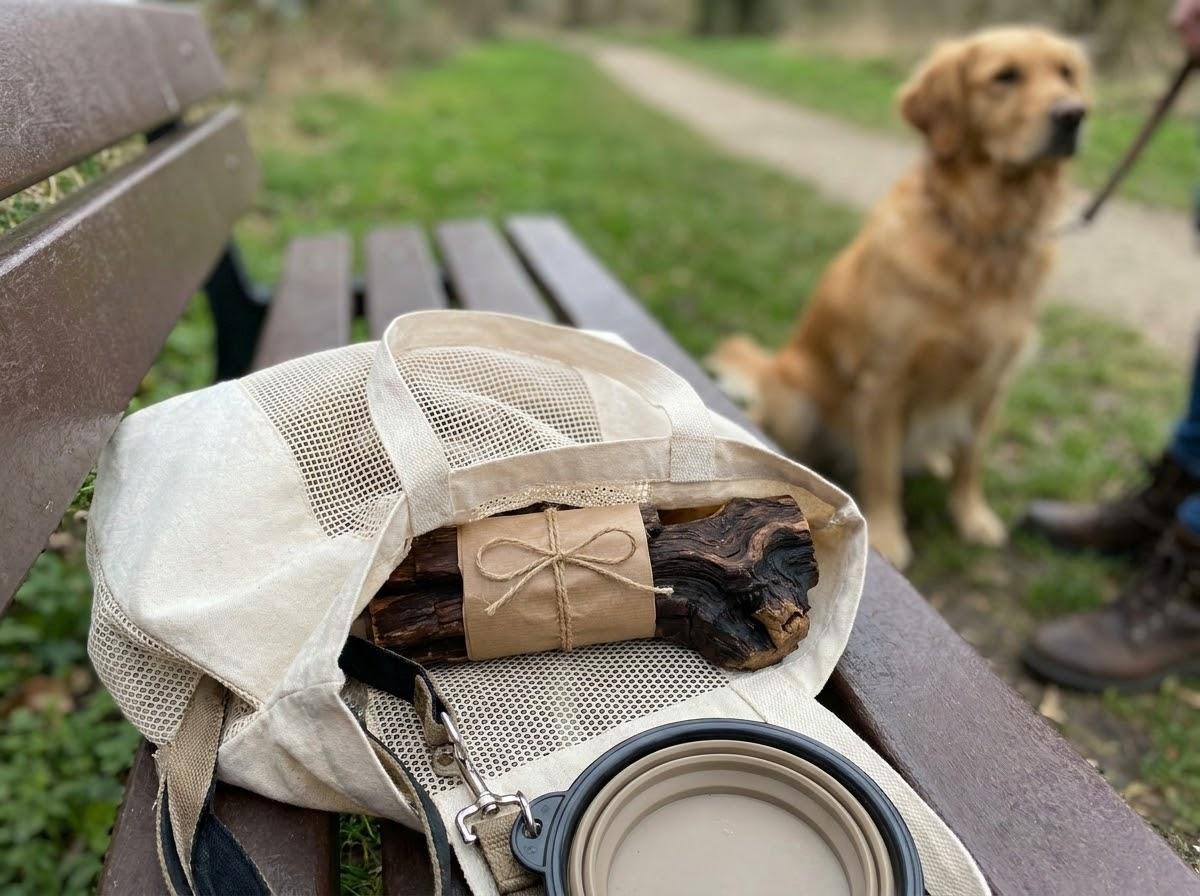
Pack a familiar chew for a supervised outing while keeping it dry, clean, and suitable for the setting.
Decide whether the outing is a good setting
A coffee wood chew can be a familiar object during a trip, but the unfamiliar place changes how closely you need to observe your dog. First decide where a calm, supervised chew session could actually happen.
Avoid offering a chew while driving or whenever you cannot see and reach your dog. If the dog becomes distressed in a new setting, focus on settling and seek behavioral advice rather than assuming a toy will fix the problem.
Pack the chew separately
Inspect the wood before leaving home. Set aside any piece with a crack, sharp edge, or a size that the dog might swallow.
Carry it in a clean, breathable compartment apart from food and damp supplies. A used chew should be allowed to dry after a session; do not seal a wet item into luggage.
Set up a supervised session
Choose a stable spot with enough room to keep the dog away from traffic, other dogs, and loose travel gear. Stay close enough to intervene if chewing changes or the toy becomes damaged.
Bring an alternative activity for moments when chewing is impractical. A walk, rest break, or familiar game may suit the situation better.
Check before packing it again
After use, examine both ends and the surface. Remove the chew if it has developed a deep crack, a sharp piece, or a swallowable end.
Clean up loose fragments and let the wood dry in a ventilated place. At home, inspect it again before the next session rather than assuming travel left it unchanged.
A short outing example
Imagine a day trip with a rest stop, a walk, and a visit to a friend's home. The chew stays packed during transit. At the house, the owner first checks that the room is quiet, the floor is clear, and the dog can be watched without interruptions. Only then does the owner offer the intact chew.
Before leaving, the owner takes the chew away, checks both ends, collects any loose material, and gives it air space in the tote. If the host has another dog, the owner skips the shared-room chew session altogether. The example shows that travel familiarity does not override supervision or the needs of a new environment.
Packing checklist
Write down four checks before departure: intact wood, suitable size, a clean separate place to carry it, and a destination where a supervised session is possible. Add a spare activity in case the location is too busy for chewing.
After use, record whether the dog gnawed calmly, the wood changed, and the item dried before storage. If any check fails, put the chew aside. This small routine is more reliable than packing it automatically just because it is a familiar toy.
What changes between travel stops
A quiet room at a relative's home, a crowded roadside stop, and an outdoor cafe are three different environments. In the quiet room, the owner may be able to sit nearby, keep the floor clear, and inspect the chew. At the roadside stop, other dogs and movement may make focused supervision unrealistic. The toy should remain packed when the conditions are poor, even if the dog normally enjoys it at home.
Before each stop, ask where the dog would lie, who would supervise, and how the owner would remove a broken piece quickly. If there is no good answer, choose another activity. A short walk on a leash or a rest in a calm space can be more appropriate than a chew in a busy place. Travel plans should adapt to the setting rather than treating the chew as a required comfort item.
A return-home inspection
On returning home, place the chew on a clean surface and compare it with its condition before the outing. Look at each end, the side grain, and any area the dog held in its mouth. Check whether the piece became shorter, rougher, or damp during travel. A note or photo taken before departure makes this comparison more reliable than memory.
If you find a crack or sharp area, retire the item immediately. If it remains intact, store it dry and ventilated until another supervised session. Keep travel storage separate from the dog's ordinary toy basket until you have checked it. This small step prevents an object damaged on a trip from being offered casually at home later.
Frequently asked questions
Can my dog chew in a moving car?
Only offer a chew when you can actively supervise and intervene; a moving vehicle often makes that difficult.
How should I pack a used wood chew?
Inspect it, keep it separate from food, and allow it to dry before storing it.

Coffee Wood Chew Stick
Dense coffee wood chew made from branches collected during routine pruning in Vietnam's Central Highlands. Available in six sizes for supervised chewing.
Ask for current availability, packaging options, and a written quote.
Have Questions or Need a Wholesale Quote?
We export high-quality, pet-friendly coffee wood chews and natural toys worldwide.
Partner with us!
✨ Wholesale Pricing Available for Resellers & Business Partners!
We offer competitive wholesale prices and attractive deals for resellers and distributors.
💬 Feel free to message me directly to discuss pricing, partnership opportunities, and further details. Let's grow our businesses together! 🤝