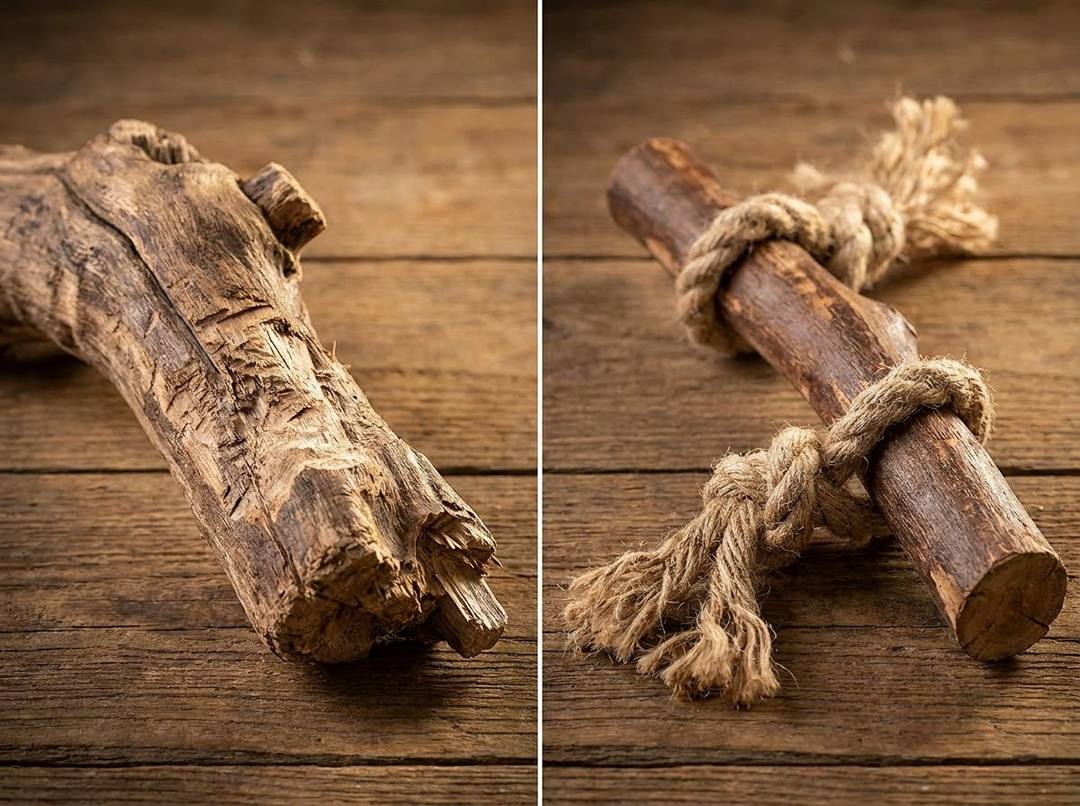
Both use coffee wood, but one is a chew stick and the other is an interactive wood-and-rope play toy.
Key takeaways
- Choose the plain chew for supervised gnawing.
- Choose the tug for supervised human-dog games.
- Inspect rope and knots as well as wood on a tug.
One material, two jobs
The coffee wood chew is a standalone branch-wood stick intended for supervised chewing. The coffee wood tug combines wood with a rope component for interactive tug, toss or fetch games.
The tug is not simply a chew with a handle. Its rope, knots and joining points add wear surfaces that need inspection after active play.
Choose by the activity
If the dog likes to settle and gnaw while you supervise, compare the six sizes of the plain chew. Assess the actual piece against the dog's mouth and chewing style.
If your goal is a shared game, inspect the tug's shape and rope option. The catalog lists hemp, cotton and coconut coir rope options across its tug styles; ask which style is currently available.
Different inspection checks
On the plain chew, look for cracks, sharp edges, loose fragments and a reduced size that could be swallowed. Stop immediately if the dog starts breaking off chunks.
On the tug, make the same wood checks and also inspect fraying rope, loose knots and connections. Retire damaged components rather than trying to prolong the game.
A buyer's comparison
Write down whether the toy is for chewing alone under observation or for a person-led game. Then compare the product dimensions and construction, rather than choosing on the shared coffee wood label.
Neither format is a universal fit. A dog that gulps wood or rope needs another option, and dental concerns deserve veterinary advice before hard chewing.
Two household examples
A dog that settles beside its owner and slowly gnaws may be a candidate for the plain chew, provided the piece is large enough and its surface stays intact. In that situation, compare an XS-to-XXL sample with the dog's mouth and plan where to store it between sessions. Rope adds little to that particular activity and gives the owner an additional component to inspect. The decision follows the intended play pattern rather than the appearance of the toy.
A dog that enjoys a short game with a person may instead engage with a tug style. The person should control the game, inspect knots before and after, and end play if the rope unravels or the wood cracks. A tug should not be left out as an unsupervised substitute for a chew stick. If the dog tears and swallows rope, the interactive design may also be unsuitable; choose a different game and seek advice if ingestion is suspected.
Compare maintenance time
The plain chew has one wood component to check for a crack, sharp edge, loose piece and mouth fit. The tug has the wood plus rope and joining points. After a tug game, inspect whether fibers have come loose, a knot has shifted or the wood has developed a split. The more complex construction can be useful for interactive play, but it also creates additional places for wear. Buyers should choose a format they are willing to inspect, not only one that looks more engaging in a photo.
Ask how the dog uses a toy when a person is absent. If it drags a tug away and dismantles the rope, the design is no longer being used as an interactive game. Store the tug out of reach after play and reserve it for the intended activity. The same storage rule applies to the chew because its use also requires supervision, although its inspection points differ.
Questions for a product inquiry
A clear retail inquiry can say whether you want the standalone coffee wood chew or a wood-and-rope tug, then name the relevant catalog size or tug style. For a tug, ask which of the cataloged rope options is available for the requested style. For a plain chew, ask for the size and dimensions. Avoid asking simply for a coffee wood toy, which can lead to a quote for the wrong product and an unfair comparison of price or intended use.
A wholesale buyer should request current sample specifications and packaging details for each format separately. The catalog describes 18 tug styles, but it does not establish stock, lead time or minimum order quantity for a particular variant. A comparison sheet can have rows for activity, components, listed dimensions, observed wear and current supplier answers. That creates a basis for a decision without inventing commercial terms.
Frequently asked questions
Can the coffee wood tug replace a plain chew?
They serve different activities. The tug is designed for interactive play and also requires rope and knot inspection.
Does the tug have only one rope type?
The company catalog lists hemp, cotton and coconut coir as rope options; confirm the current style when inquiring.

Coffee Wood Chew Stick
Dense coffee wood chew made from branches collected during routine pruning in Vietnam's Central Highlands. Available in six sizes for supervised chewing.
Ask for current availability, packaging options, and a written quote.
Have Questions or Need a Wholesale Quote?
We export high-quality, pet-friendly coffee wood chews and natural toys worldwide.
Partner with us!
✨ Wholesale Pricing Available for Resellers & Business Partners!
We offer competitive wholesale prices and attractive deals for resellers and distributors.
💬 Feel free to message me directly to discuss pricing, partnership opportunities, and further details. Let's grow our businesses together! 🤝