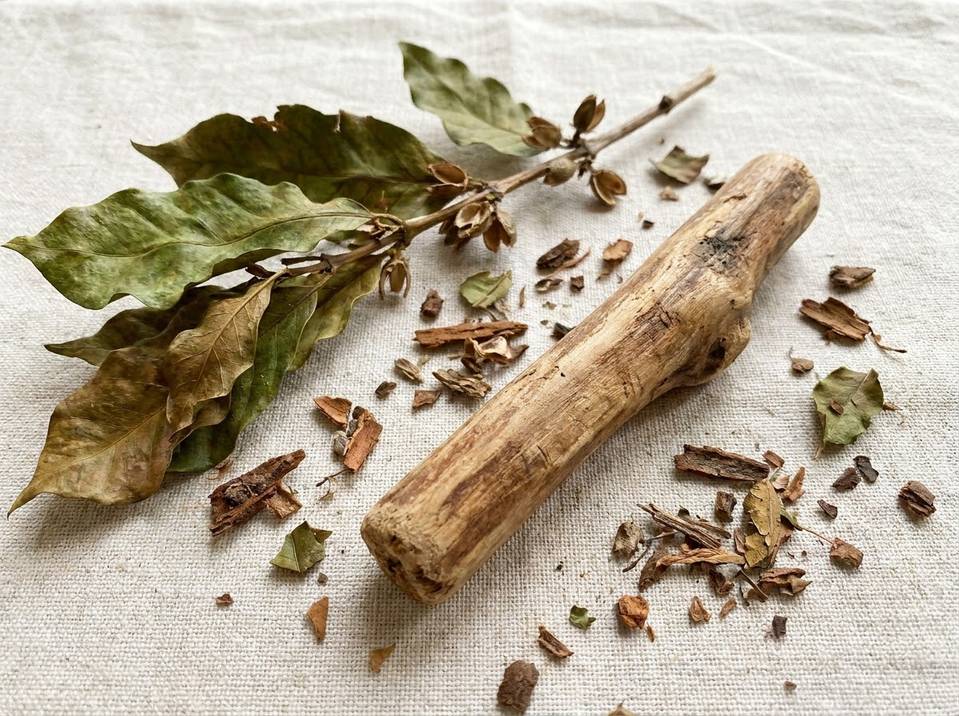
A coffee wood chew is a non-edible wooden dog toy made from pruned coffee-tree branches. Here is how to evaluate one for supervised use.
Key takeaways
- It is a chew toy, not a food or coffee-flavored treat.
- The Eco Pet Toys catalog lists six sizes from XS to XXL.
- Individual fit and frequent inspection matter more than the material name.
The material behind the name
A coffee wood chew is a piece of branch wood offered as a dog chew toy. The company catalog describes branches collected during routine pruning in Vietnam's Central Highlands; the name refers to the tree, not to coffee beans or added caffeine.
Natural wood varies in grain and shape. The relevant buying question is whether the particular piece is an appropriate size and condition for the individual dog, not whether every coffee wood piece behaves identically.
What the dog does with it
A dog may hold the chew between its paws and work at the surface. The wood can wear and fray, so a responsible owner watches the session and clears away loose or sharp pieces.
It is not an edible reward. If a dog tries to gulp pieces or snap the stick, stop the session and choose a different enrichment option with professional guidance if needed.
What the product listing can tell you
The Eco Pet Toys listing gives the material, origin, six catalog size ranges and an indicative retail price. Those fields let a buyer compare a physical sample or ask about a specific size.
They do not establish a universal weight-to-size rule, current stock, a safety certification or a dental outcome. Ask for current documentation if those points matter to a purchase decision.
A practical first decision
Start with the dog's mouth size and chewing style. Pick a piece that cannot fit wholly into the mouth, and inspect it for cracks, sharp edges and loose material before use.
Supervise a short first session, then inspect again. Retire a piece once damage appears or it becomes small enough to swallow; speak with a veterinarian about dental conditions or unusual chewing behavior.
Questions the product name cannot answer
Imagine two dogs of similar body size: one carefully scrapes a toy's surface, while the other snaps a stick in half and tries to swallow it. The same coffee wood product description does not make the chew equally suitable for both. Before buying, ask what your dog actually does with firm toys and whether an intact sample stays well outside its mouth. This behavior check is more useful than assuming that natural wood is universally appropriate.
The listing also cannot tell you what happened to a particular batch after the catalog was prepared. If a retailer or importer needs processing records, test documents or current packaging details, request those records directly and check that they cover the item being offered. A buyer should distinguish a verified document from a general material story. Pet owners can use the published dimensions and supervision instructions immediately, without treating unanswered technical questions as proof of a claim.
What to verify before you choose a seller
A useful product description should identify the material and dimensions without claiming an outcome it cannot show. For this product, the catalog supplies pruned coffee branch wood, a Vietnam origin and six size ranges. If a listing adds statements such as guaranteed splinter-free behavior, a specific moisture level or clinical dental benefits, ask for evidence tied to that exact item. The fact that a branch came from a coffee tree does not by itself establish how it was processed, tested or stored.
Compare the written listing with a physical sample if possible. Does the sample look intact, and do its measurements fit the size you requested? Is the texture consistent with a natural wood object that can wear? Keep unanswered sourcing or test questions on a separate list instead of filling them with assumptions. This is especially relevant to retailers who must decide which statements can appear on their own product labels.
How the definition affects everyday use
Because this is a non-edible toy, the dog should not be encouraged to consume detached material. Set up the session where loose pieces can be seen, keep the dog in view and collect the chew afterward. A dog that gnaws at an exposed end is presenting a different use pattern from a dog that crushes and gulps. In the second case, changing activities may be more sensible than assuming a larger stick will solve the behavior.
The product is also not a substitute for a dental examination or behavior plan. A dog with oral pain, a recent extraction or repeated swallowing attempts needs individual advice. Buyers can use a simple definition to avoid category confusion: branch-wood toy, supervised use, periodic inspection and retirement when damaged or too small. That description is modest, but it gives a household concrete actions to follow.
Frequently asked questions
Is a coffee wood chew made from coffee beans?
No. The catalog identifies pruned coffee-tree branch wood as the material.
Is a coffee wood chew meant to be eaten?
No. Treat it as a supervised chew toy and remove loose pieces or a damaged stick.

Coffee Wood Chew Stick
Dense coffee wood chew made from branches collected during routine pruning in Vietnam's Central Highlands. Available in six sizes for supervised chewing.
Ask for current availability, packaging options, and a written quote.
Have Questions or Need a Wholesale Quote?
We export high-quality, pet-friendly coffee wood chews and natural toys worldwide.
Partner with us!
✨ Wholesale Pricing Available for Resellers & Business Partners!
We offer competitive wholesale prices and attractive deals for resellers and distributors.
💬 Feel free to message me directly to discuss pricing, partnership opportunities, and further details. Let's grow our businesses together! 🤝