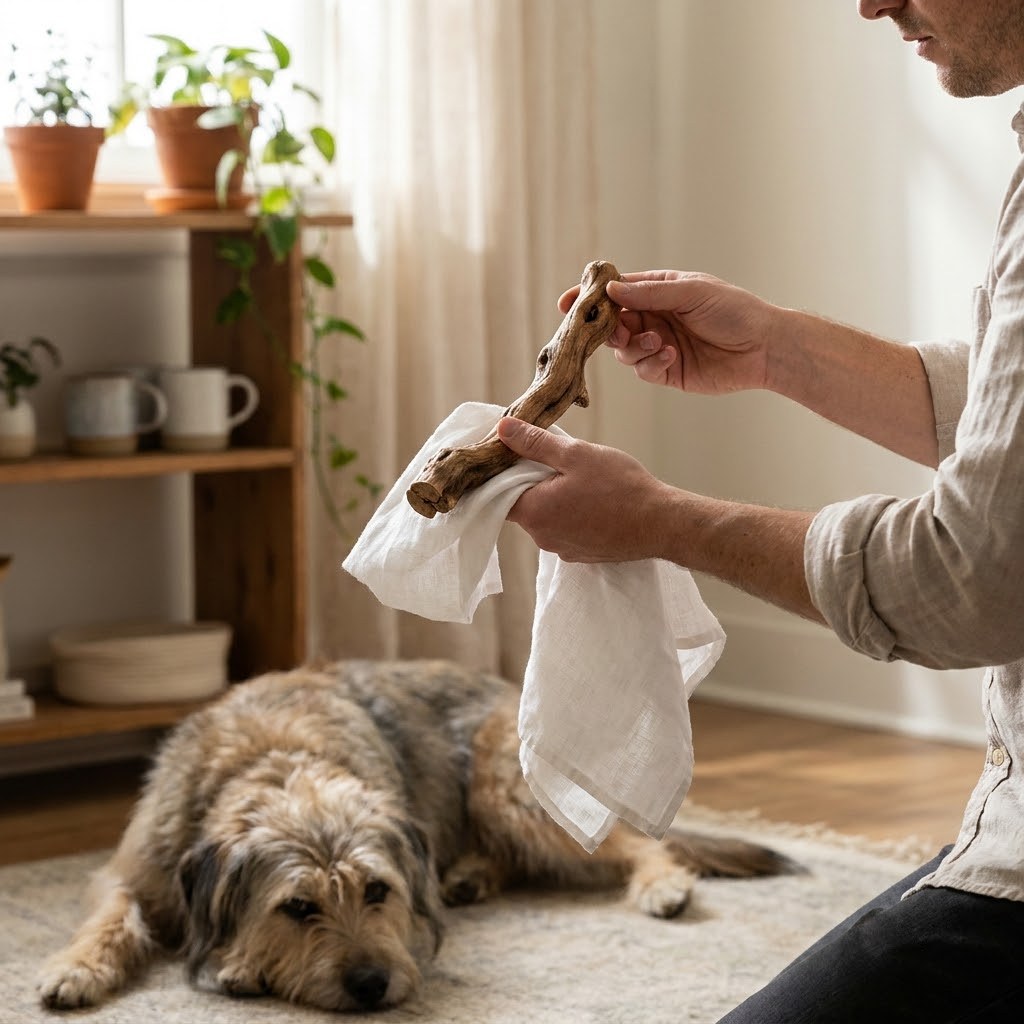
Proper cleaning and storage dramatically extend the lifespan of your coffee wood chew while keeping it hygienic. Learn the essential dos and don'ts of natural wood care.
Key takeaways
- Never soak a coffee wood chew in water or place it in a dishwasher; excessive moisture weakens internal lignin bonds.
- Clean surface saliva and debris by brushing the stick with a stiff bristle brush or wiping with a damp, clean cloth.
- Always allow the chew to air-dry thoroughly in a well-ventilated location before storing.
- Store chews in breathable baskets or open bins away from enclosed, humid plastic containers.
- Inspect the stick weekly and use medium-grit sandpaper to gently smooth down any sharp corners or rough wear spurs.
Why Natural Botanical Chews Require Different Care from Plastic Toys
Pet parents are accustomed to synthetic rubber and plastic toys that can be tossed into a dishwasher or soaked in hot soapy water. However, a coffee wood chew is a living botanical material with open porous cellulose channels.
Subjecting natural hardwood to boiling water, chemical detergents, or dishwasher cycles strips the natural plant lignins, causes swelling, and introduces harsh cleaning chemicals deep into the wood grain where dogs will mouth them.
Caring for a coffee wood chew requires gentle, mechanical cleaning methods that preserve wood fiber integrity while maintaining impeccable canine hygiene.
The 3-Step Daily Post-Chew Cleaning Routine
After your dog completes a supervised 20-to-30-minute chewing session, implement this simple 60-second maintenance routine:
Step 1: Wipe Away Surface Saliva. Use a clean, dry micro-fiber cloth to thoroughly wipe down the exterior surface, absorbing pooled saliva and dislodging loose floor dirt.
Step 2: Brush Off Loose Cellulose Fibers. Use a stiff, natural-bristle brush (such as a vegetable brush or dedicated wooden nail brush) to sweep away soft, hydrated wood fibers clinging to the chewed ends.
Step 3: Stand Vertically to Air-Dry. Place the stick upright in a cup or rack where air can circulate around all sides, allowing moisture to evaporate naturally.
What NOT to Do: Common Cleaning Mistakes
Avoid these common mistakes that destroy natural wood chews:
Do NOT Soak in Water: Prolonged soaking saturates the internal wood core, leading to premature swelling, fiber weakening, and potential mold formation.
Do NOT Use Bleach, Vinegar, or Detergents: Chemical cleaners soak into the wood grain. When your dog chews the stick later, they will ingest chemical residues that cause oral ulcers and gastric irritation.
Do NOT Microwave or Bake in an Oven: Some online forums suggest baking wood toys to sterilize them. Oven heating rapidly desiccates the wood, making it dangerously brittle and prone to shattering under bite pressure.
Optimal Storage: Ventilated Baskets vs. Sealed Plastic
Where you store your dog's coffee wood chew between sessions directly influences its longevity:
Ideal Storage: Store chews in an open woven seagrass basket, wire caddy, or cotton canvas tote placed in a dry room away from floor dampness. Excellent airflow keeps the wood clean and dry.
Avoid Sealed Containers: Never store a used wood chew in an airtight plastic tub, sealed zip-top bag, or closed drawer. Trapped residual moisture will cultivate mildew within 48 hours.
Smoothing Rough Edges: The Sandpaper Trick
As dogs gnaw with their sharp premolars, irregular wear patterns can occasionally create an acute point or rough spur on one side of the stick.
Keep a small sheet of 120-grit sandpaper in your pet care drawer. Once a week, take thirty seconds to gently buff down any sharp corners or uneven ridges until the surface is smoothly contoured once more. This simple step keeps the chew completely safe and comfortable for your dog's mouth.
Frequently asked questions
Can I put a coffee wood chew in the dishwasher?
No. Dishwashers use extreme heat, prolonged water soaking, and harsh detergents that weaken wood fibers and leave toxic chemical residues in the wood.
How do I disinfect a coffee wood chew naturally?
Wipe it down with a cloth lightly dampened with warm water, brush off debris, and let it dry in direct sunlight for an hour. Sunlight provides natural UV disinfection without chemicals.
What should I do if the chew gets dirty from the garden?
Scrub the surface with a stiff dry brush to remove soil. If mud is present, rinse briefly under running cold water, scrub immediately, and dry thoroughly with a towel.
How often should I inspect the coffee wood chew?
Inspect the chew before and after every chew session to check for deep cracks, sharp edges, or pieces worn down to a swallowable size.
Editorial sources
External references support the general safety and dental-care guidance in this article. Product dimensions and material descriptions come from the Eco Pet Toys catalog.
- American Animal Hospital Association (AAHA): Dental & Chew Guidelines: Veterinary consensus on masticatory object hardness, dental fracture risks, and supervision protocols.
- Veterinary Oral Health Council (VOHC): Accepted Plaque Control Methods: Standards for mechanical friction on canine tooth enamel and gingival margin health.
- ASPCA Position Statement on Dog Chews and Enrichment Safety: Guidance on individualized size selection, behavioral observation, and avoiding toxic chemical coatings.
- International Association of Animal Behavior Consultants (IAABC): Chewing & Arousal: Behavioral science principles on stress reduction and de-escalating resource guarding through natural toys.

Coffee Wood Chew Stick
Dense coffee wood chew made from branches collected during routine pruning in Vietnam's Central Highlands. Available in six sizes for supervised chewing.
Ask for current availability, packaging options, and a written quote.
Have Questions or Need a Wholesale Quote?
We export high-quality, pet-friendly coffee wood chews and natural toys worldwide.
Partner with us!
✨ Wholesale Pricing Available for Resellers & Business Partners!
We offer competitive wholesale prices and attractive deals for resellers and distributors.
💬 Feel free to message me directly to discuss pricing, partnership opportunities, and further details. Let's grow our businesses together! 🤝