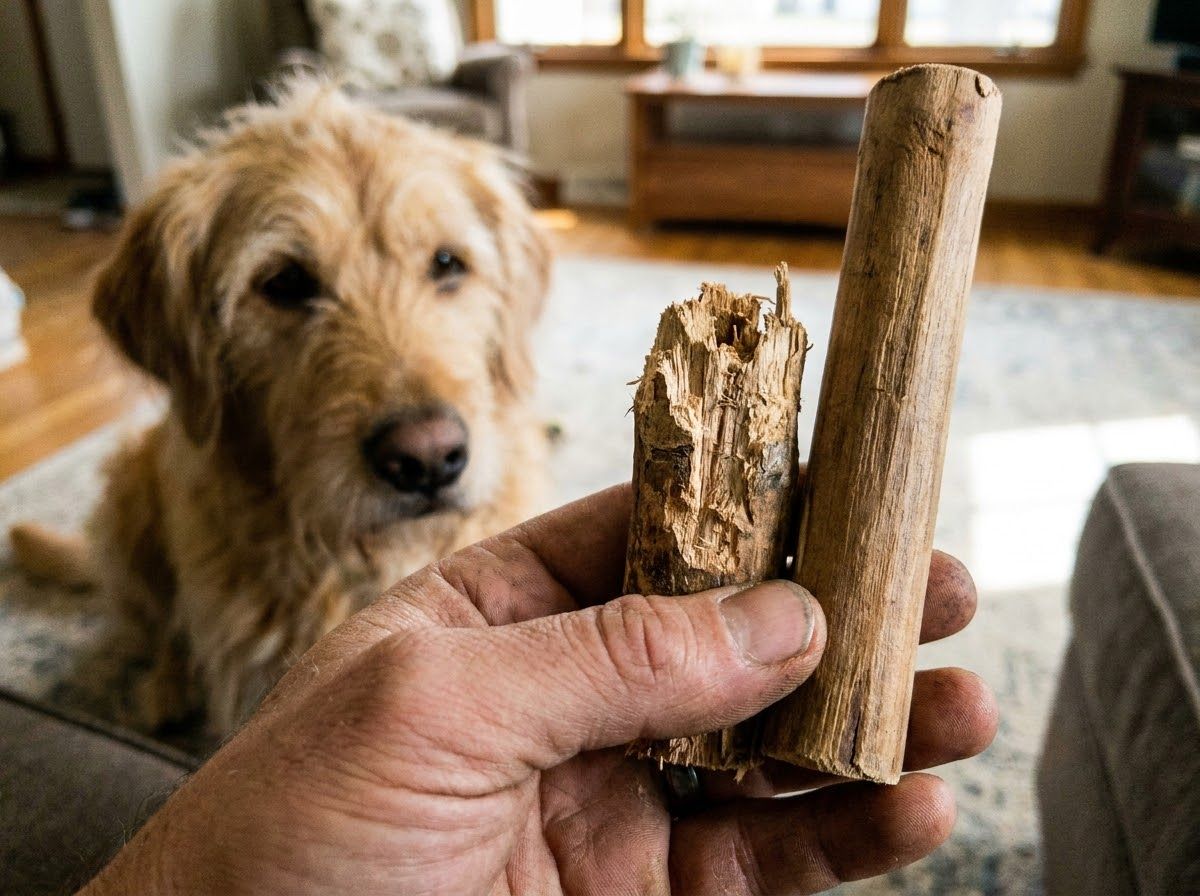
A chew can become unsuitable as it wears. Judge its current size against the dog's mouth, not its original package label.
The practical swallowing check
A coffee wood chew is too small if the dog could take the whole remaining piece into its mouth or swallow it. Compare the actual piece with the individual dog's mouth before each use.
Do not rely on a fixed fraction of the original length. The dog's mouth and the shape of the worn piece determine the immediate concern.
How wear changes fit
Gnawing can shorten the ends and narrow parts of the chew. A size that appeared appropriate when new may no longer provide enough length to remain outside the mouth.
Check the narrowest and shortest points rather than measuring only the middle. A detached chunk is a separate hazard even when the main piece still looks large.
What to do with a short piece
Remove a too-small chew and keep it away from the dog. Do not attach it to another object or assume closer supervision makes an easily swallowed piece acceptable.
If you want a replacement, reassess size and chewing style with a new intact piece. A different material or activity may suit a dog that tends to gulp objects.
Other reasons to retire early
Size is only one check. A deep crack, sharp edge, loose large fragment or visible contamination can justify retiring a chew sooner.
If the dog swallows a piece or develops symptoms, contact a veterinarian promptly. Describe the material, approximate size of the missing piece and what you have observed.
A size-specific decision example
Consider a dog that has worn down one end while the other end remains long. The original full length may still look reassuring when measured across the table, yet the dog might be able to hold the narrowed end deep in its mouth and break off a short section. Look at the portion the dog can actually grip, not only the total span. If the whole remaining piece can be swallowed, retire it regardless of whether the surface is otherwise smooth.
This article focuses on the swallowed-whole fit question. A different decision is needed when an otherwise large chew develops a crack or sharp point: remove that piece for damage even though it is still long. Keep these checks separate when explaining a replacement to another household member. A piece may fail either check, and passing the size check today does not predict how it will fit after the next period of wear.
Check the end the dog actually holds
A piece can look substantial on a table but have a narrow, shortened end that the dog works deep into its mouth. Inspect the worn shape from the dog's point of use. During a supervised session, notice whether it repeatedly turns the piece and grips the shorter end. If the entire remaining object can fit inside the mouth, remove it. Do not wait for a numerical length threshold from a different dog's guide, because the relevant mouth and remaining shape are in front of you.
A detached fragment creates an additional question. The main stick might still be long, while the fragment is small enough to swallow. Collect loose pieces after each session and do not let another pet find them. If a piece is missing and ingestion is suspected, contact a veterinarian with the best description you have. The full-length measurement alone cannot account for breakage.
Tell size failure from damage failure
When a chew is too short, the next purchase question may concern a different starting dimension or a different toy design. When a chew is cracked, even a larger intact length does not make that damaged object usable. Write down which observation caused retirement, especially if several people supervise the dog. This keeps the response matched to the concern instead of turning every problem into a generic recommendation to size up.
The older site guide discusses replacement over the toy's lifespan. This page addresses the immediate mouth-fit decision at a particular moment. It cannot promise how many sessions a size will last, since chewing speed varies. Reassess an intact replacement in the same way: current dimensions, current dog and current behavior. If the dog gulps pieces regardless of size, choose another activity and seek professional advice as appropriate.
Frequently asked questions
Is there one retirement length for every dog?
No. Compare the remaining piece with the individual dog's mouth and remove it before it becomes swallowable.
Can I keep a small chew for later?
Keep it out of the dog's reach; do not offer a piece the dog could swallow whole.

Coffee Wood Chew Stick
Dense coffee wood chew made from branches collected during routine pruning in Vietnam's Central Highlands. Available in six sizes for supervised chewing.
Ask for current availability, packaging options, and a written quote.
Have Questions or Need a Wholesale Quote?
We export high-quality, pet-friendly coffee wood chews and natural toys worldwide.
Partner with us!
✨ Wholesale Pricing Available for Resellers & Business Partners!
We offer competitive wholesale prices and attractive deals for resellers and distributors.
💬 Feel free to message me directly to discuss pricing, partnership opportunities, and further details. Let's grow our businesses together! 🤝