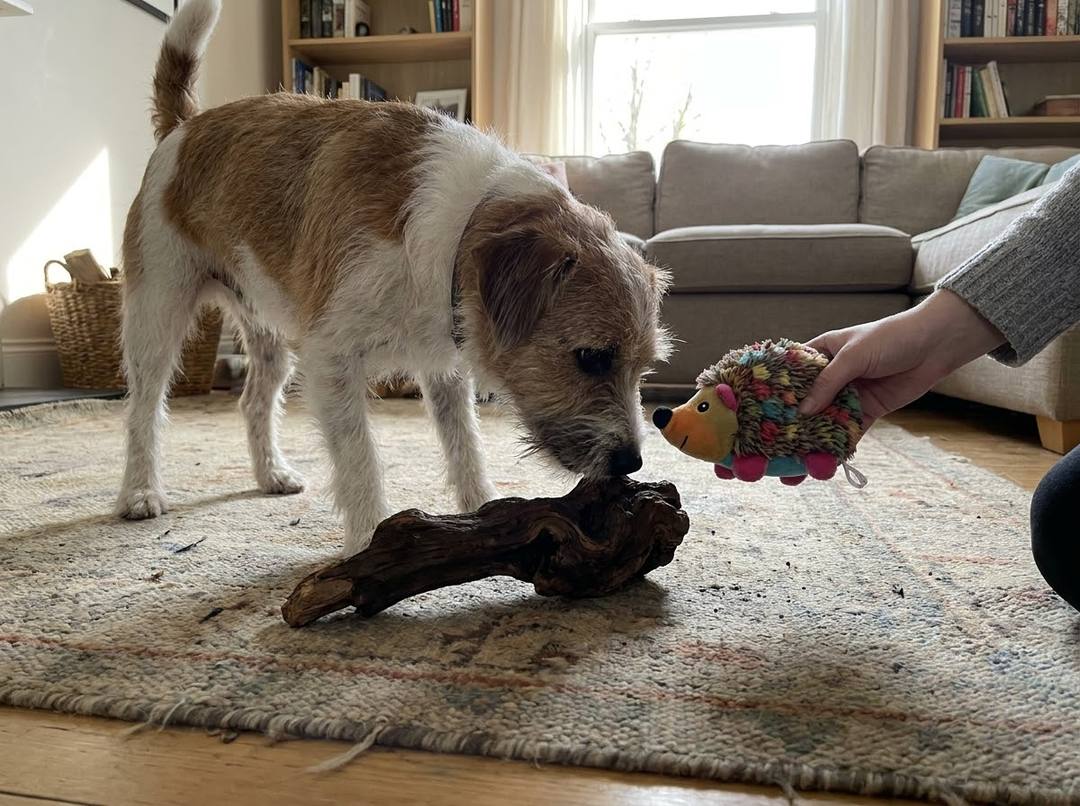
A dog may prefer a different texture or activity; observe preference without forcing a chew session.
Do not treat preference as a problem
Dogs vary in what they choose to mouth or play with. An untouched coffee wood chew does not mean the dog needs more encouragement or that the product is defective.
First confirm the chew is intact and sized so it cannot be swallowed. A dog may reject an object that is awkward to hold or simply uninteresting.
Offer it in a calm moment
Place the chew nearby while you can supervise. Let the dog investigate at its own pace, and remove the object if the dog walks away.
Avoid pushing wood into the mouth or leaving it in a crate to compel use. A relaxed introduction provides better information about voluntary interest.
Compare activities, not promises
Try an appropriate rubber toy, interactive tug, or another supervised game and observe which activity the dog chooses. The wood chew is one option among several.
Do not coat the chew with food without considering allergies, diet, hygiene, and the risk of encouraging the dog to eat the wood itself.
Know when to ask for help
A sudden loss of interest in all chewing or play is different from disliking one toy. If that change comes with pain, poor appetite, or unusual behavior, contact a veterinarian.
If the dog prefers one safe form of enrichment, use that preference. A successful toy choice is the one that fits the animal and can be supervised.
A no-pressure introduction
On the first day, an owner places an intact, suitably sized chew on the floor while sitting nearby. The dog sniffs it and walks away. The owner picks it up after the session instead of moving it into the dog's mouth or leaving it unattended overnight.
On another day, the owner offers a different activity and notices that the dog prefers an interactive game. That is a practical outcome: the dog has shown a preference. If the dog previously enjoyed all toys and suddenly stops, the owner treats that change as a separate health question, not as resistance to one product.
Check the reasons you can observe
Before concluding that the dog dislikes wood, check whether the piece is easy to hold, whether the room is calm, and whether the dog is comfortable approaching it. Note the dog's age, dental history, and ordinary play preferences without assigning a medical cause yourself.
Keep the decision simple: offer once under supervision, observe voluntary interest, and choose an appropriate alternative if interest is absent. A product page can explain material and dimensions; it cannot require a dog to enjoy a texture.
Separate indifference from discomfort
A dog that sniffs a wood chew and chooses a ball is showing a preference. A dog that approaches a chew, mouths it briefly, then drops it while pawing at the face may be showing discomfort. These observations are not a diagnosis, but they point to different next steps. Let the first dog play with a suitable alternative; ask a veterinarian about the second if the pattern persists or other signs appear.
Observe interest in food, games, and ordinary routines over time. A sudden broad change is more concerning than ignoring one unfamiliar object. Avoid presenting the chew repeatedly as a test of obedience. The aim is to learn what form of enrichment is comfortable and engaging for this individual dog.
Keep introductions clean and measurable
If you try a second introduction, keep the same calm room and short supervised opportunity, then note whether the dog investigates, carries, gnaws, or leaves the item. Change only one variable at a time, such as offering the chew in a quieter place. Otherwise it is hard to know whether the toy, the room, or competing activity affected the response.
Do not use a food coating as the default experiment. It can obscure the dog's preference for the wood itself and may introduce diet or hygiene concerns. A dog that remains uninterested has still given useful feedback. Put the item away and select a different appropriate activity rather than forcing a sales claim to fit the dog.
Frequently asked questions
Should I force my dog to try a coffee wood chew?
No. Offer it calmly and let the dog choose whether to investigate.
Can I flavor the chew to make it appealing?
Check dietary and hygiene concerns first; adding food can change how the dog uses the toy.

Coffee Wood Chew Stick
Dense coffee wood chew made from branches collected during routine pruning in Vietnam's Central Highlands. Available in six sizes for supervised chewing.
Ask for current availability, packaging options, and a written quote.
Have Questions or Need a Wholesale Quote?
We export high-quality, pet-friendly coffee wood chews and natural toys worldwide.
Partner with us!
✨ Wholesale Pricing Available for Resellers & Business Partners!
We offer competitive wholesale prices and attractive deals for resellers and distributors.
💬 Feel free to message me directly to discuss pricing, partnership opportunities, and further details. Let's grow our businesses together! 🤝