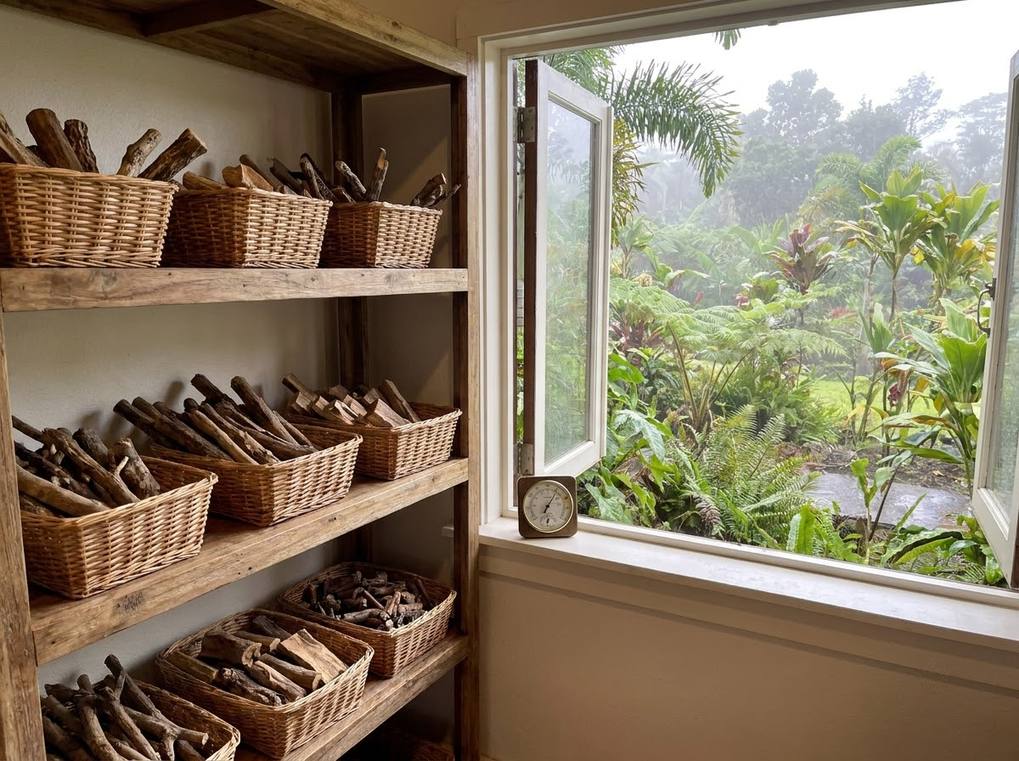
Humidity makes drying and visible condition more important. Keep the used chew clean, ventilated and easy to inspect.
Dry the used surface first
A chew can be damp after a dog has mouthed it. Let it air-dry in a clean, ventilated spot before putting it away.
Avoid sealing a saliva-wet piece in plastic. Trapped moisture makes it harder to judge the wood's condition before the next use.
Choose a sensible location
Keep the chew away from standing water, rain and damp floors. An indoor shelf with airflow is easier to inspect than a closed outdoor container.
Do not place it where the dog can take it without supervision. Storage should also preserve control over when each session starts.
Inspect in good light
Before reuse, check for visible discoloration, unusual odor, a softened area or surface contamination. Discard a piece that appears compromised.
A humidity number or fixed drying time cannot guarantee condition. Look at the actual chew and its storage history.
Keep records simple
If several dogs have chews, keep pieces separate so you can track which one belongs to each dog and notice wear. Mark the storage location, not the wood with an unverified treatment.
For wholesale storage questions, request current packaging and handling specifications from the supplier. The public catalog alone does not document them.
A humid-weather storage example
Imagine a chew used in the evening during rainy weather. Its surface is still wet with saliva when play ends. Instead of closing it in a bag overnight, place it on a clean, ventilated indoor shelf beyond the dog's reach. The next day, inspect its surface, smell and structure before offering it. If it appears damp, discolored or otherwise compromised, do not use it. This is an observable routine that does not depend on an invented moisture percentage.
For a buyer storing multiple samples, label the container or shelf position so each sample can be tracked without writing on the chew. Keep samples apart from water and inspect before presentation. Ask the supplier for current batch handling and packaging information if commercial storage conditions matter. The site cannot infer a guaranteed shelf life from the fact that the material is wood; local humidity and the state of individual pieces vary.
Distinguish drying from treatment claims
Allowing a used chew to dry in a ventilated place is a household care step. It does not prove that the wood was kiln dried, sterilized, chemically untreated or manufactured to a particular moisture specification. Those are separate supplier questions. A retailer sourcing for a humid destination should request current handling, packaging and test information rather than converting a home storage suggestion into a product compliance claim.
At home, keep the routine observable: remove the chew after play, place it somewhere clean and airy, and examine it before the next session. Do not bake, bleach or apply an unapproved coating to a damaged piece in an attempt to restore it. If the wood has visible mold-like growth, contamination or an unusual smell, discard it. A damaged or suspect chew is not repaired by drying alone.
Plan for multiple chews or pets
If a household stores more than one wood chew, separate them and remember which belongs to which dog. That allows you to recognize individual wear and prevents a smaller animal from finding a larger dog's worn fragment. Keep storage out of reach because use must start with a human inspection. During very damp weather, check more closely for a piece that has not dried between sessions rather than assuming that a fixed waiting period works in every room.
For a business, log which batch or sample a visual concern came from and ask the supplier about current storage instructions. The public product page gives material and size details, but it does not document a guaranteed shelf life, humidity range or packaging barrier. A source-aware article leaves those fields open until records exist. This helps buyers ask useful questions instead of publishing an unsupported technical number.
Frequently asked questions
Can I keep a wet wood chew in a zip bag?
Let it dry with airflow before storage; avoid trapping a wet piece in a sealed bag.
Is there a guaranteed humidity threshold for these chews?
The available product evidence does not establish one. Inspect the piece and request current specifications if needed.

Coffee Wood Chew Stick
Dense coffee wood chew made from branches collected during routine pruning in Vietnam's Central Highlands. Available in six sizes for supervised chewing.
Ask for current availability, packaging options, and a written quote.
Have Questions or Need a Wholesale Quote?
We export high-quality, pet-friendly coffee wood chews and natural toys worldwide.
Partner with us!
✨ Wholesale Pricing Available for Resellers & Business Partners!
We offer competitive wholesale prices and attractive deals for resellers and distributors.
💬 Feel free to message me directly to discuss pricing, partnership opportunities, and further details. Let's grow our businesses together! 🤝