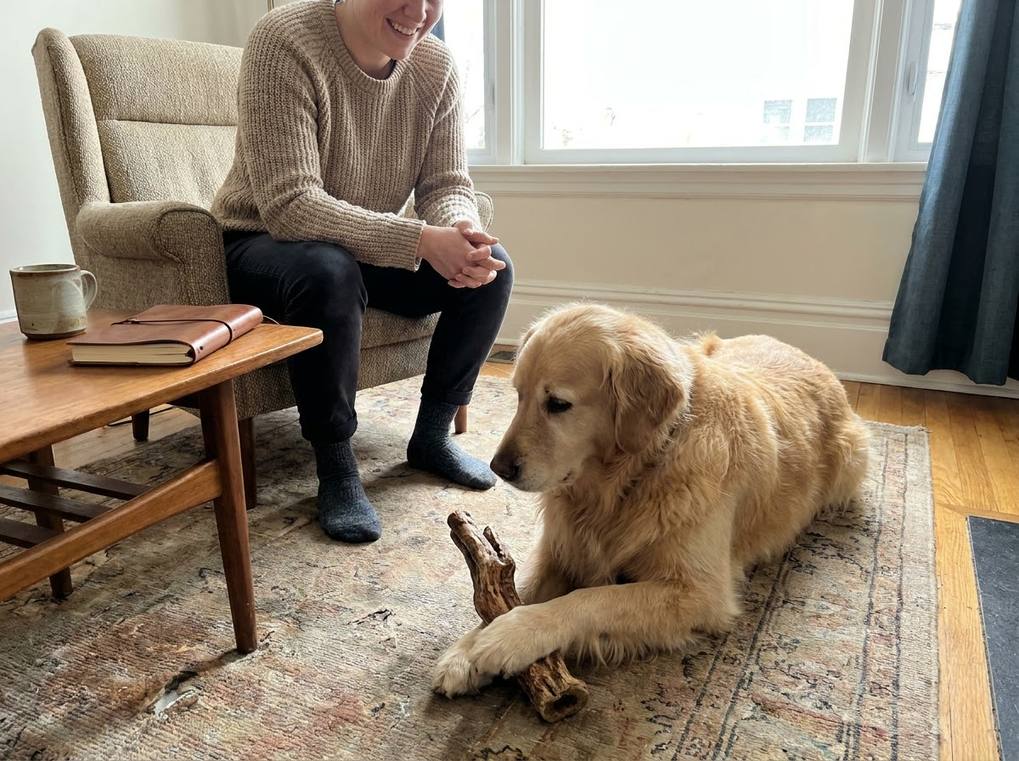
Use a short observation checklist to choose and retire toys based on behavior rather than breed assumptions.
Watch before choosing a size
The catalog provides XS through XXL coffee wood chew dimensions, but no breed or weight rule can describe every dog. Observe mouth size, grip, and how the animal applies pressure.
Does the dog scrape the surface, bite down to split the object, or carry it away? These differences matter more than a generic breed label.
Observe the session
Stay close for a few minutes and look at the dog's pace, body language, and the toy's condition. Pause if chewing becomes frantic or the dog tries to swallow separated material.
A relaxed posture does not prove a toy is risk-free. Continue checking the wood for cracks and sharp edges as the session proceeds.
Write down what changes
Record the product size, whether it was easy to hold, and the type of wear. A simple description is enough; you do not need a bite-force estimate.
If a toy repeatedly breaks or the dog appears uncomfortable, remove it and consider another texture. Bring notes to your veterinarian when tooth or swallowing concerns are involved.
Use the observation to decide
Choose an intact item that is too large to swallow and manageable under supervision. Reassess as the chew wears, since the starting dimensions will not remain constant.
Stop using the chew when it cracks, develops sharp edges, or becomes small enough to swallow. The checklist supports a decision, but cannot guarantee safety.
A four-line observation record
A practical note can read: 'M size; dog held the center with paws; scraped one end for a few minutes; no crack after the session.' Another note might read: 'Same toy; dog tried to clamp across the middle; session stopped.' The difference is behavior, not a label such as gentle or aggressive.
A photograph of the chew before and after use helps distinguish gradual surface wear from a new split. Keep the record factual. It should not claim a bite-force measurement, diagnose anxiety, or turn a single calm session into a lifetime safety promise.
Use a stop-decision checklist
Before starting, confirm the toy is intact and too large to swallow. During the session, look for a changed grip, forceful breaking, separated pieces, or discomfort. Afterward, inspect both ends, the side grain, and the remaining length.
If any step raises concern, remove the chew and record why. If the dog repeatedly tries to swallow fragments or has tooth pain, ask a veterinarian which toy textures remain suitable. Repeating a checklist across sessions helps you notice changes that a one-time size chart cannot capture.
What to watch at the beginning
Before the dog takes the chew, notice whether the selected size can be held without pushing the stick far back into the mouth. Once the dog starts, distinguish slow scraping from hard clamping across the wood. Watch for repeated attempts to pry off one end or carry a loose piece away. This is a description of behavior, not a measure of bite force or a prediction based on breed.
Set a clear stop condition before the session: the owner will take the toy away if the dog tries to swallow material, appears uncomfortable, or the wood develops a crack or sharp edge. This makes the decision easier when the dog is excited. If the toy cannot be removed safely because the dog guards it, seek qualified behavior help and change the setup.
Compare sessions without assuming progress
A dog may gnaw calmly on one day and bite more forcefully on another. Note the date, setting, toy condition, and what changed. A short series of factual observations can reveal that chewing style varies with arousal or the condition of the object. It cannot prove that a toy will always behave the same way.
Share the record with a veterinarian if tooth pain or ingestion is a concern. A trainer or behavior professional can help with handling and guarding questions. The owner still makes the immediate supervision and retirement decision during each session. No checklist can make natural wood risk-free; its value is to help the person notice and act on changes.
Frequently asked questions
Does breed tell me which chew size to buy?
Use catalog dimensions as a starting point and judge fit for the individual dog's mouth and chewing style.
What behavior means I should stop?
Stop if the dog breaks off and swallows pieces, shows discomfort, or the chew develops damage.

Coffee Wood Chew Stick
Dense coffee wood chew made from branches collected during routine pruning in Vietnam's Central Highlands. Available in six sizes for supervised chewing.
Ask for current availability, packaging options, and a written quote.
Have Questions or Need a Wholesale Quote?
We export high-quality, pet-friendly coffee wood chews and natural toys worldwide.
Partner with us!
✨ Wholesale Pricing Available for Resellers & Business Partners!
We offer competitive wholesale prices and attractive deals for resellers and distributors.
💬 Feel free to message me directly to discuss pricing, partnership opportunities, and further details. Let's grow our businesses together! 🤝