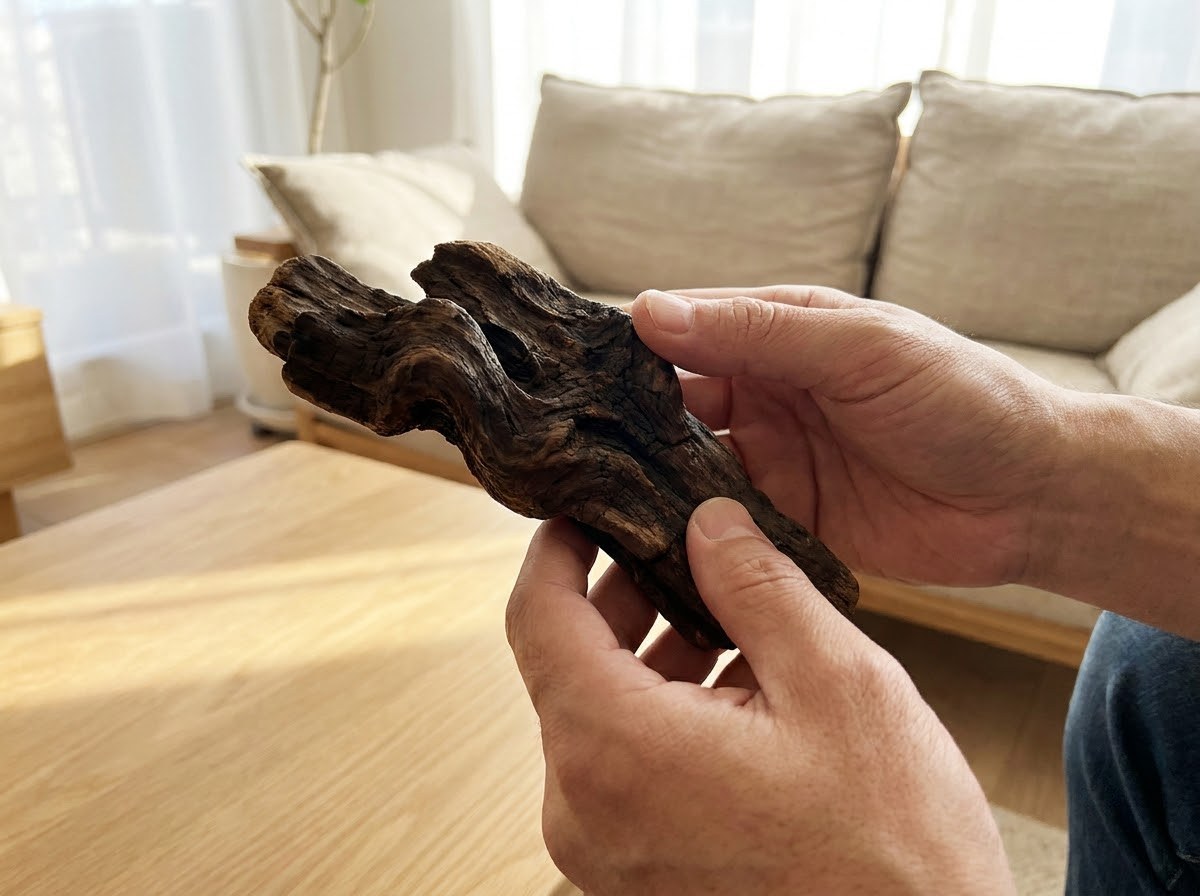
A quick inspection before every session can reveal a chew that should be retired before the dog touches it.
Check the current size
Hold the actual chew and compare its remaining length and thickness with the dog's mouth. A previously suitable piece may be too small after repeated wear.
Remove any piece the dog could swallow whole. The original XS-to-XXL label cannot substitute for checking its present size.
Look along the grain
Rotate the wood in good light and inspect both ends and the length of the stick. A deep split can allow a chunk to separate during chewing.
Do not offer a cracked piece to see whether it holds together. Set it aside and choose an intact option.
Check edges and loose material
The product can fray as it wears. Check whether surface fibers have become sharp or whether larger pieces are loose enough to detach.
Clear away loose fragments and retire a chew with sharp edges. If its condition is uncertain, do not use it.
Notice storage condition
Inspect for visible contamination, unusual odor or dampness after storage. Do not offer a piece that looks or smells compromised.
Store chews dry with ventilation after use. A clean-looking surface does not prove that a damaged or poorly stored piece is safe.
An inspection card for the next session
Make a simple four-part card: present size, visible cracks, edge condition and storage condition. Each item has a clear action. A swallowable piece is removed; a deep crack or sharp edge is removed; a visibly compromised stored piece is removed. If all checks pass, the dog still needs observation during use because the wood can change while being chewed. This card is about the object's starting condition, not a guarantee of a safe outcome.
For example, a chew may be full length but have a line opening at one end. It passes the size check and fails the crack check. Another may have a smooth surface but have worn down to a short stub. It passes the edge check and fails the fit check. Keeping the reasons distinct makes it easier to explain why a piece was retired and prevents a visually tidy surface from overruling a more serious concern.
Turn the check into a repeatable habit
Keep the chew in a place where you can pick it up before giving it to the dog. Rotate it once in bright light and inspect the two ends, the sides and the current length. This takes more attention than grabbing a toy from the floor, but it reveals whether the object changed during its previous use or storage. A second caregiver should be able to perform the same steps without relying on your memory of when it was purchased.
Treat each failed check as a clear stop signal. A deep crack, sharp point, loose large piece, visible contamination or swallowable size calls for removal. If all checks pass, begin a supervised session and remain ready to stop if the dog changes the object. A pre-use inspection reduces uncertainty at the start; it cannot predict every fracture or chewing behavior that might occur later.
Know the limits of visual inspection
A clean-looking wood surface does not reveal current test results, processing details or a dog's dental health. Those questions need supplier records or veterinary advice. Keep them separate from the visible checklist so a passed surface check does not become a false certificate of safety. Ask the supplier for current documents if a technical claim affects a commercial decision, and check that the paperwork refers to the product being offered.
The catalog describes dense coffee wood from pruned branches and six sizes. It does not specify a universal moisture target or a wear rate. If a chew looks different from previous samples, photograph the condition and ask a precise question, such as whether a visible split is within product acceptance criteria. Meanwhile, do not offer a suspect piece. Inspection is a decision tool for the object in hand, not a claim that all pieces are identical.
Frequently asked questions
How often should I inspect a coffee wood chew?
Before and after every supervised session, and during use if its condition changes.
Can I keep using a cracked chew?
Retire it when it cracks or develops sharp edges.

Coffee Wood Chew Stick
Dense coffee wood chew made from branches collected during routine pruning in Vietnam's Central Highlands. Available in six sizes for supervised chewing.
Ask for current availability, packaging options, and a written quote.
Have Questions or Need a Wholesale Quote?
We export high-quality, pet-friendly coffee wood chews and natural toys worldwide.
Partner with us!
✨ Wholesale Pricing Available for Resellers & Business Partners!
We offer competitive wholesale prices and attractive deals for resellers and distributors.
💬 Feel free to message me directly to discuss pricing, partnership opportunities, and further details. Let's grow our businesses together! 🤝