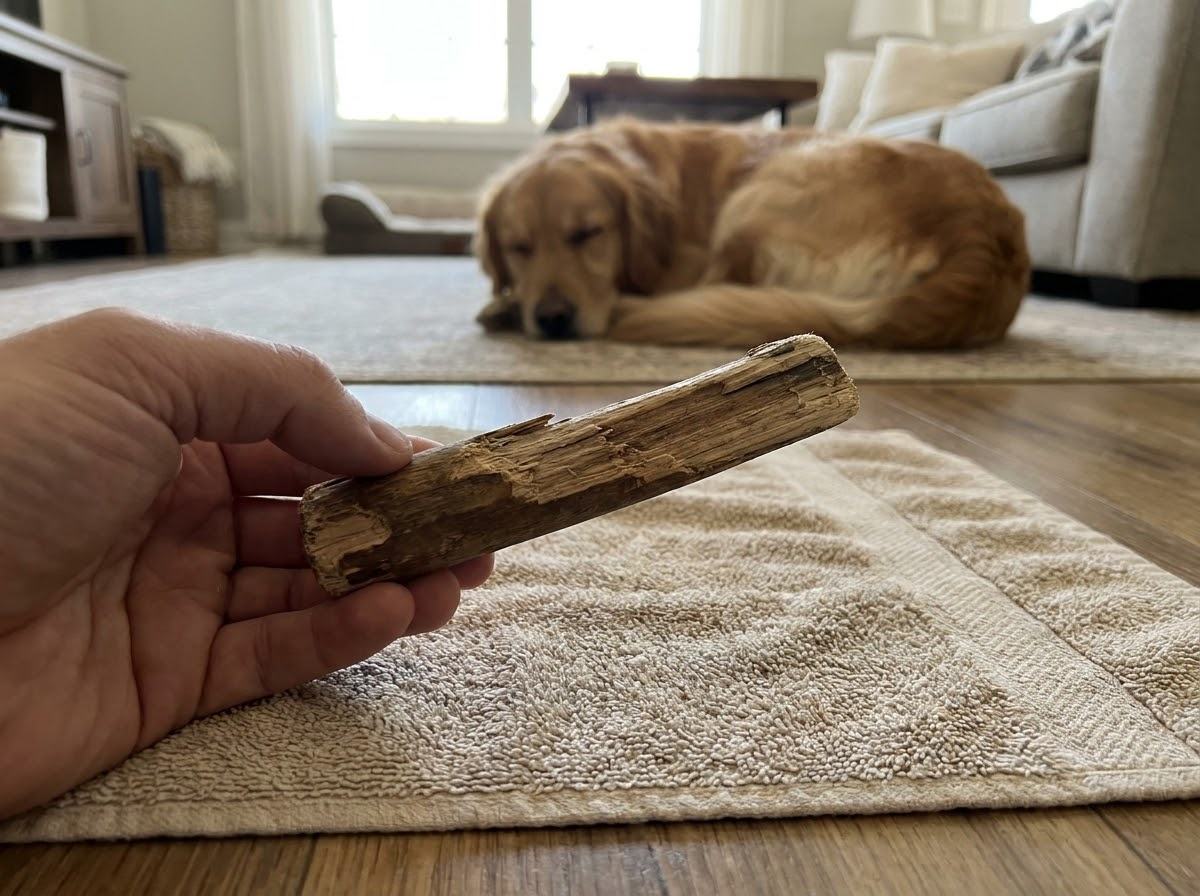
The end of a chew session is the best time to catch new wear before the next use.
Collect the chew and nearby pieces
Take the chew away and look around the play area for fragments. Compare the remaining stick with how it looked at the start of the session.
If a substantial piece is missing and you think the dog swallowed it, contact a veterinarian for case-specific advice. Do not assume wood fragments are harmless.
Inspect both ends
Gnawing often concentrates at the ends. Look for sharp points, new cracks and loose chunks that could detach next time.
Surface fraying can occur, but that does not excuse a deep split or a sharp edge. Retire a damaged piece rather than repairing it.
Reassess mouth fit
The chew may be shorter or thinner than it was at the start. Compare its current size with the dog's mouth before deciding to keep it.
If it could fit wholly inside the mouth, put it beyond the dog's reach. Do not save a swallowable stub for a shorter session.
Prepare for storage
If the wood is saliva-wet, let it dry in a ventilated, clean location. Avoid putting a damp chew into an airtight bag.
Inspect again before the next session, even if this post-use check found no problem. Storage can change the condition of a natural material.
Compare before and after
A useful after-use routine starts by remembering the condition at the beginning. If one end became much shorter, examine whether a piece detached and whether the dog may have swallowed it. If the surface merely became rougher, check for sharp projections and fresh splits before deciding on storage. The same visible wear can lead to different actions depending on whether the piece remains large enough and intact.
In a shared household, tell the next caregiver what changed instead of leaving the chew in a general toy basket. A note such as 'crack at one end, retired' is actionable; 'looks old' is not. Put a retired piece out of reach. If a piece remains usable, let it dry with airflow and repeat the full before-use check next time. The post-session inspection records a condition, not permanent clearance.
Account for the missing material
After chewing, compare the ends with their appearance before the session. Small surface changes and a missing chunk are not the same observation. Look on the floor and mat for pieces, especially if the dog chewed out of sight briefly. If a substantial fragment is unaccounted for, note its approximate size and shape from the remaining wood and contact a veterinarian if ingestion is possible. Do not assume that a natural material will pass without concern.
If several pets share the space, collect fragments before another animal enters. A piece left on the floor may be swallowed later by a different pet. This cleanup task is part of the post-use inspection, not merely housekeeping. It also helps you tell the next caregiver whether the original chew is intact, retired or awaiting professional advice. If the floor is textured or dark, use a light cloth or mat next time so fragments are easier to notice.
Record a usable decision
A simple note can say 'still full length, no crack, dried on open shelf' or 'new split on one end, removed.' It avoids vague labels such as 'old' or 'probably fine.' If the piece remains intact, store it dry with airflow, then perform the separate before-use check next time. A post-use pass is a record of one moment, not permission for indefinite use.
This guide differs from the before-use checklist because it asks what changed during a specific session and whether material is missing. For example, a chew may have looked fine at the start but now has a sharp edge. The immediate action is to retire it and make sure fragments are accounted for. The before-use routine cannot reconstruct that change unless someone recorded or inspected it when play ended.
Frequently asked questions
Why inspect after chewing if I watched the session?
Small cracks and edge changes may be easier to see once the chew is in your hand.
Should a wet chew go into a sealed bag?
Let it dry in a ventilated place before storage rather than trapping moisture.

Coffee Wood Chew Stick
Dense coffee wood chew made from branches collected during routine pruning in Vietnam's Central Highlands. Available in six sizes for supervised chewing.
Ask for current availability, packaging options, and a written quote.
Have Questions or Need a Wholesale Quote?
We export high-quality, pet-friendly coffee wood chews and natural toys worldwide.
Partner with us!
✨ Wholesale Pricing Available for Resellers & Business Partners!
We offer competitive wholesale prices and attractive deals for resellers and distributors.
💬 Feel free to message me directly to discuss pricing, partnership opportunities, and further details. Let's grow our businesses together! 🤝