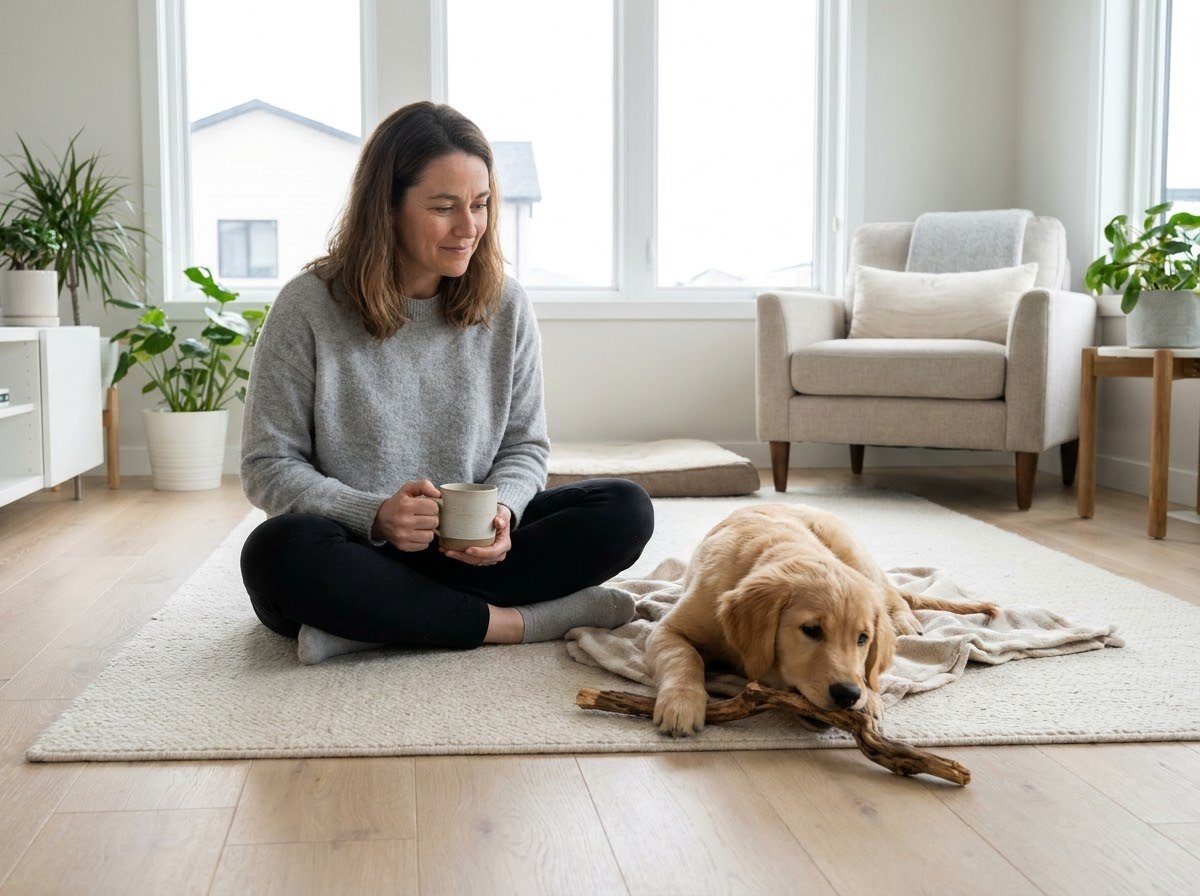
Treat the first session as an observation: check fit, watch how the dog chews, and inspect the wood again afterwards.
Key takeaways
- Inspect the wood and assess fit before offering it.
- Stay present and watch the dog's chewing style.
- Remove the chew if cracks, sharp edges or swallowable pieces appear.
Set up a calm observation
Choose a place where you can stay with the dog and see the toy clearly. Remove competing toys or food if they distract you from observing the first interaction.
Before offering the wood, check the surface and make sure the piece cannot fit wholly into the dog's mouth. Do not begin with a cracked or sharp piece.
Watch the chewing pattern
Notice whether the dog holds the chew and gnaws at the surface or tries to snap and swallow it. Surface wear can occur, but a large separated chunk changes the risk immediately.
Pause the session if the dog starts gulping material, coughing, struggling or biting in a way that breaks the wood. You can choose another toy rather than trying to make this one work.
Inspect after the session
Collect the chew and look at both ends, the grain and any loose fragments. A new crack or sharp edge is a reason to retire it before another use.
Let a damp chew dry in a ventilated place before storage. Avoid sealing saliva-wet wood in a container where moisture can remain trapped.
Decide whether to offer it again
The first session gives you information about this dog and this piece. If the dog gnawed gradually and the chew remains intact and appropriately sized, repeat the same checks next time.
If the dog chewed dangerously or showed discomfort, stop using it. Seek veterinary advice for oral pain or unexpected symptoms rather than assuming a toy caused or solved them.
A first-session decision record
Before starting, note the chew's size option and whether it has any surface defects. During the session, notice how the dog grips it, whether fine surface wear develops and whether any substantial piece separates. Afterward, look at the same areas again. These three snapshots make the next decision easier: continue with the intact piece, retire it, or switch activities because the dog is trying to break or swallow wood.
For a multi-dog home, try the first session with dogs separated so you can observe one animal without competition for the object. Do not interpret a quiet first minute as proof that guarding cannot occur later. Put the toy away after inspection, out of reach, and keep the session notes simple: fit, chewing style, visible damage and any sign of discomfort. A short factual record is more useful than a promised session duration.
Plan what you will watch
Set the chew on a clear surface and look at its condition before the dog takes it. During the first minutes, watch how the dog picks it up, whether it can place the whole piece in its mouth and whether it works at the surface or clamps to snap it. The value of a first session is not an arbitrary time goal. It is the chance to learn whether this dog interacts with this type of object in a manageable way under supervision.
Keep attention on the object rather than using the session as background entertainment. If a large fragment separates, stop and account for the pieces. If the dog seems distressed, also stop and seek appropriate advice. A quiet first encounter does not certify future sessions; wood wears and behavior can change when the dog becomes familiar with the toy.
Use the result to choose the next activity
After the session, place the chew on a table and compare it with its starting state. A smooth gradual change without a crack may support another supervised trial after storage and a fresh inspection. A deep split, sharp edge, missing chunk or swallowable size means retirement. If the dog repeatedly tries to break and gulp it, consider a different enrichment format instead of treating every new stick as another experiment.
Explain the decision to anyone else who cares for the dog. 'This is only for supervised use and must be checked at both ends' is clearer than 'the dog likes it.' If the dog has dental disease or a history of swallowing objects, ask a veterinarian before repeating hard chewing. The first-session record should guide a specific next action, not become a blanket statement that the product is safe.
Frequently asked questions
Can I leave a dog alone with its new coffee wood chew?
No. Supervise the first session and later sessions so you can remove a damaged or too-small piece.
What is the first sign to stop?
Stop if the dog tries to swallow pieces, the wood cracks, sharp edges appear or the dog shows distress.

Coffee Wood Chew Stick
Dense coffee wood chew made from branches collected during routine pruning in Vietnam's Central Highlands. Available in six sizes for supervised chewing.
Ask for current availability, packaging options, and a written quote.
Have Questions or Need a Wholesale Quote?
We export high-quality, pet-friendly coffee wood chews and natural toys worldwide.
Partner with us!
✨ Wholesale Pricing Available for Resellers & Business Partners!
We offer competitive wholesale prices and attractive deals for resellers and distributors.
💬 Feel free to message me directly to discuss pricing, partnership opportunities, and further details. Let's grow our businesses together! 🤝