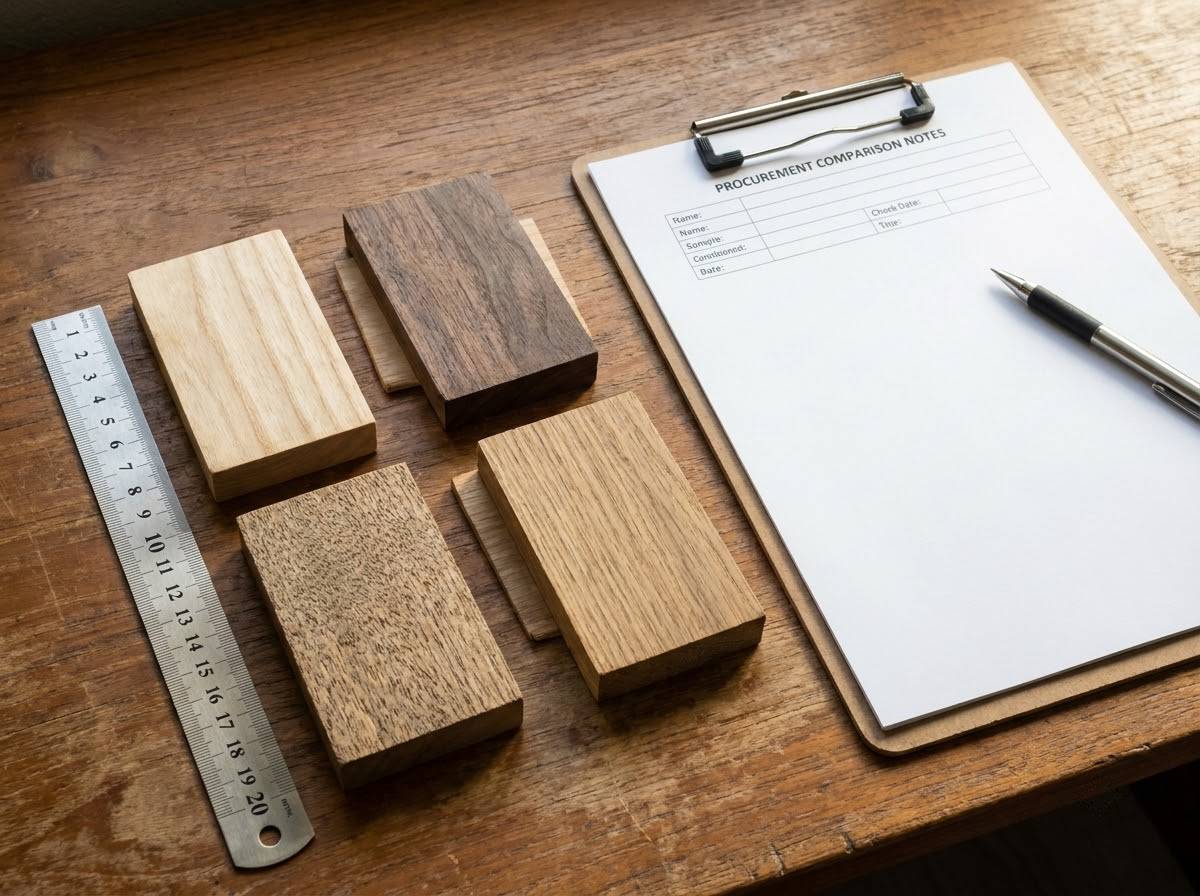
Use the six published size ranges to compare samples, then confirm current specifications before ordering.
Start with the catalog table
The current product listing shows six options: XS 12–13 cm long, S 13–15 cm, M 17–18 cm, L 18–20 cm, XL 21–22 cm, and XXL 23–24 cm. Each also has a diameter range.
These ranges are a useful first comparison, not a guarantee that every natural piece has identical dimensions. Record both length and diameter when evaluating a sample.
Compare physical samples
Place samples on a level surface and measure each with the same tool. Note how shape, ends, and natural variation affect the usable grip.
A ruler gives a length reading, while calipers can help with diameter. If measurement methods matter to a purchase agreement, specify where and how the supplier should measure.
Match the intended use
For a pet owner, the decisive question is whether the individual dog can safely hold the chew without swallowing it. Observe chewing style as well as apparent mouth fit.
For a wholesale buyer, identify which sizes your customers request and ask for the latest size tolerances. Do not infer breed or weight suitability from the letters XS through XXL alone.
Document the decision
A useful comparison sheet lists size name, measured sample dimensions, visible condition, and unanswered questions. Photograph the exact sample beside a metric scale if you need to discuss it remotely.
Before ordering, request current dimensions and availability in writing. The published retail price is only a reference; quantity, packaging, and shipping require a separate quote.
Build a sample measurement sheet
Create columns for size label, catalog length range, catalog diameter range, measured length, measured diameter, sample ID, and observation. For example, an XL sample should be compared with the listed 21–22 cm length and 4.5–5.4 cm diameter, rather than with an arbitrary breed category.
Measure at an agreed point and record whether a taper or irregular shape affects the reading. If several samples vary, keep each result instead of averaging away an outlier. The sheet can then support a precise question about the supplier's accepted tolerance.
Separate consumer and procurement decisions
A pet owner uses dimensions to avoid a swallowable piece and to choose a shape the dog can manage under supervision. A buyer ordering multiple units uses the same figures to write acceptance criteria and plan shelf or packaging space.
Neither use turns catalog ranges into a guarantee of fitness. When placing a commercial order, identify the edition of the specification used, ask for current lot information, and agree how deviations will be handled. This article owns the measurement task; dental suitability needs a different evaluation.
Define a measurement method
For a curved or tapered piece, 'diameter' may differ depending on where calipers touch it. Agree whether the buyer will record the center, the widest point, or several points. For length, record the end-to-end distance along a straight line and photograph the tool placement. Those details let the supplier reproduce the observation instead of debating a number without context.
Measure several samples if a purchase decision depends on variation. Keep each reading with its sample ID rather than reporting only an average. If a value appears outside the listed range, ask whether the current specification has changed and whether the sample is representative. The catalog provides a starting range; a buyer and supplier should agree on actual acceptance criteria in writing.
Use the six ranges honestly
The current listing gives XS at 12–13 cm by 1.5–2.0 cm, S at 13–15 by 2.0–2.8, and M at 17–18 by 2.8–3.2. The larger options are L at 18–20 by 3.3–4.4, XL at 21–22 by 4.5–5.4, and XXL at 23–24 by 5.5–6.5. The first dimension is length and the second diameter.
Writing both dimensions prevents a comparison that treats a long, narrow chew as equivalent to a shorter, thicker one. It also helps a retailer plan packaging without promising fit for a dog by weight. For an individual pet, return to supervised observation and the rule to remove a piece that can be swallowed.
Frequently asked questions
How many coffee wood chew sizes are listed?
The current product listing has six sizes, from XS to XXL.
Do catalog ranges guarantee exact dimensions?
Treat them as listed ranges and confirm current specifications for a specific order.

Coffee Wood Chew Stick
Dense coffee wood chew made from branches collected during routine pruning in Vietnam's Central Highlands. Available in six sizes for supervised chewing.
Ask for current availability, packaging options, and a written quote.
Have Questions or Need a Wholesale Quote?
We export high-quality, pet-friendly coffee wood chews and natural toys worldwide.
Partner with us!
✨ Wholesale Pricing Available for Resellers & Business Partners!
We offer competitive wholesale prices and attractive deals for resellers and distributors.
💬 Feel free to message me directly to discuss pricing, partnership opportunities, and further details. Let's grow our businesses together! 🤝