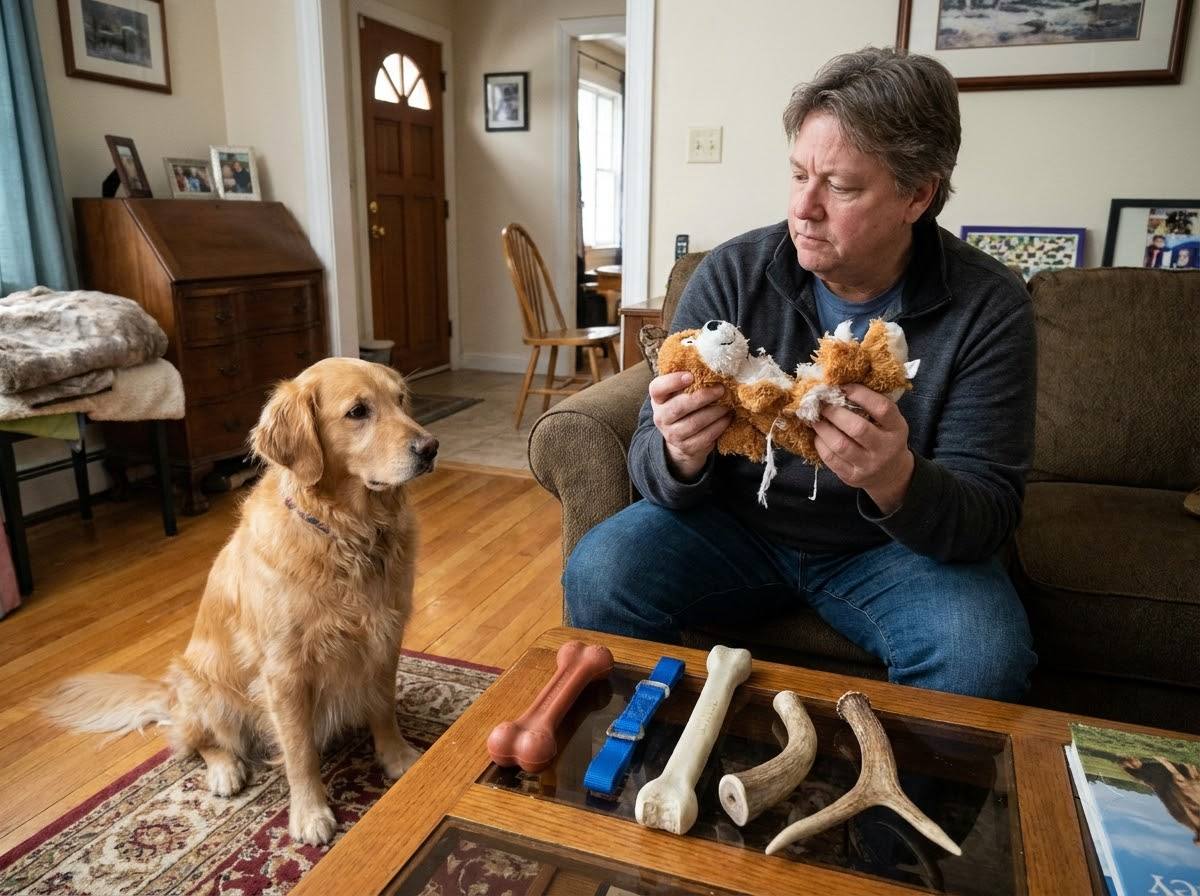
A dog that breaks or swallows toy pieces needs a more cautious chew choice and close observation.
Recognize the chewing pattern
Some dogs scrape a surface slowly, while others clamp, break, and attempt to swallow pieces. The latter pattern changes the risk of any chew, including coffee wood.
Observe with a toy the dog already knows before offering a new one. Note whether the dog pauses to gnaw or tries to separate large pieces.
Decide if wood is appropriate
The product catalog lists six sizes, but a size label cannot establish safety for an individual dog. A piece that can enter the back of the mouth or be swallowed should not be offered.
If the dog repeatedly fractures hard objects or gulps fragments, stop the session. Ask a veterinarian about safer options for that dog's teeth and swallowing behavior.
Supervise the first minutes
Stay close and examine how the dog holds the chew. If an end cracks or a chunk separates, exchange the toy for another activity and remove the piece.
Do not assume small fibers are safe to eat. The product is a toy, not food, and intentional swallowing deserves a different response from ordinary surface wear.
Record a useful decision
A simple note about toy type, size, damage, and behavior is more useful than a breed rule. It can help you explain the pattern to a veterinarian or qualified trainer.
A different texture or interactive activity may suit the dog better. Revisit the decision if dental health or chewing behavior changes.
An observation example
Suppose a dog takes a wood chew, bites sharply across one end, and immediately tries to pick up the separated piece. That is different from a dog gradually rubbing its teeth along the surface. The owner should interrupt, remove both the chew and fragment, and avoid another trial with the same damaged item.
The owner can record the original size, what broke, and whether any material was swallowed. If ingestion is suspected or the dog shows distress, a veterinarian can advise the next step. Trying a larger stick without addressing the same gulping behavior would leave the central problem unresolved.
Questions for a veterinarian
Describe whether gulping happens with food, edible chews, or non-food toys; what sizes and textures have been tried; and whether the dog has tooth problems. Bring a photograph of the damaged item if available. These details make the discussion more specific than saying the dog is a strong chewer.
Ask which forms of enrichment can be supervised safely while the pattern is assessed. Do not assume the veterinary answer will be another wood size. Some dogs need a different activity rather than a harder object.
Describe the piece, not just the dog
A useful incident record says whether the separated material was a fine surface fiber, a visible chunk, or a sharp splinter. It notes whether the piece was recovered and whether ingestion was seen or merely suspected. This distinction helps a veterinarian assess what happened. Do not guess a quantity or declare an unseen fragment harmless because it came from a natural material.
If the dog coughs, retches, seems painful, refuses food, or behaves unusually after a suspected ingestion, contact a veterinarian promptly. Keep the damaged toy and any recovered pieces for reference. Even if the dog appears normal, a history of swallowing toy parts is a reason to reconsider chew choices with professional guidance before repeating the experiment.
Choose a safer next activity
A dog that repeatedly attempts to swallow broken objects may need supervised activities that do not invite the same sequence of breaking and gulping. Discuss alternatives with a veterinarian, particularly if the behavior occurs with several toy types. The choice might involve a different material, an interactive game, or a change to the environment rather than a bigger coffee wood chew.
When comparing alternatives, observe the same points: how the dog grips the object, whether pieces separate, and whether it can be inspected during use. Record the outcome instead of seeking a blanket label such as 'safe for power chewers.' That phrase cannot account for an individual animal that swallows material.
Frequently asked questions
Is coffee wood safe for a dog that swallows toy pieces?
Do not continue a chew session when the dog breaks off or gulps pieces; ask a veterinarian for individual guidance.
Will a larger stick solve gulping?
Size matters, but it does not correct a habit of breaking and swallowing parts.

Coffee Wood Chew Stick
Dense coffee wood chew made from branches collected during routine pruning in Vietnam's Central Highlands. Available in six sizes for supervised chewing.
Ask for current availability, packaging options, and a written quote.
Have Questions or Need a Wholesale Quote?
We export high-quality, pet-friendly coffee wood chews and natural toys worldwide.
Partner with us!
✨ Wholesale Pricing Available for Resellers & Business Partners!
We offer competitive wholesale prices and attractive deals for resellers and distributors.
💬 Feel free to message me directly to discuss pricing, partnership opportunities, and further details. Let's grow our businesses together! 🤝