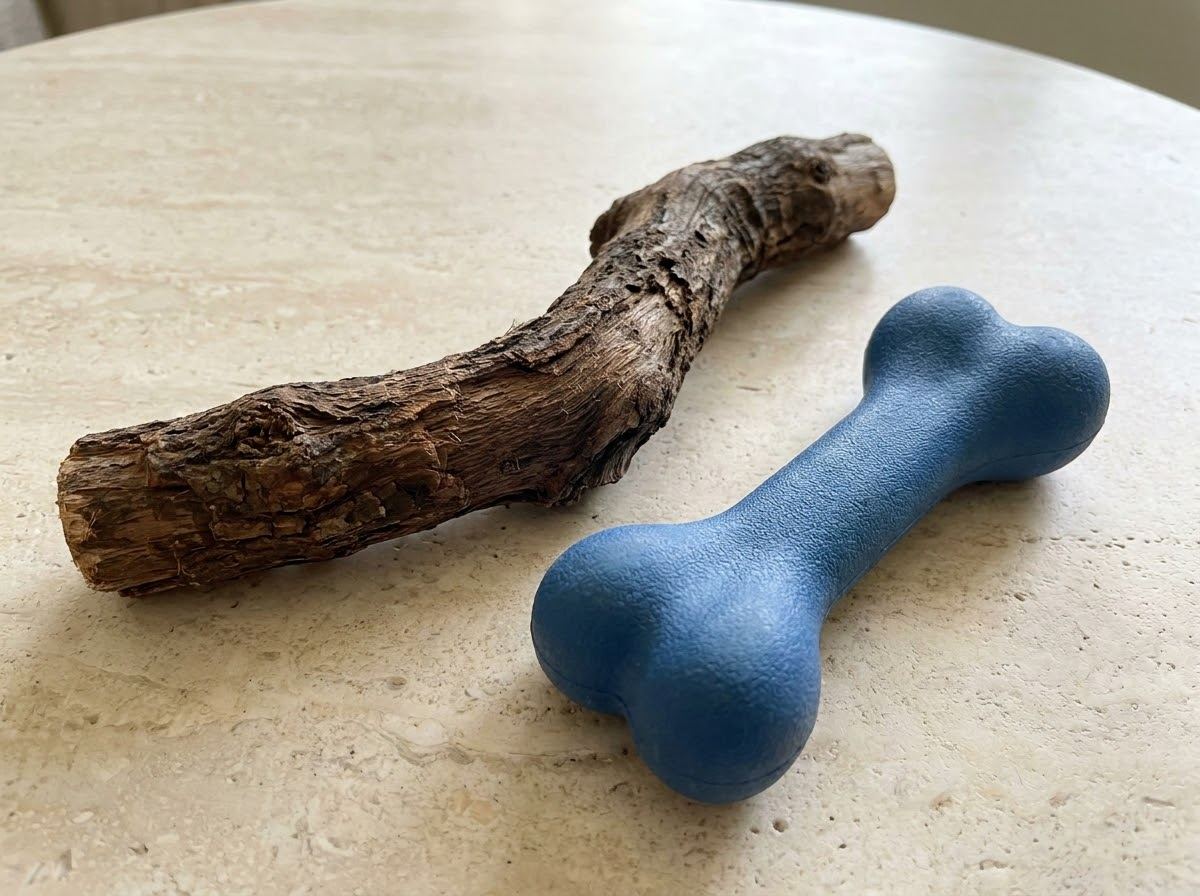
A wood chew and a rubber toy offer different textures. The right choice starts with the dog's mouth, chewing style and intended activity.
Different textures and uses
Coffee wood is a dense branch-wood stick for supervised gnawing. Rubber toys vary widely in flexibility, shape and intended play use.
Read the specific rubber product's instructions before comparing it with wood. A hollow food toy, a ball and a solid rubber chew do not serve exactly the same job.
Observe the dog's preference
Some dogs work at a firm surface; others engage more readily with a flexible or moving toy. Preference is useful information but does not replace safety checks.
Watch whether the dog chews gradually, tears off chunks or tries to gulp the toy. Stop an activity when its wear or handling becomes risky.
Inspect each material differently
For wood, look for a deep crack, sharp edge, loose piece or a remaining size the dog could swallow. The listed coffee wood size only describes the new product range.
For rubber, follow the maker's care guidance and look for tears, missing pieces or material changes. Do not assume flexibility makes a damaged toy suitable.
Account for dental advice
A veterinarian may recommend a different texture for a dog with tooth pain or recent dental treatment. Ask with the actual products in mind.
If wood is suitable, supervise its use. If not, choose a veterinarian-approved alternative; no material category is a universal dental solution.
Match the toy to a specific activity
Suppose a dog enjoys carrying a flexible toy during fetch but settles down to gnaw a firm object while a person watches. A rubber ball may serve the first activity while a properly sized wood chew might be evaluated for the second. Comparing those as if they perform the same task obscures the decision. Name the activity first, then compare the actual dimensions, construction and care instructions of suitable products for that activity.
For a dog with a recent dental procedure, the activity question changes. Even if it previously enjoyed wood, the treating veterinarian may restrict hard chewing and may or may not approve a particular rubber toy. Bring the product details to the discussion. If the dog tears a rubber toy or cracks wood, remove the damaged object promptly. The better option is the one that fits the current dog and can be monitored, rather than the one with the more appealing material label.
Separate a chew from a game toy
A solid rubber ball used for fetch should be compared with other fetch toys before it is compared with a wood stick intended for gnawing. If the question is which toy will occupy a dog during a supervised quiet period, choose an appropriate rubber chew model for that comparison. Naming the activity narrows the decision and avoids calling the wood inferior because it does not bounce or calling rubber inferior because it lacks wood grain.
For each toy, check the maker's use instructions, dimensions and expected wear. The coffee wood listing advises inspection and retirement for cracks, sharp edges and swallowable size. A rubber product may have different cleaning and retirement instructions. Follow those rather than applying a wood checklist unchanged. In either case, collect detached pieces and stop when the dog's interaction creates a concern.
Use the dog's response as evidence with limits
Suppose a dog calmly gnaws a wood chew but immediately tears a soft rubber toy into pieces. That observation may favor the wood for this dog's supervised chewing, assuming the wood also passes fit and dental checks. Another dog may ignore wood and engage with an intact rubber toy. Those are useful household observations, not proof that a material is always preferable. A change in age, tooth condition or chewing style may change the answer later.
If a veterinarian advises against hard objects after treatment, do not claim that any rubber alternative is automatically approved. Describe the exact toy and ask whether its firmness and intended activity fit the recovery plan. Keep the decision record practical: material, product, use, observed damage and professional restrictions. This is more honest than a winner badge or a broad claim of dental safety for either category.
Frequently asked questions
Is a rubber toy always softer than coffee wood?
Rubber products vary. Compare the particular toy and ask a veterinarian about dental suitability.
Can I leave either toy unsupervised?
Follow the specific product instructions and monitor wear; this coffee wood chew is intended for supervised use.

Coffee Wood Chew Stick
Dense coffee wood chew made from branches collected during routine pruning in Vietnam's Central Highlands. Available in six sizes for supervised chewing.
Ask for current availability, packaging options, and a written quote.
Have Questions or Need a Wholesale Quote?
We export high-quality, pet-friendly coffee wood chews and natural toys worldwide.
Partner with us!
✨ Wholesale Pricing Available for Resellers & Business Partners!
We offer competitive wholesale prices and attractive deals for resellers and distributors.
💬 Feel free to message me directly to discuss pricing, partnership opportunities, and further details. Let's grow our businesses together! 🤝