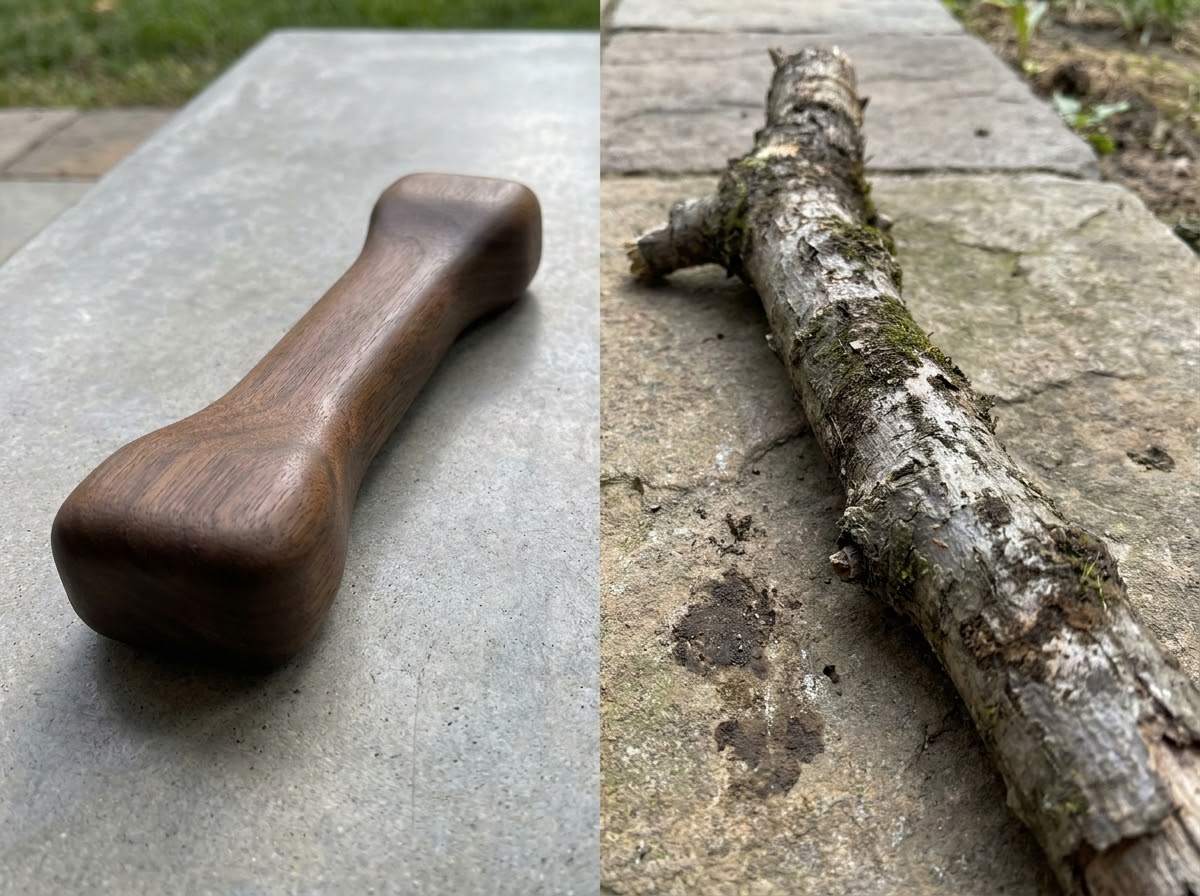
A named product gives you material and size information. A found stick may have an unknown origin and condition.
What you can identify
The Eco Pet Toys catalog identifies pruned coffee-tree branch wood and publishes six size ranges for its chew. That makes it possible to ask about a known product and compare dimensions.
An outdoor stick can be from an unidentified plant and may have an unknown history. Avoid assuming that a similar appearance means the same material or processing.
What you can inspect
Any wood offered to a dog needs a surface and mouth-fit check. Look for cracks, sharp edges and loose pieces before supervised use.
A found stick can also carry dirt, visible decay or other contamination from its surroundings. Its size and surface may change after weather exposure.
What the catalog does not prove
A cataloged chew still is not guaranteed safe for every dog. The listing does not provide a current test report or an individual dental assessment.
Do not convert product traceability into a promise that wood cannot splinter or cause harm. Supervise and retire the chew when damage develops.
Choose the activity deliberately
If considering a wood chew, select an identified, appropriately sized product and observe how the dog uses it. If the dog breaks or gulps wood, select another enrichment format.
Ask a veterinarian about hard chewing when the dog has dental issues. A found outdoor stick is not a substitute for that suitability decision.
A side-by-side buyer exercise
Place a cataloged chew and a found branch separately on a table. For the cataloged piece, you can identify the stated coffee wood material and compare it with published size ranges, then inspect its actual surface. For the found branch, the species, environmental exposure and history may all be uncertain. This exercise does not certify the purchased product, but it shows what information is available for a more informed choice.
Do not offer the found stick merely because the dog picked it up outdoors or because it resembles a product photo. If the dog has already been chewing an unknown branch, remove it if it is damaged or swallowable and monitor for symptoms; ask a veterinarian if there is concern about ingestion. For future play, choose an activity whose material and care instructions you can identify and follow. Supervision remains necessary even with a labeled toy.
Unknown origin is a real information gap
A stick found in a park may have an uncertain plant species, weather exposure and surface contamination. You may not know whether it has brittle sections or hidden damage. The product listing for the coffee wood chew at least identifies a stated material, origin and size range. That difference is informational; it does not turn the purchased piece into a risk-free object. Both need physical inspection, and the purchased chew still requires close supervision.
If a dog picks up a found stick, trading it for another activity can avoid turning an unknown object into a prolonged chew session. Do not assume every outdoor branch is poisonous or that every cataloged stick is harmless. The useful decision is whether you can identify and inspect the material well enough for the intended supervised activity. If the dog has swallowed material from an unknown stick, give the veterinarian what facts you have rather than guessing at its species.
Ask better questions about a purchased chew
A retailer can request current sourcing and processing records for the coffee wood product, plus a sample to inspect. A product name and catalog description establish a starting point, not independent verification of every safety or environmental claim. If a supplier cannot document a claim, omit it from customer-facing copy. Pet owners can focus on the available size ranges, visible condition and supervised use guidance while asking for any additional information they need.
When comparing objects side by side, do not use color alone as a quality test. Grain, dimensions, cracks and sharp edges provide more actionable observations than a darker or lighter surface. Check the actual wood again after chewing, because even a known product changes. The comparison is about knowledge and control over the object, not a claim that one source of wood can never cause injury.
Frequently asked questions
Is a cataloged coffee wood chew risk-free?
No. It still requires fit assessment, supervision and frequent inspection.
Can I identify a safe stick by appearance alone?
Appearance alone cannot establish a found stick's plant identity, condition or suitability.

Coffee Wood Chew Stick
Dense coffee wood chew made from branches collected during routine pruning in Vietnam's Central Highlands. Available in six sizes for supervised chewing.
Ask for current availability, packaging options, and a written quote.
Have Questions or Need a Wholesale Quote?
We export high-quality, pet-friendly coffee wood chews and natural toys worldwide.
Partner with us!
✨ Wholesale Pricing Available for Resellers & Business Partners!
We offer competitive wholesale prices and attractive deals for resellers and distributors.
💬 Feel free to message me directly to discuss pricing, partnership opportunities, and further details. Let's grow our businesses together! 🤝