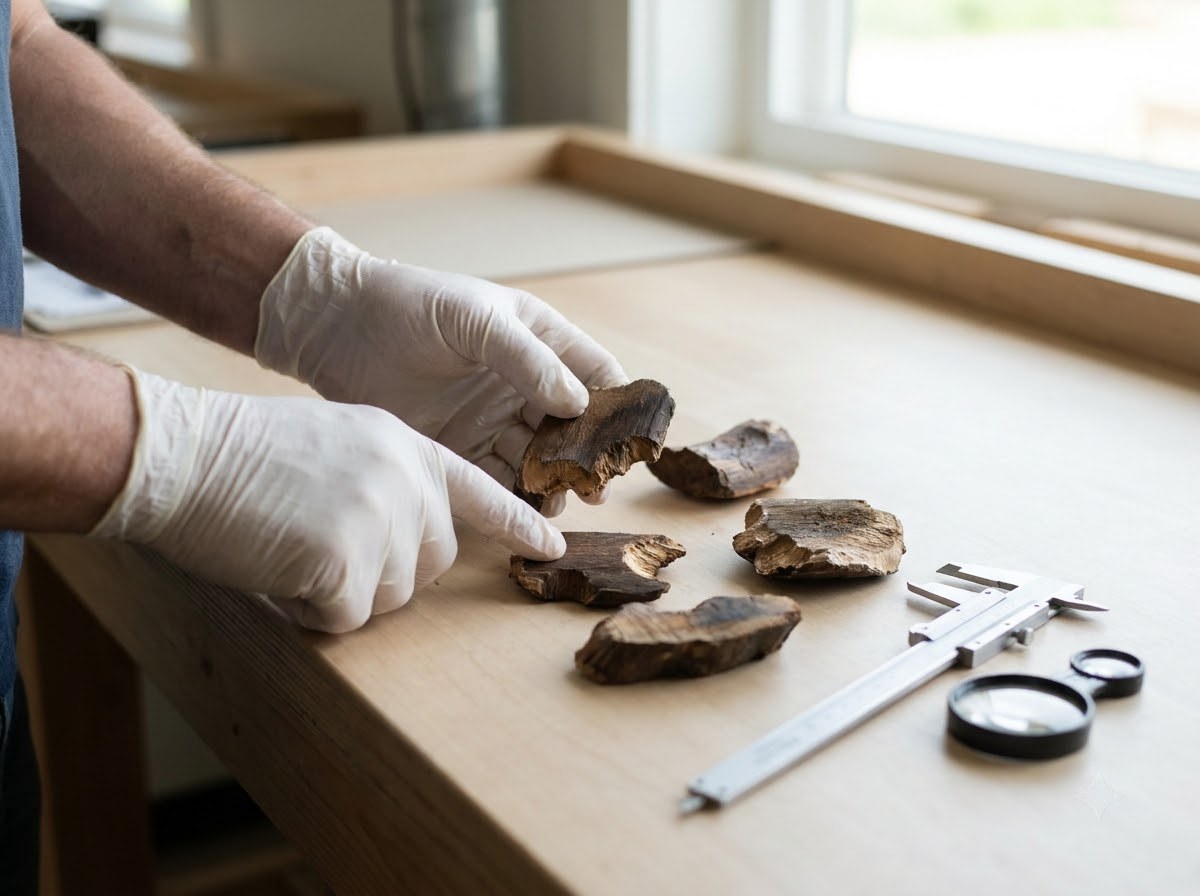
Evaluate sample dimensions, condition, variation, and documentation with a repeatable written checklist.
Identify each sample
Assign a simple ID to each piece and record its stated catalog size. Keep its packaging and any accompanying specification sheet with the record.
This prevents a discussion about one sample from being mistaken for a conclusion about every future lot. Photograph the piece beside a metric ruler.
Measure and inspect
Record length and diameter, then compare them with the published range for that size. Look along the full surface and both ends for cracks, sharp edges, or loose material.
Natural wood can vary. Describe what you see rather than declaring every difference a defect; ask the supplier which variation is expected and which requires rejection.
Check the information supplied
Confirm that the stated material and origin match the product description. Ask for current processing, testing, and labeling information when relevant to your intended market.
Do not fill gaps with assumptions about heat treatment, certifications, or moisture. Mark those points as unanswered until a current document supports them.
Make a decision with limits
Group findings as acceptable, needs clarification, or unsuitable for your intended use. Include the date and reviewer so the evaluation can be repeated.
If a sample will be used by a dog, choose an individual fit and supervise the session. Product evaluation cannot remove the need for ordinary safety checks.
Run the checklist on one piece
Take one labeled sample and write its ID before removing the packaging. Photograph the whole item, measure its longest dimension and selected diameter points, and record where each reading was taken. Inspect both ends in bright light and note any visible split or rough area.
Then compare your notes with the supplier's current specification, not only a website image. If a feature is unclear, describe it precisely in a question: 'Is this side split acceptable for this size?' A repeatable observation is more useful than an unsupported verdict that the wood is perfectly safe.
Keep outcomes separate
Mark dimension, surface condition, documentation, and packaging as separate fields. A sample may meet a listed length range while the paperwork remains incomplete. Another may look visually sound but differ from the agreed diameter range.
Assign each field one of three statuses: observed as expected, clarification required, or unsuitable for the intended purchase. Save the dated photographs and supplier responses. This protects the decision from being reduced to a single subjective thumbs-up.
Use a consistent inspection light
Examine samples under bright, even light on a clear surface. Rotate each piece and inspect the ends and side grain. Note the location of any crack or sharp projection, not just whether the item 'looks good.' A close photograph with a scale can help the supplier identify the same feature without relying on a vague description.
If two reviewers inspect the same sample, ask them to record observations separately before comparing. A simple checklist reduces the chance that one person's favorable overall impression hides a specific concern. It does not turn the check into a laboratory test or prove how the item will perform in use.
Decide what to ask the supplier
A missing specification should produce a document request. A size outside the stated range should produce a measurement question. A surface crack should produce a question about acceptance criteria or a decision to reject the sample. Keep these pathways distinct so the supplier can answer each issue directly.
Record the final disposition for every sample ID and preserve the photographs. If the sample will be shown to a dog, supervise that separate use and retire the item if damage appears. A procurement inspection and an animal-use observation are two different checks, even when they involve the same piece of wood.
A reviewer can finish the sheet by writing one next action for every unresolved field: remeasure, ask for a specification, request another sample, or decline the item. Avoid a vague overall grade when the dimension and surface results differ. The dated action list lets another buyer pick up the evaluation without repeating work or assuming that silence meant approval.
Frequently asked questions
What should I photograph?
Capture the full sample, both ends, any damage, and a metric scale.
Does one sample approve an entire order?
No. Agree on current specifications and shipment inspection separately.

Coffee Wood Chew Stick
Dense coffee wood chew made from branches collected during routine pruning in Vietnam's Central Highlands. Available in six sizes for supervised chewing.
Ask for current availability, packaging options, and a written quote.
Have Questions or Need a Wholesale Quote?
We export high-quality, pet-friendly coffee wood chews and natural toys worldwide.
Partner with us!
✨ Wholesale Pricing Available for Resellers & Business Partners!
We offer competitive wholesale prices and attractive deals for resellers and distributors.
💬 Feel free to message me directly to discuss pricing, partnership opportunities, and further details. Let's grow our businesses together! 🤝