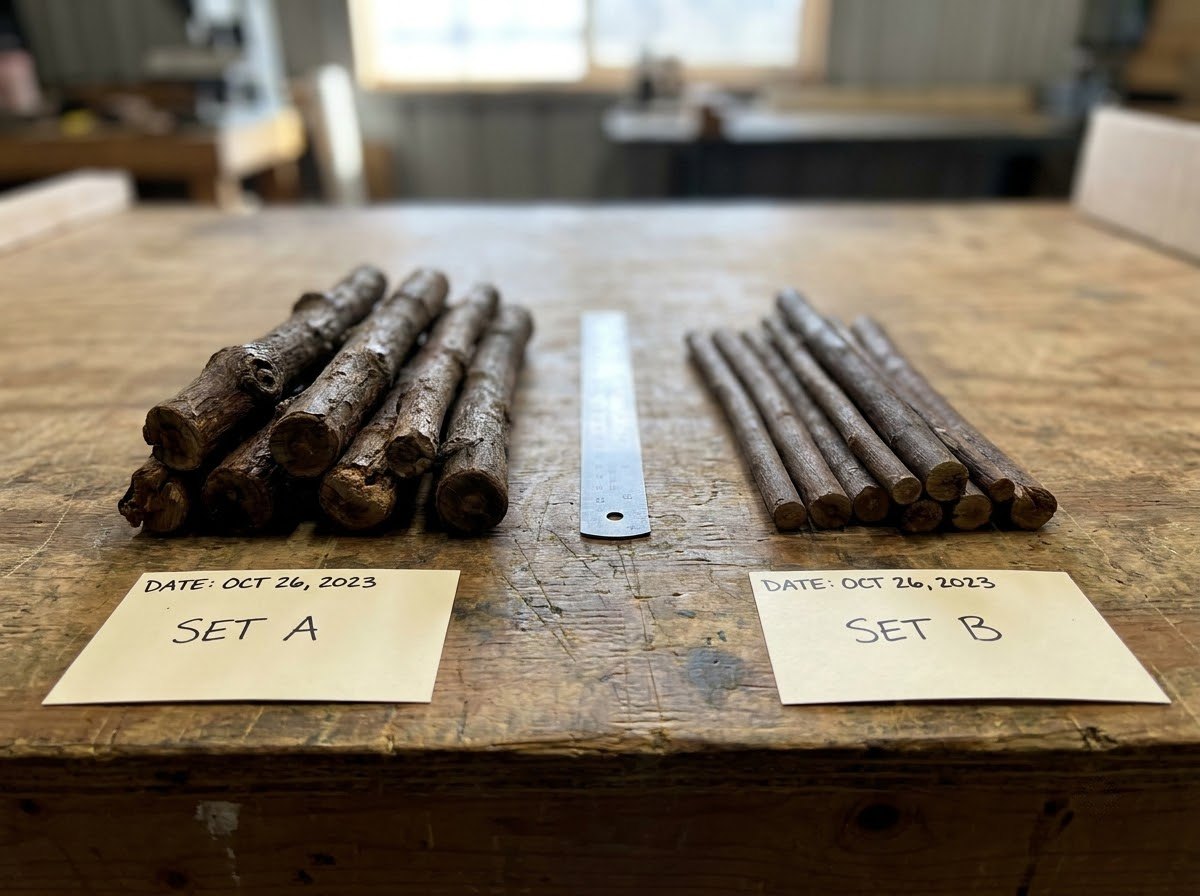
Compare dated samples against the same documented criteria so natural variation is not confused with a confirmed specification change.
Define the comparison question
Decide whether you are checking size, visible finish, surface condition, packaging, or another specific attribute. Comparing two samples without a stated question often produces subjective notes that are difficult to act on.
Use the current catalog dimensions as a starting reference. Ask the supplier for the measuring method and any approved purchase specification before calling a naturally varied sample out of tolerance.
Keep the setup consistent
Photograph each sample under similar light with a ruler and size label. Record the date, supplier reference, and any lot information actually provided; do not invent a lot code for an unmarked sample.
Measure the same points on every piece. Note curvature, taper, cracks, sharp edges, or loose material as observations. A single visually different piece does not by itself establish a quality trend.
Separate observation from conclusion
Write 'the end is visibly cracked' rather than 'the batch is unsafe.' The former can be checked by another reviewer; the latter requires a wider assessment and may have serious implications.
If a concern appears, quarantine the sample from use and ask the supplier for current evidence or corrective information. A buyer may choose an acceptance criterion, but should record it in a written agreement.
Use the record for future orders
A dated approved sample and a consistent comparison form make later conversations more precise. Record who accepted the sample and whether the decision applies to appearance, size, packaging, or all three.
The record does not replace independent testing where testing is needed. It simply shows what was inspected, what was observed, and what remained unknown when the purchase decision was made.
Example: an apparent mismatch
Two dated samples may differ in color or contour while still falling within agreed dimensions. Record both observations without calling either item defective. If one has a crack, set that sample aside and document it separately from ordinary appearance variation.
A comparison log becomes useful when it includes photographs, measurement points, who reviewed each piece, and which question remained open. A single attractive sample is not evidence that every future lot has been tested.
A side-by-side sample sheet
Prepare two columns headed by the sample's actual identifying information. Under each, record length and diameter using the same method, visible contour, end condition, surface cracks, packaging, and any label. Leave a field for 'not supplied' so a missing lot identifier does not become an invented one in the notes.
Photograph the samples together for context and separately for detail. Use the same ruler, background, and lighting where practical. A warmer photograph can make one piece look darker; a different camera angle can make a curved piece look shorter. Repeat the observation before escalating an apparent difference.
The reviewer should mark each item as within an agreed criterion, outside it, or not assessable from the information available. Do not collapse a cosmetic preference, a dimensional difference, and a visible crack into one overall score. They lead to different decisions and may require different supplier responses.
After the comparison, send only the unresolved points to the supplier with the corresponding photographs. Ask whether any current specification or process changed between the samples. Archive the answer beside the comparison sheet. If the buyer needs testing or regulatory documents, request those separately; the side-by-side sheet is a visual record, not a laboratory report.
A sample sheet is most helpful when it ends with an explicit next action. One row may need a measurement clarification, another a replacement sample, and another no action because the variation is allowed. Name the person who will ask each question and the date of the supplier response. Without these fields, a detailed visual log can still leave the purchase decision unresolved. Revisit the sheet when a new lot arrives so the same question is not lost.
Frequently asked questions
Can two coffee wood chew samples look different?
Yes. Natural branch products may vary in contour, so compare them against documented dimensions and agreed condition criteria.

Coffee Wood Chew Stick
Dense coffee wood chew made from branches collected during routine pruning in Vietnam's Central Highlands. Available in six sizes for supervised chewing.
Ask for current availability, packaging options, and a written quote.
Have Questions or Need a Wholesale Quote?
We export high-quality, pet-friendly coffee wood chews and natural toys worldwide.
Partner with us!
✨ Wholesale Pricing Available for Resellers & Business Partners!
We offer competitive wholesale prices and attractive deals for resellers and distributors.
💬 Feel free to message me directly to discuss pricing, partnership opportunities, and further details. Let's grow our businesses together! 🤝