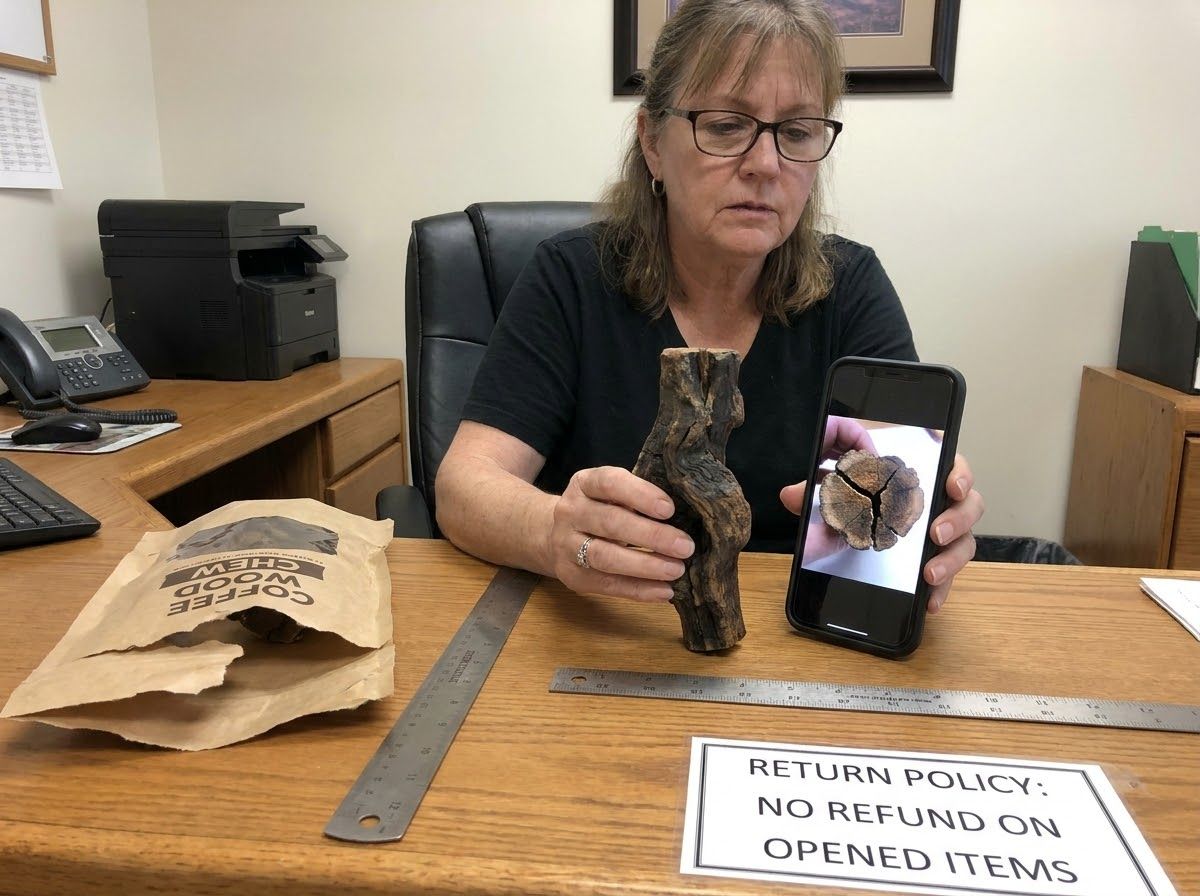
A retailer can handle a return question more consistently by recording the order, product condition, and customer concern before deciding the next step.
Identify the purchase
Ask for an order reference, purchase date, seller, and the size name shown on the item or packaging. The Eco Pet Toys catalog lists XS through XXL coffee wood chews; a customer's memory of 'medium' may not match the actual item received.
Record whether the purchase was a retail inquiry fulfilled directly or an order from another retailer. The seller of record and the current returns policy determine who can make a commercial decision. Do not promise a refund before checking those details.
Describe the condition
Ask the customer to explain why the chew is being returned: wrong size, unopened item, visible damage on arrival, or damage after use. These are different questions and need different evidence.
For a condition concern, request photographs of the complete chew, both ends, packaging, and any affected area with a ruler for scale. If a crack or sharp edge is present, tell the customer to stop using the item while it is assessed.
Separate service from health advice
If the customer reports that a dog swallowed a fragment, hurt a tooth, or has symptoms, recommend prompt contact with a qualified veterinarian. A return conversation cannot establish whether the animal is medically well.
Do not say that natural wood is harmless to swallow or that all surface wear is safe. Preserve the customer's account in their own words, then pass product condition details to the responsible quality reviewer.
Explain the next step
Tell the customer which current policy will be checked, what information is still needed, and who will respond. If the item is a retail purchase from a separate store, direct the customer to that seller while still recording a product quality concern for internal review.
When the decision is made, document the reason and the version of the policy used. If several buyers misunderstand the same size label or care instruction, use that evidence to improve the listing rather than treating each contact as an isolated case.
Example: a wrong-size request
A customer says the chew looked larger online than it does in hand. Record the size shown on the package and compare the physical item with the catalog's length and diameter ranges. Keep a photograph with a ruler so the seller can check the concern.
If the dimensions match, the listing image or size explanation may still need work. If they do not, route the case for product review and apply the seller's actual return policy; do not infer the outcome from the customer's first description.
A return inquiry decision path
Begin by sorting the reason into a small number of categories: ordered the wrong size, received the wrong item, arrived visibly damaged, or changed condition during use. This is a service triage tool, not a verdict. Ask one question at a time so the customer can provide a reliable account without feeling that they must prove a technical cause.
For a size concern, compare the actual item and its label with the order record and published size range. For arrival damage, ask the customer to keep the package and photograph the item before further handling. For damage after use, ask when it was first noticed and how the item was used. Avoid saying that a crack was caused by the dog or by manufacturing until a reviewer examines evidence.
A customer may also report a health concern. In that case, the immediate message should focus on the animal: remove the chew and contact a qualified veterinarian for symptoms, suspected ingestion, or injury. The retailer can separately process the order or return question. Commercial service staff should not interpret clinical signs or promise that a swallowed fragment is safe.
Close with a written summary of the facts supplied, the current policy that applies, and the next owner of the case. If the seller is another store, distinguish its return decision from the manufacturer's product review. This distinction lets a buyer receive a clear service answer while still giving the product team the information needed to investigate a possible recurring problem.
A clear closing message should distinguish what the retailer knows from what it is still checking. It can acknowledge the reported condition, confirm that the item should remain out of use if damaged, list the information received, and explain who will review the case. It should not guess the cause, promise a refund outside policy, or interpret a dog's symptoms from a written description.
Frequently asked questions
What should I send with a coffee wood chew return inquiry?
Provide the order reference, size, reason for the request, and clear photographs of the item and packaging if condition is the concern. Stop using a damaged chew.

Coffee Wood Chew Stick
Dense coffee wood chew made from branches collected during routine pruning in Vietnam's Central Highlands. Available in six sizes for supervised chewing.
Ask for current availability, packaging options, and a written quote.
Have Questions or Need a Wholesale Quote?
We export high-quality, pet-friendly coffee wood chews and natural toys worldwide.
Partner with us!
✨ Wholesale Pricing Available for Resellers & Business Partners!
We offer competitive wholesale prices and attractive deals for resellers and distributors.
💬 Feel free to message me directly to discuss pricing, partnership opportunities, and further details. Let's grow our businesses together! 🤝