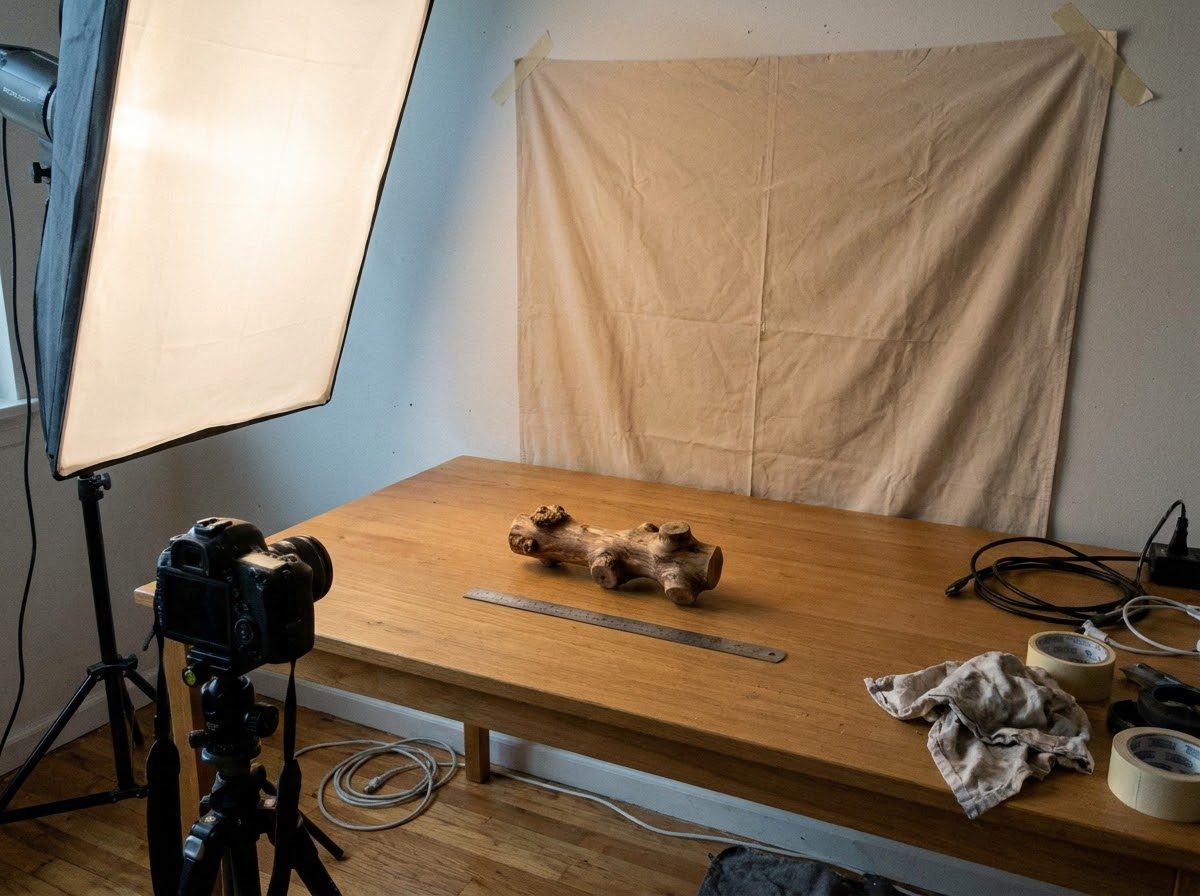
Show real scale, surface condition, and size differences while keeping lifestyle images honest about supervision and product variation.
Show the object clearly
Start with a clean photograph of a representative coffee wood chew from multiple sides. Use neutral light so the shape, ends, and surface are easy to inspect. Avoid retouching away ordinary natural variation that a buyer should expect.
Include a ruler in at least one specification image. The catalog lists six sizes, so a size lineup can help viewers understand the range, but the actual dimensions still belong in accessible text near the image.
Photograph the decision points
An end view and side view help shoppers distinguish diameter from length. For a natural branch product, show what the published size range means without promising that every piece will have exactly the same contour.
A close-up of acceptable surface condition can support care guidance. If showing a damaged example, label it clearly as a replacement signal and avoid making an unsafe-looking chew appear ready for play.
Use honest lifestyle scenes
Show a dog with a person supervising nearby. Avoid images of a dog left alone with a hard chew or a small piece placed deep in the mouth, since those pictures conflict with written use guidance.
Do not imply that an image proves a health effect or a vet endorsement. A veterinarian in a photograph should only be used with real context and permission, and never as a shortcut for an unsupported clinical claim.
Prepare files for the web
Give each image a descriptive filename and alt text that describes what is visible. The file should load quickly and the crop should preserve the part of the product that helps the reader decide.
Use a consistent reference image when a listing says XS through XXL. If the sample changes, replace the photograph and update its date rather than making old imagery silently stand in for a new product specification.
Example: image sequence
A practical gallery could begin with the full chew on a neutral background, then show an end view, a ruler image, and a lineup of six sizes. A supervised lifestyle image can follow once the buyer has seen the object itself.
If the gallery shows a sample with a pronounced curve, say that natural shapes vary rather than implying every piece has the same contour. Keep the actual size data in text so a cropped mobile photograph does not hide it.
A shot list tied to buyer questions
Write down the question each image should answer before arranging a camera. The hero image should answer 'what does the chew look like?' An end view should answer 'what is its diameter and finish?' A ruler image should help with scale. A six-size lineup should show the range while the text table supplies the actual dimensions.
Use one representative sample and note when an image is illustrative. Coffee branches vary naturally, so a highly polished studio shot must not imply that every piece has the same curve or grain. If the current shipped item differs materially from the photographed sample, update the gallery rather than relying on a tiny disclaimer to bridge the gap.
Review each crop at phone width. A ruler that is readable on a desktop may disappear in a card thumbnail; a close-up of the chew may crop out the end that shows wear. Choose a separate crop for the blog hero if necessary and keep alt text literal, such as 'coffee wood chew beside metric ruler,' instead of repeating a keyword string.
Keep images and captions aligned with use guidance. A dog should be supervised in lifestyle scenes. Avoid images of a loose fragment inside the mouth, a veterinary coat suggesting endorsement, or a factory that is not the actual source. A good photograph adds observable evidence to the listing; it cannot prove safety, processing, or certification on its own.
Before publishing, compare the image set with one real sample in hand. Check that color and grain have not been altered into an unrealistic finish, that the ruler image has a readable unit, and that the size lineup corresponds to the catalog. Save the original files so a future reviewer can see what was photographed, not only the polished crop used online.
Frequently asked questions
What is the most useful coffee wood chew photograph?
A clear product view with accurate scale and visible surface detail, paired with written dimensions and supervised-use guidance.

Coffee Wood Chew Stick
Dense coffee wood chew made from branches collected during routine pruning in Vietnam's Central Highlands. Available in six sizes for supervised chewing.
Ask for current availability, packaging options, and a written quote.
Have Questions or Need a Wholesale Quote?
We export high-quality, pet-friendly coffee wood chews and natural toys worldwide.
Partner with us!
✨ Wholesale Pricing Available for Resellers & Business Partners!
We offer competitive wholesale prices and attractive deals for resellers and distributors.
💬 Feel free to message me directly to discuss pricing, partnership opportunities, and further details. Let's grow our businesses together! 🤝