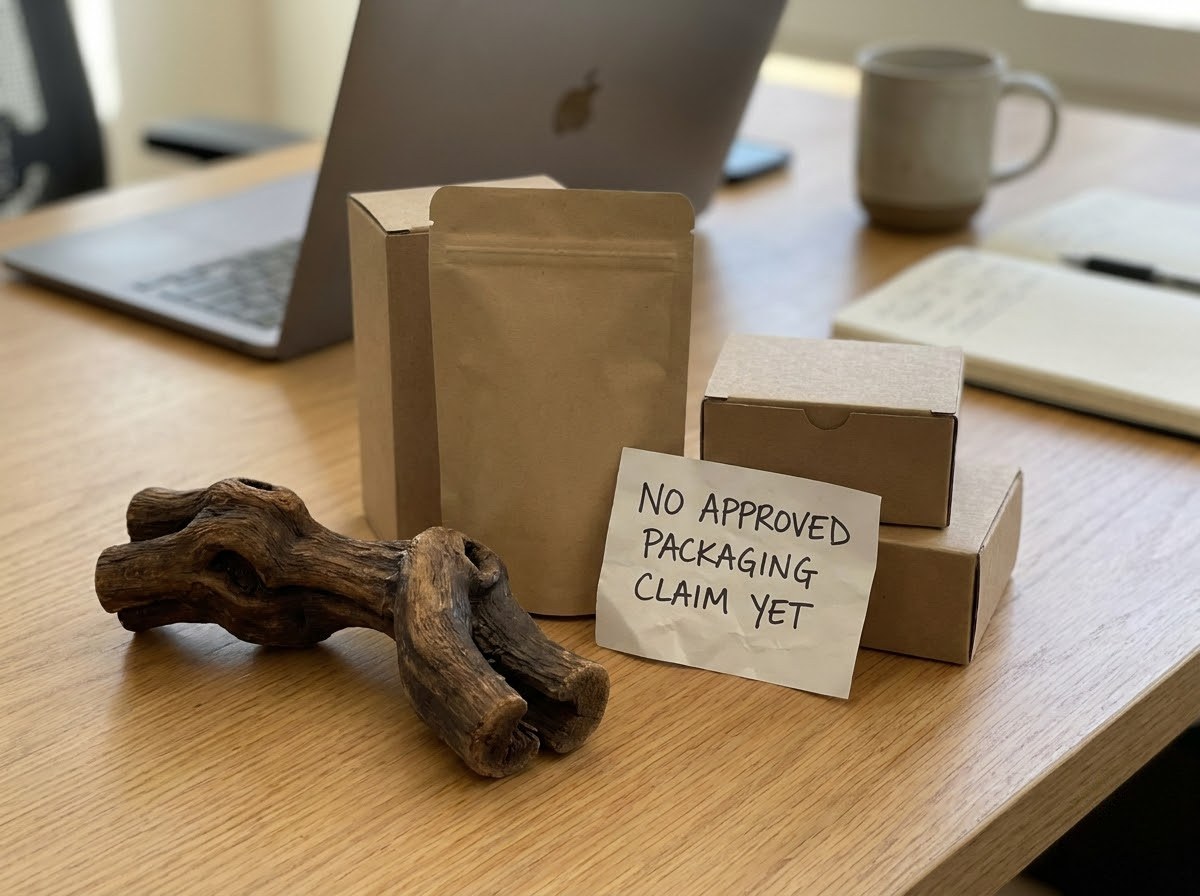
Clarify packaging material, labeling space, product protection, and market requirements before requesting a quote.
Describe the unit you need
Start with the coffee wood chew sizes you plan to sell and how each unit will be displayed. Different dimensions may need different packaging space and handling.
Ask what packaging formats are currently available. The project does not document approved custom packaging options or minimum quantities for them.
Protect the product and its information
Discuss how the wood will be kept identifiable and protected during handling. Ask how the label will show material, size, supplier details, and any instructions your market requires.
Do not add unverified assurances about toxicity, certification, or absence of splinters to artwork. A packaging mockup is not evidence for a product claim.
Check destination requirements
Requirements vary by market and channel. Ask a qualified local advisor which language, importer, safety, and traceability information applies to your specific product and destination.
The supplier can provide product facts and available documents, while the importer should verify market obligations. Avoid using a generic country list as a substitute for current advice.
Confirm the physical proof
Request a packaging sample or proof before approving production. Check fit for each size, readability, barcode placement if relevant, and whether the product can be inspected on receipt.
Include packaging material, unit count, artwork responsibility, and revision steps in the written quote. Current prices and lead times must be confirmed for the order.
A packaging brief example
A buyer could ask for a proposal for three specified sizes, each with enough space for a readable material line, size identification, basic supervision guidance, and the importer information required locally. The brief should say whether a hang tag, sleeve, or box is being considered without presuming any option is already offered.
Ask for a blank physical mockup that fits the measured sample. Check whether the package hides damage, whether the wood can move excessively, and whether the instructions remain readable at shelf distance. The supplier should confirm actual material and production options before artwork is finalized.
Review the approval handoff
Keep a checklist for product size, packaging dimensions, artwork version, label language, barcode ownership, and any claim evidence. Record who approves each field and which market it applies to.
If a label writer proposes a new environmental or health claim, pause that sentence for evidence review rather than letting it slip into the approved proof. A physical packaging approval verifies fit and printing; it does not validate unsupported product claims.
Plan for more than one size
A package that fits an XS chew may not fit an XXL piece listed at 23–24 cm long and 5.5–6.5 cm in diameter. Ask whether one format can be adapted or separate formats are needed. Test physical samples rather than scaling a drawing by eye. Leave room for natural variation within the agreed specification.
Think through how cartons will identify each size and how a retail customer will distinguish them without a misleading breed chart. An importer may need information on the outer carton as well as the retail unit. Confirm which party designs and approves each layer before ordering printed material.
Separate packaging protection from proof
A sleeve or box might keep units organized during handling, but its existence does not demonstrate a manufacturing treatment, safe use for every dog, or environmental benefit. Ask for current product records if artwork makes those claims. The label should still explain supervision, inspection, and replacement limits in language appropriate for the destination market.
Review a complete proof with the actual chew inside. Check that size information matches the item and that required text remains legible once folded or attached. Save the final approved artwork and its date. If the product specification later changes, reopen the proof rather than assuming the old package remains accurate.
Before approving a print run, place the largest and smallest relevant physical samples in their proposed packages. Photograph the fit and have someone unfamiliar with the project read the instructions and size label. Ask the supplier to identify which version it is quoting. This check catches practical mismatches that a digital artwork file alone cannot reveal.
Frequently asked questions
Can I assume custom packaging is available?
No. Ask the supplier which current options can be quoted.
Can a label promise no splinters?
Only use claims supported by appropriate evidence; natural wood should still be inspected and supervised.

Coffee Wood Chew Stick
Dense coffee wood chew made from branches collected during routine pruning in Vietnam's Central Highlands. Available in six sizes for supervised chewing.
Ask for current availability, packaging options, and a written quote.
Have Questions or Need a Wholesale Quote?
We export high-quality, pet-friendly coffee wood chews and natural toys worldwide.
Partner with us!
✨ Wholesale Pricing Available for Resellers & Business Partners!
We offer competitive wholesale prices and attractive deals for resellers and distributors.
💬 Feel free to message me directly to discuss pricing, partnership opportunities, and further details. Let's grow our businesses together! 🤝