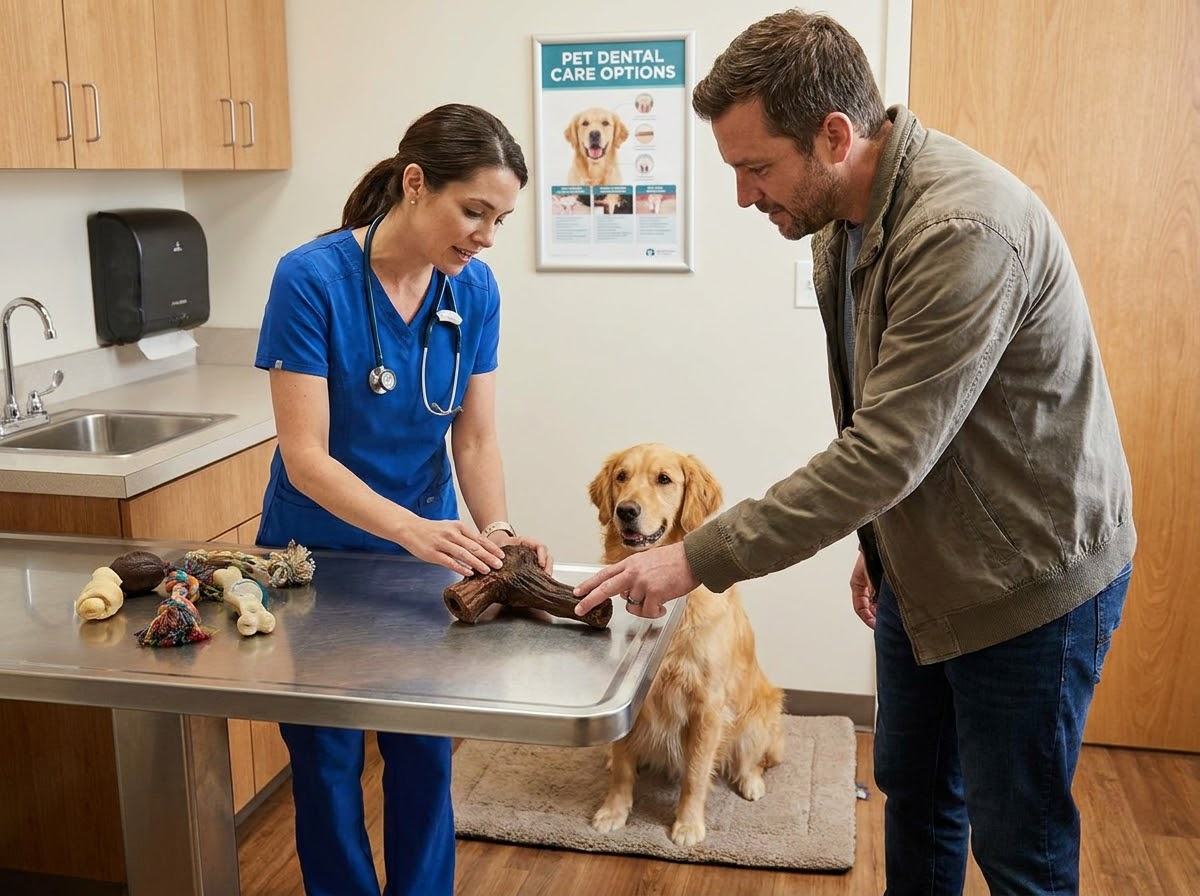
A hard chew may be a poor match for a dog with dental discomfort. Ask a veterinarian to assess the dog's mouth before use.
Hardness is an individual question
Coffee wood is a dense wooden material. The product listing describes it as a chew for supervised use, not as a dental treatment or a universally gentle choice.
Existing tooth wear, fractured teeth, gum disease and the dog's chewing force can change the suitability of any hard toy. A product label cannot diagnose the mouth.
Notice changes in behavior
A dog that suddenly avoids a familiar chew, drops food, favors one side or reacts when the mouth is touched may need an oral examination. These signs have many possible causes.
Stop hard chewing while seeking advice. Do not use a new chew to test whether dental pain has resolved.
Questions for the veterinarian
Bring the actual chew or a clear photograph and its dimensions. Ask whether hard objects are suitable given the dog's teeth and any previous treatment.
Also ask what softer textures or alternative activities would be appropriate. The answer may differ after an examination and dental history review.
If a chew is approved
Choose a piece that cannot be swallowed whole and supervise how the dog uses it. Inspect for cracks or sharp edges before and after every session.
Veterinary approval for a dog at one point in time is not a permanent guarantee. Reassess if behavior, tooth condition or toy condition changes.
How to frame the dental question
Instead of asking whether coffee wood is good for teeth in general, ask whether this dog's teeth can tolerate this particular firm object. Bring the product dimensions and describe whether the dog slowly gnaws or bites down hard. Mention prior fractures, extractions, visible wear, bad breath or changes in eating if relevant. Those details help a veterinarian assess the animal rather than endorse a material category without an examination.
If a dog turns away from the chew, do not force repeated trials to establish a preference. It may simply dislike the texture, or it may have discomfort that deserves assessment. Offer only activities appropriate to the dog's current condition while waiting for advice. The textured wood surface can contact teeth during chewing, but that observation is not evidence that it prevents plaque, treats gum disease or makes professional dental care unnecessary.
Observe the pattern before making a claim
A dog may abandon a wood chew because it dislikes the texture, because another toy is more interesting or because its mouth hurts. Behavior alone does not establish the cause. Note when the change started and whether eating, drinking or other play has also changed. Bring those observations to a veterinarian instead of treating a single reaction as evidence that coffee wood injured the teeth or that it relieved discomfort.
If the dog has an identified dental problem, stop hard chewing until the treating clinician advises otherwise. Do not rely on the fact that another dog uses the same material without trouble. Tooth condition and bite style differ. The same cautious approach applies to a dog with no known history but obvious pain while chewing: remove the object and seek an examination.
Separate mechanical contact from a health outcome
The product listing says the textured surface makes contact with tooth surfaces during supervised chewing. That is an observation about use. It does not show a reduction in plaque, prevention of fracture or treatment of gum disease. Claims about outcomes require evidence appropriate to the outcome and product. If a seller cites a dental endorsement, ask to see the specific current documentation rather than assuming it follows from material or texture.
For the owner, the practical choices are narrower and clearer: identify dental concerns, ask whether a firm chew is suitable, select a piece that cannot be swallowed whole, supervise, then inspect wear. A veterinarian may recommend a softer activity or no chew during a period of treatment. The article should support that conversation, not replace it with a universal hardness rule.
Frequently asked questions
Does coffee wood clean teeth?
It provides chewing contact, but the site does not claim a clinical dental outcome or replacement for veterinary dental care.
What if my dog has a broken tooth?
Stop offering hard chews and seek veterinary assessment.

Coffee Wood Chew Stick
Dense coffee wood chew made from branches collected during routine pruning in Vietnam's Central Highlands. Available in six sizes for supervised chewing.
Ask for current availability, packaging options, and a written quote.
Have Questions or Need a Wholesale Quote?
We export high-quality, pet-friendly coffee wood chews and natural toys worldwide.
Partner with us!
✨ Wholesale Pricing Available for Resellers & Business Partners!
We offer competitive wholesale prices and attractive deals for resellers and distributors.
💬 Feel free to message me directly to discuss pricing, partnership opportunities, and further details. Let's grow our businesses together! 🤝