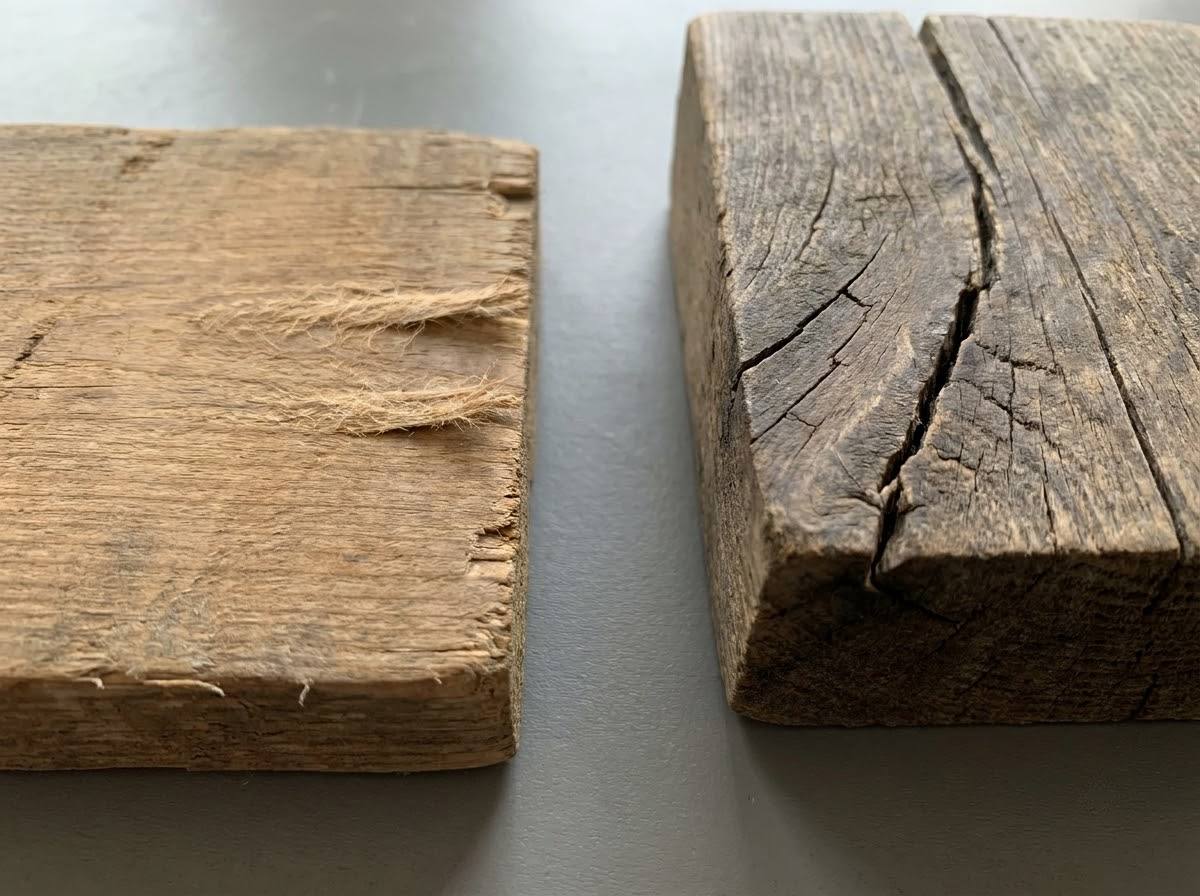
Surface wear and structural damage are different observations. Inspect the real chew before deciding whether to offer it again.
What surface fraying looks like
The product description notes that dense wood may gradually wear and fray during supervised chewing. Fine surface fibers can appear where a dog has worked at an end.
Even ordinary wear needs inspection. Remove loose material and check whether an edge has become sharp or a larger piece is beginning to separate.
What a crack changes
A visible split running into the body of a chew can allow a piece to detach under pressure. That is a different condition from fibers lifting only at the surface.
Do not try to predict whether the crack will stay small. Take the chew away when a deep split or sharp edge appears.
A repeatable inspection
Rotate the piece in good light and look at both ends and along the grain. Feel carefully for sharp edges without pushing a loose fragment back into place.
Repeat after use because damage may develop during the session. If you cannot tell whether a split is superficial, retire the piece rather than testing it with the dog.
When behavior matters more than appearance
A dog that clamps and snaps the stick may break off large pieces even if the starting piece looks intact. Watch the chewing style while you supervise.
If the dog repeatedly breaks hard toys, ask a veterinarian or qualified behavior professional about other enrichment formats. The surface condition alone cannot guarantee a safe session.
Compare three visible conditions
A lightly roughened end with no projecting sharp edge is different from a visible line that runs into the body of the wood. A third condition is a partially detached chip that can be lifted away. The first calls for closer inspection and continued supervision; the second and third call for removal. The point is to classify what is visible, not to promise that any wood fiber is harmless or that a small crack will remain stable.
Take photographs at the start and end of a session if you find it hard to tell whether a line has grown. Compare the same side under similar lighting. If a suspected crack becomes longer, opens under light handling or exposes a sharp edge, retire the piece. Do not ask the dog to stress-test it. When you cannot distinguish fraying from structural damage, choosing another intact toy is a practical and reversible decision.
Document changes without testing on the dog
An owner can inspect a chew on a table under daylight before and after use. Photograph the same end from a similar angle if a grain line is hard to track. A surface that simply looks more textured may still need a careful edge check; a line that opens into the body or a chip that lifts away calls for retirement. The photo is a comparison aid, not a substitute for handling the piece or watching how the dog uses it.
Do not bend a suspect stick until it breaks as a home durability test, and do not offer it again to see what happens. If you cannot tell whether a line is a natural grain mark or a developing split, setting the piece aside is a modest cost compared with allowing a fragment to detach. For a seller inquiry, send a clear image and ask about the current product, but keep that particular damaged chew away from the dog.
Explain wear to another caregiver
Use observable descriptions: 'fine fibers at the end, no sharp edge found' differs from 'long crack along one side' or 'a chip is loose.' A statement such as 'wood always flakes safely' is too broad and does not tell the next caregiver what to inspect. The product listing itself says to remove loose or sharp pieces and replace a cracked chew. Keep that distinction in a shared household note if more than one person offers the toy.
If the dog repeatedly creates large chips even from intact pieces, the concern is not merely how the surface looks after a session. Watch the bite pattern and ask whether another texture or game better fits the dog. A veterinarian can assess dental concerns; a behavior professional can help with unsafe chewing patterns. Neither a smooth-looking grain nor a marketing promise overrides the observed interaction.
Frequently asked questions
Is all fraying a reason to discard the chew?
Surface wear can occur, but remove loose or sharp pieces and retire the chew if cracks or hazardous edges develop.
Should I glue a cracked chew?
No. Retire a cracked chew and use an intact alternative.

Coffee Wood Chew Stick
Dense coffee wood chew made from branches collected during routine pruning in Vietnam's Central Highlands. Available in six sizes for supervised chewing.
Ask for current availability, packaging options, and a written quote.
Have Questions or Need a Wholesale Quote?
We export high-quality, pet-friendly coffee wood chews and natural toys worldwide.
Partner with us!
✨ Wholesale Pricing Available for Resellers & Business Partners!
We offer competitive wholesale prices and attractive deals for resellers and distributors.
💬 Feel free to message me directly to discuss pricing, partnership opportunities, and further details. Let's grow our businesses together! 🤝