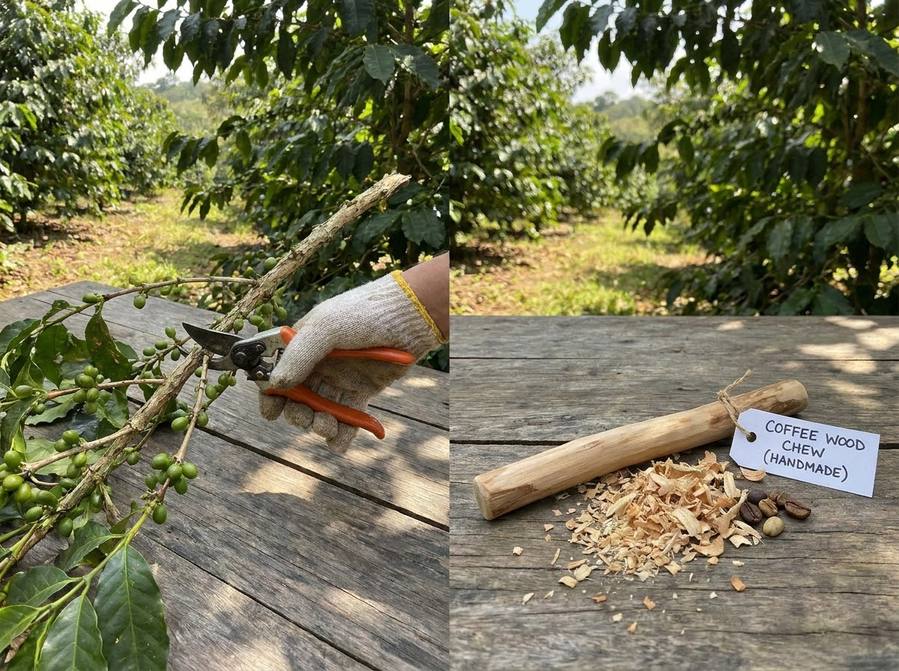
The catalog identifies pruned coffee branches as the material; further process and impact claims need records.
Start with the documented origin
Eco Pet Toys describes its coffee wood chew as made from branches collected during routine pruning in Vietnam's Central Highlands. This explains the stated agricultural source of the wood.
The phrase does not tell us how often any tree is pruned, how much material is recovered, or how every branch is processed. Those details require current production evidence.
Distinguish material from process
The finished product is listed as a dense wood chew in six sizes. The public catalog description supports the material and dimensions, with natural variation expected.
It does not establish a particular drying temperature, treatment method, additive policy, or moisture target. Buyers needing those details should request written specifications.
Explain the use carefully
The chew is intended for supervised use by a dog suited to its size and texture. Dense wood can wear and fray; owners should inspect it often.
Remove the toy if it cracks, develops sharp edges, or becomes small enough to swallow. A natural origin does not eliminate dental or ingestion concerns.
Tell the story without overstating it
A responsible product story can say where the stated material comes from and how to use the item. It can also say which documents a buyer should request.
Do not translate pruning into quantified waste savings, carbon benefits, or compostability without a suitable study. These claims require a separate evidence trail.
A careful origin paragraph
A product story could explain that coffee growers prune trees and that the company catalog identifies selected branch wood as the source for its chew. It can then state the listed six sizes and the need for supervised use. The reader learns both where the stated material comes from and how to evaluate the finished toy.
The paragraph should stop before claiming that the company saves a measured volume of waste, uses a particular machine, or creates a net environmental benefit. None of those outcomes follows automatically from the word pruning. A producer interview or current process file could later add detail, after review.
Questions for a future source interview
Ask which tree species and locations supply branches, how material is selected, what happens to rejected wood, and which steps transform a branch into a finished chew. Ask how records connect those answers to the products currently sold.
Keep answers attributed to the business until supporting records are available. This interview plan makes the story more specific without inventing factory observations. It also separates an agricultural origin from a lifecycle claim that would need a different method of proof.
Separate the stages in a timeline
A simple educational timeline has four questions: where the branch is collected, how it is selected, how the wood is prepared, and how the final chew is checked and packed. Only the first question is partly answered by the current public material description. The others are valuable questions for the business, not blanks to fill with a typical wood-processing story.
If future factory records become available, date them and connect them to the product currently sold. A historical photo might describe an old process but not a current batch. This approach lets the site tell a richer story later without claiming that an unobserved process happened to every chew.
Keep pet use in the narrative
A branch origin is interesting, but a buyer still needs to know the product is a chew toy for supervised use. Explain that dense wood wears and may fray, and that the owner should remove a chew with cracks, sharp edges, or swallowable pieces. Those limits are part of a truthful material story.
Avoid describing the wood as edible or implying that all detached fibers will pass harmlessly. The product listing supports a cautious inspection rule instead. If the company obtains processing specifications or suitable environmental evidence, those can be reviewed and added with their scope stated clearly.
Frequently asked questions
Is coffee wood chew made from coffee beans?
No. The product description identifies pruned coffee tree branch wood.
Does pruned wood prove a carbon benefit?
No quantified environmental benefit is documented for this product.

Coffee Wood Chew Stick
Dense coffee wood chew made from branches collected during routine pruning in Vietnam's Central Highlands. Available in six sizes for supervised chewing.
Ask for current availability, packaging options, and a written quote.
Have Questions or Need a Wholesale Quote?
We export high-quality, pet-friendly coffee wood chews and natural toys worldwide.
Partner with us!
✨ Wholesale Pricing Available for Resellers & Business Partners!
We offer competitive wholesale prices and attractive deals for resellers and distributors.
💬 Feel free to message me directly to discuss pricing, partnership opportunities, and further details. Let's grow our businesses together! 🤝