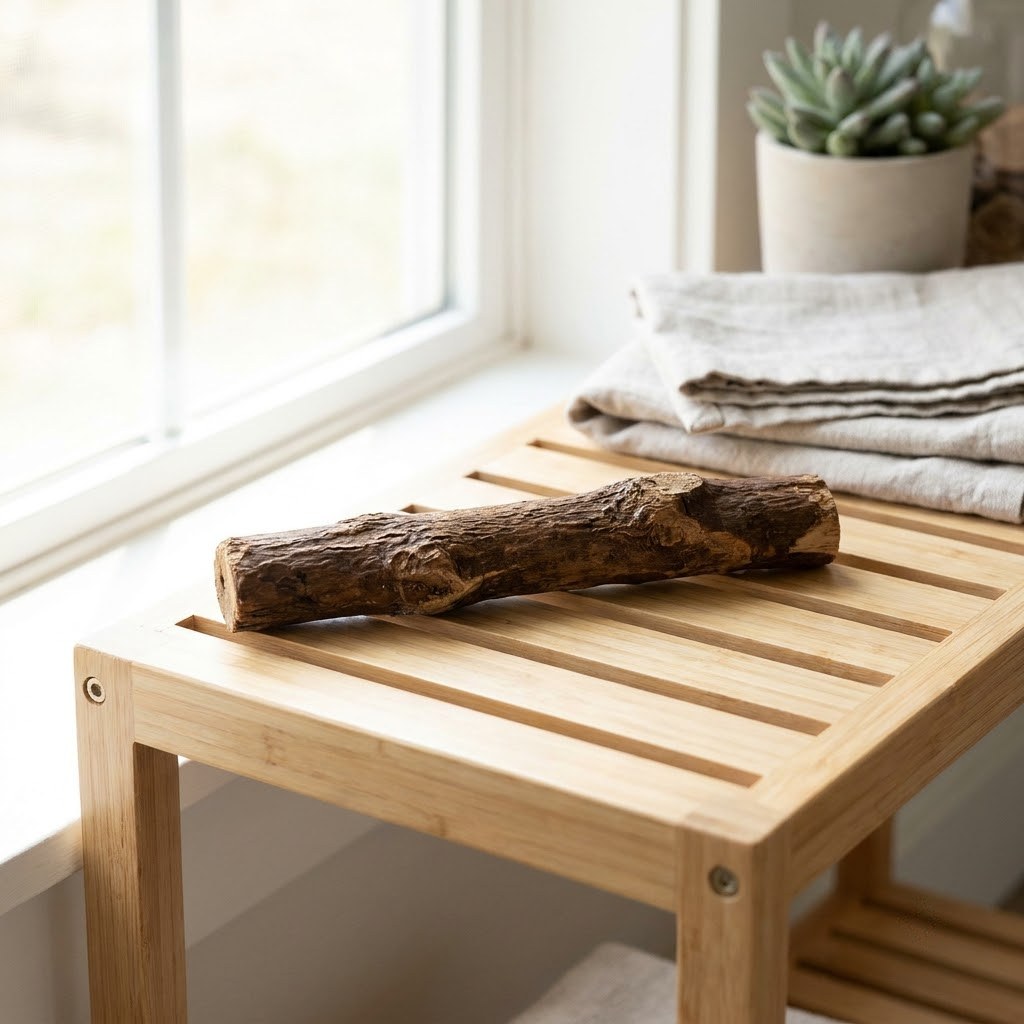
Why is moisture content the single most critical quality metric for a coffee wood chew? Learn how controlled kiln-drying prevents mold and brittleness without synthetic chemical preservatives.
Key takeaways
- Optimal moisture content for a safe coffee wood chew is strictly calibrated between 10% and 12%.
- Wood with moisture exceeding 14% risks fungal spore growth and surface mold during ocean transit and home storage.
- Wood over-dried below 8% becomes overly brittle, increasing the risk of structural splitting under heavy canine bite force.
- Controlled thermal kiln-drying eliminates wood-boring insects and stabilizes internal cellular lignin without synthetic chemical fumigation.
- Pet owners should store coffee wood chews in ventilated, dry locations and allow the wood to air-dry between chewing sessions.
Why Moisture Content Determines Coffee Wood Chew Safety
When evaluating natural botanical dog toys, pet owners and veterinary professionals often focus on hardness and fiber integrity. However, in wood technology and companion animal safety, internal moisture content (MC) is the primary determinant of both physical safety and biological shelf stability.
A freshly pruned branch from a Coffea canephora tree in Vietnam contains between 45% and 60% sap moisture. If a green branch is offered to a dog or packaged in plastic without scientific moisture conditioning, two catastrophic failures occur: rapid microbial mold colonization inside the packaging, or uncontrolled internal tension that leads to explosive longitudinal splintering.
To manufacture a premium, reliable coffee wood chew, harvested branches must undergo a rigorous, computer-controlled kiln-drying process to reach an equilibrium moisture content of 10% to 12%.
The Danger Zone: Mold Growth vs. Excessive Brittleness
Understanding the moisture spectrum illustrates why precise conditioning is non-negotiable for pet health:
High Moisture (>14% MC): Any wood retaining moisture above 14% creates a hospitable breeding ground for environmental fungal spores, including Aspergillus and Penicillium molds. In humid storage conditions, damp wood develops visible surface mildew and produces mycotoxins that can trigger acute canine respiratory allergies and gastrointestinal toxicosis.
Over-Dried Brittle Wood (<8% MC): Conversely, flash-drying wood too aggressively or baking it down below 8% moisture strips the cellulose fibers of natural elasticity. The lignified cellular walls become glass-like and fragile, prone to snapping into sharp, jagged fragments under the vertical pressure of a dog's premolars.
The 10–12% Sweet Spot: At this precise equilibrium, the interwoven fiber matrix retains enough internal resilience to flex slightly under jaw pressure while remaining completely dry enough to prevent bacterial or fungal proliferation.
Thermal Kiln-Drying: Chemical-Free Phytosanitary Compliance
Global import regulations across the United States (USDA-APHIS), European Union, and Australia require imported wood products to be completely free of agricultural pests, bark-boring beetles, and fungal pathogens.
Cheap wood products often rely on toxic chemical fumigation—such as methyl bromide gas or chemical preservative soaks—to achieve biosecurity clearance. For pet products that dogs mouth and ingest for hours, chemical fumigation is unacceptable.
Eco Pet Toys utilizes 100% thermal heat-treatment kiln chambers. Over several days, hot air circulates through stacked wood tiers, gradually driving moisture out while raising the core temperature above 60°C (140°F) for multiple hours. This heat eliminates any dormant larvae or pathogens naturally, delivering pure, food-safe, non-toxic wood sticks.
How Proper Moisture Interacts with Canine Saliva
The mechanical magic of a properly kiln-dried coffee wood chew occurs when it encounters canine saliva during a chew session.
Because the wood is stabilized at 10–12% moisture, the dry exterior surface quickly absorbs moisture and salivary amylase enzymes. Within five to ten minutes of focused gnawing, the surface cellulose fibers hydrate and expand, softening from a rigid hardwood into a flexible, fibrous texture.
This hydration gradient ensures that as the dog grinds down the stick, the shedding material separates as soft, digestible cellulose flakes rather than sharp wood shards.
Home Storage and Care: Maintaining Wood Equilibrium
Once a high-quality coffee wood chew arrives in your home, simple maintenance preserves its moisture equilibrium and hygienic safety:
Avoid Airtight Plastic Containers: Never store a damp, saliva-coated wood chew in an airtight ziplock bag or sealed plastic bin. Trapping saliva without air circulation will cause mildew to form on even the finest wood.
Use a Breathable Storage Basket: Store chews in an open woven basket, wire rack, or canvas caddy placed in a dry, ventilated area of your home.
Post-Chew Air Drying: After each 20-to-30-minute chewing session, wipe the stick dry with a clean cloth and leave it on an open counter to air-dry thoroughly before the next play session.
Frequently asked questions
What is the best moisture content for a coffee wood chew?
The ideal moisture content is between 10% and 12%. This level prevents mold growth during storage while preserving fiber flexibility so the wood does not splinter.
Can a coffee wood chew get moldy?
If left in a damp, unventilated container with wet saliva, surface mold can develop. Always allow the wood to air-dry in an open, ventilated area between chewing sessions.
Are coffee wood chews treated with chemical preservatives?
Authentic coffee wood chews are kiln-dried with heat and air only, completely free of chemical fungicides, pesticides, or artificial varnishes.
Can I wash a coffee wood chew with water?
Do not soak the chew in water or run it through a dishwasher. Simply brush off loose fibers with a dry towel or stiff brush and let it dry naturally.
Editorial sources
External references support the general safety and dental-care guidance in this article. Product dimensions and material descriptions come from the Eco Pet Toys catalog.
- American Animal Hospital Association (AAHA): Dental & Chew Guidelines: Veterinary consensus on masticatory object hardness, dental fracture risks, and supervision protocols.
- Veterinary Oral Health Council (VOHC): Accepted Plaque Control Methods: Standards for mechanical friction on canine tooth enamel and gingival margin health.
- ASPCA Position Statement on Dog Chews and Enrichment Safety: Guidance on individualized size selection, behavioral observation, and avoiding toxic chemical coatings.
- International Association of Animal Behavior Consultants (IAABC): Chewing & Arousal: Behavioral science principles on stress reduction and de-escalating resource guarding through natural toys.

Coffee Wood Chew Stick
Dense coffee wood chew made from branches collected during routine pruning in Vietnam's Central Highlands. Available in six sizes for supervised chewing.
Ask for current availability, packaging options, and a written quote.
Have Questions or Need a Wholesale Quote?
We export high-quality, pet-friendly coffee wood chews and natural toys worldwide.
Partner with us!
✨ Wholesale Pricing Available for Resellers & Business Partners!
We offer competitive wholesale prices and attractive deals for resellers and distributors.
💬 Feel free to message me directly to discuss pricing, partnership opportunities, and further details. Let's grow our businesses together! 🤝