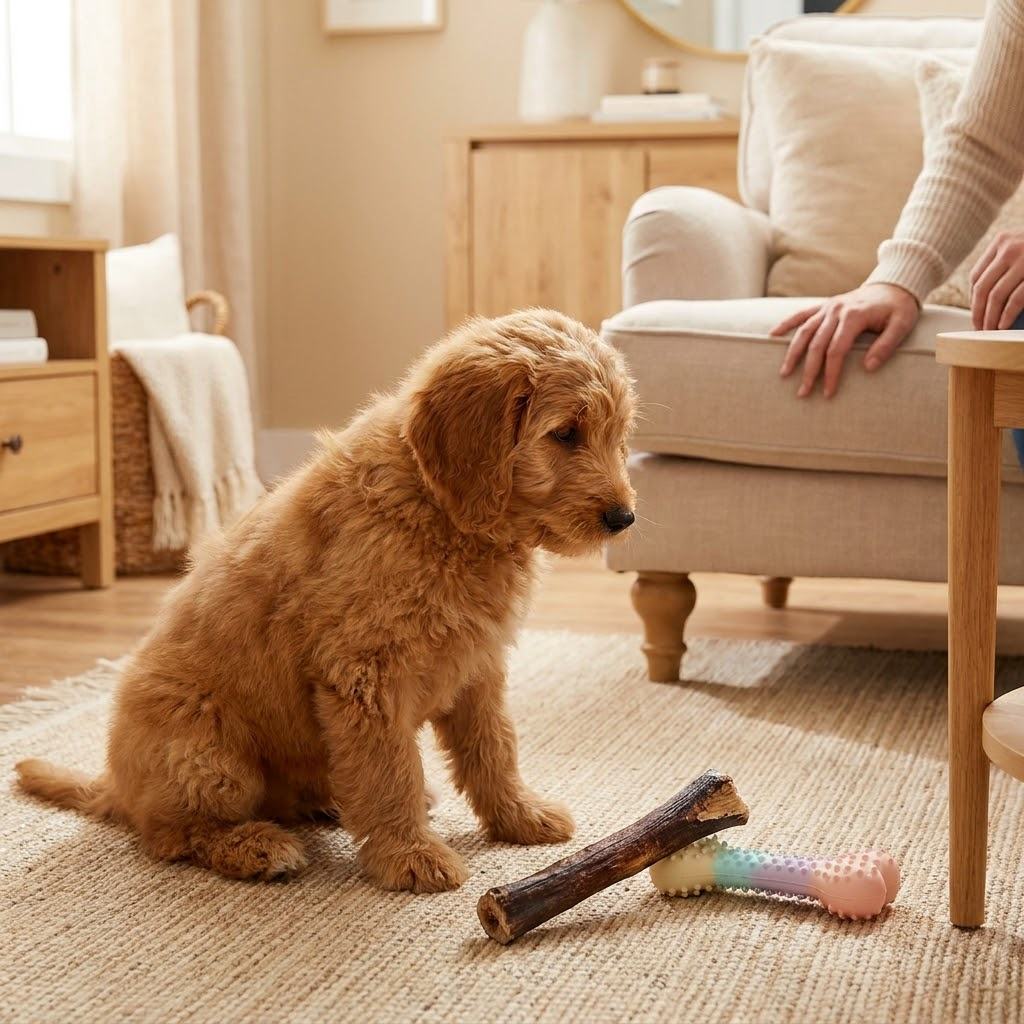
Between 12 and 24 weeks of age, puppies experience intense gum inflammation and an uncontrollable urge to chew. Discover why coffee wood chews protect fragile baby teeth while satisfying natural instincts.
Key takeaways
- Canine deciduous (baby) teeth have thinner enamel caps and fragile roots vulnerable to fractures from hard nylon bones.
- A coffee wood chew softens upon contact with saliva, gently massaging inflamed gingival margins without fracturing deciduous teeth.
- Chewing wood fibers provides essential counter-pressure that assists in the natural shedding of retained baby incisors and premolars.
- Puppy owners should strictly choose Size XS or Size S sticks to match small jaw spans and prevent choking hazards.
- All puppy chew sessions must be directly supervised, immediately replacing pieces that wear down to swallowable sizes.
The Physiology of the Puppy Teething Crisis (12 to 24 Weeks)
Puppy teething is one of the most challenging developmental phases for new pet parents. Between 12 and 16 weeks of age, a puppy's 28 sharp deciduous (milk) teeth begin loosening and exfoliating, making way for 42 permanent adult teeth by approximately six months of age.
As adult tooth crowns erupt through the sensitive periosteum and gingiva, puppies suffer from intense local inflammation, swollen gums, and severe itching (pruritus). To relieve this throbbing discomfort, puppies possess a biological, neurological urge to clamp their jaws down on any firm object within reach—frequently targeting table legs, baseboards, electrical cords, and leather shoes.
Redirecting this instinct toward a dedicated, natural coffee wood chew provides essential physical relief while establishing positive lifelong chewing boundaries.
Why Rigid Synthetic Chews Endanger Baby Teeth
Many well-meaning puppy parents make the critical mistake of buying hard synthetic nylon bones or dense antler chews marketed for adult dogs.
Canine deciduous teeth are structurally delicate: they possess thinner enamel layers, wider pulp chambers, and narrow, brittle root structures compared to adult dentition. When an energetic puppy clamps down on an unyielding synthetic polymer or antler, the excessive impact force easily shears off deciduous crowns.
Broken deciduous teeth expose the sensitive pulp chamber, leading to painful bacterial pulpitis, facial swelling, and potentially damaging the permanent adult tooth bud developing directly beneath the gumline. Veterinary dental specialists strongly caution against any chew toy that does not soften or flex under jaw contact.
How Coffee Wood Softens to Soothe Inflamed Gums
A Size XS or Size S coffee wood chew offers the ideal balance of mechanical firmness and gentle surface compliance for teething puppies.
When a puppy mouths the wood, warm saliva quickly penetrates the outer grain layer. Within minutes, the dense wood fibers soften into a velvety, fibrous cushion. As the puppy bites down, the hydrated cellulose fibers gently compress against swollen gums, providing therapeutic counter-pressure that numbs teething aches.
Furthermore, as fine cellulose flakes peel off harmlessly, puppies experience the deeply rewarding sensory feedback of 'shredding' and deconstructing a natural object—satisfying their predatory curiosity without destroying household furnishings.
Puppy Size Chart: Choosing Between Size XS and Size S
Proper sizing is essential to ensure puppy safety and prevent choking hazards:
Size XS (12–13 cm long, 1.5–2.0 cm diameter): Recommended for toy and small breed puppies up to 10 lbs (such as Chihuahua, Yorkshire Terrier, Pomeranian, Toy Poodle, and Miniature Dachshund).
Size S (13–15 cm long, 2.0–2.8 cm diameter): Recommended for medium breed puppies between 10 and 25 lbs (such as French Bulldog, Beagle, Cocker Spaniel, and Corgi).
For large and giant breed puppies (Golden Retriever, German Shepherd, Labrador, Great Dane), start directly with Size M or Size L to ensure the stick cannot accidentally fit horizontally behind their molar teeth.
Puppy Safety Protocol: Managing Your First Chew Sessions
Follow this structured routine to ensure a safe, enriching puppy chew experience:
1. Supervise 100% of the Time: Never leave a teething puppy unattended in a crate with any chew toy.
2. Keep Sessions Focused: Limit initial sessions to 15 to 20 minutes to prevent jaw muscle exhaustion and over-stimulation.
3. Remove Worn Stubs: As your puppy chews, the stick will slowly diminish in length. When it wears down to approximately one-third of its original length, retire the stub immediately to eliminate any swallowing risk.
Frequently asked questions
At what age can a puppy start using a coffee wood chew?
Puppies can safely begin using Size XS or Size S coffee wood chews starting at 12 weeks of age, when the deciduous teeth begin loosening and permanent teeth begin erupting.
Can a coffee wood chew damage puppy baby teeth?
Unlike hard nylon bones, coffee wood fibers soften with saliva into gentle cellulose flakes, making it safe for delicate deciduous teeth when properly sized and supervised.
Does coffee wood help puppies stop biting furniture?
Yes. Offering a coffee wood chew provides an appropriate, highly satisfying natural texture that successfully redirects destructive chewing away from furniture and shoes.
What should I do if my puppy swallows small flakes of coffee wood?
Small, soft cellulose flakes shed during chewing are digestible plant roughage that will pass harmlessly through the stool. However, never let puppies bite off or swallow large chunks.
Editorial sources
External references support the general safety and dental-care guidance in this article. Product dimensions and material descriptions come from the Eco Pet Toys catalog.
- American Animal Hospital Association (AAHA): Dental & Chew Guidelines: Veterinary consensus on masticatory object hardness, dental fracture risks, and supervision protocols.
- Veterinary Oral Health Council (VOHC): Accepted Plaque Control Methods: Standards for mechanical friction on canine tooth enamel and gingival margin health.
- ASPCA Position Statement on Dog Chews and Enrichment Safety: Guidance on individualized size selection, behavioral observation, and avoiding toxic chemical coatings.
- International Association of Animal Behavior Consultants (IAABC): Chewing & Arousal: Behavioral science principles on stress reduction and de-escalating resource guarding through natural toys.

Coffee Wood Chew Stick
Dense coffee wood chew made from branches collected during routine pruning in Vietnam's Central Highlands. Available in six sizes for supervised chewing.
Ask for current availability, packaging options, and a written quote.
Have Questions or Need a Wholesale Quote?
We export high-quality, pet-friendly coffee wood chews and natural toys worldwide.
Partner with us!
✨ Wholesale Pricing Available for Resellers & Business Partners!
We offer competitive wholesale prices and attractive deals for resellers and distributors.
💬 Feel free to message me directly to discuss pricing, partnership opportunities, and further details. Let's grow our businesses together! 🤝