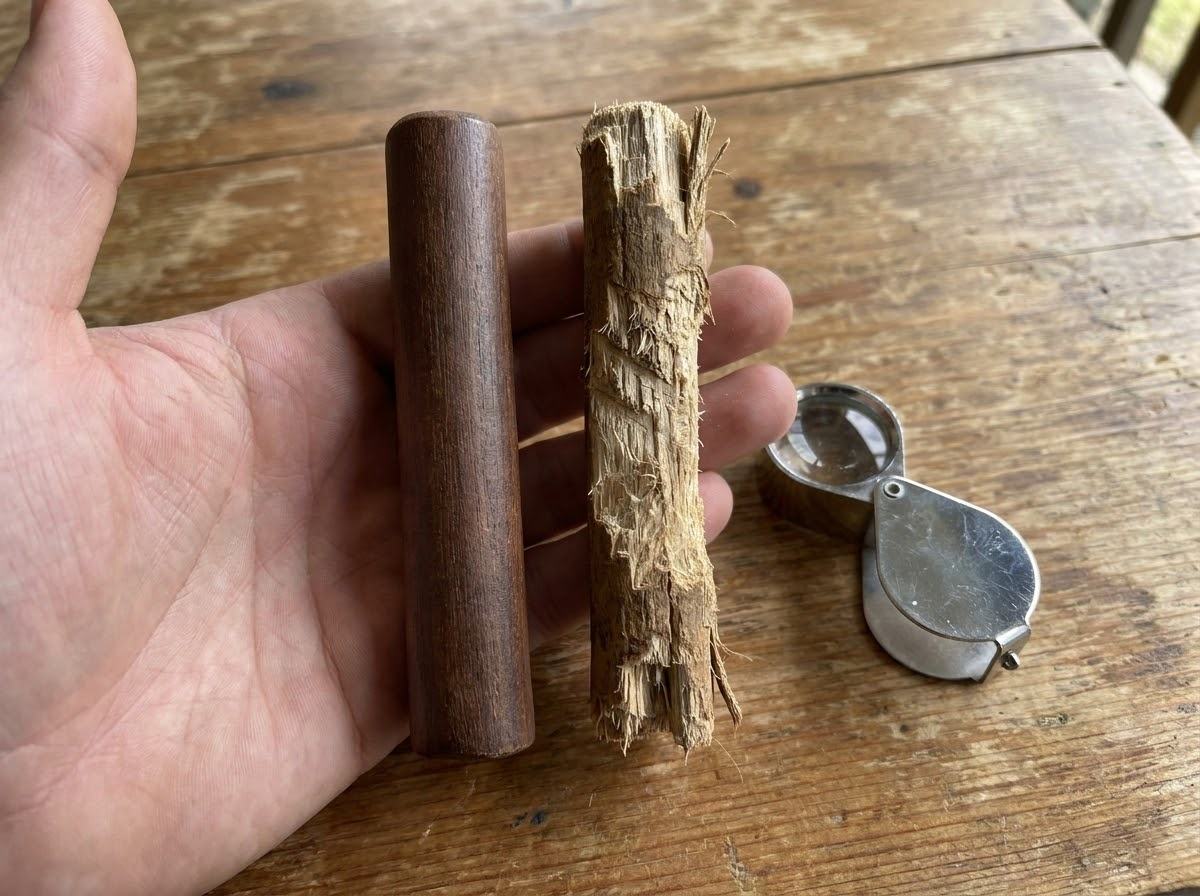
How long does a coffee wood chew actually last? Discover the four stages of natural wood wear, how to identify the exact retirement threshold, and how to compost worn stubs for zero waste.
Key takeaways
- A coffee wood chew typically lasts between 3 and 8 weeks depending on breed size, jaw strength, and session frequency.
- Natural wear progresses through four predictable stages: Initial Conditioning, Fibrous Softening, Dimensional Reduction, and Retirement.
- The 'One-Third Rule' dictates that once a stick wears down to one-third of its original length, it must be retired to prevent choking.
- Unlike synthetic plastic bones that linger for 500 years in landfills, worn coffee wood stubs are 100% backyard compostable.
- Crushing or burying worn end stubs in garden soil enriches garden beds with organic carbon and moisture-retaining organic matter.
The Natural Lifecycle of a Sustainable Pet Chew
Pet parents evaluating sustainable pet products frequently ask: 'How long will a coffee wood chew last before I need to buy another one?'
Because coffee wood is an authentic biological material rather than a molded synthetic polymer, its lifespan is not fixed to a calendar date. Durability varies based on your dog's bite pressure, chewing technique, saliva production, and session duration.
On average, with daily 20-minute supervised sessions, a correctly sized coffee wood chew provides between three and eight weeks of continuous enrichment. Understanding its natural wear cycle ensures maximum safety and zero environmental waste.
The 4 Stages of Coffee Wood Chew Wear
A quality coffee wood chew progresses through four distinct anatomical stages during its functional life:
Stage 1: Initial Conditioning (Days 1–3). The newly unboxed stick is dense and dry. As the dog gnaws, saliva penetrates the outer grain, smoothing the factory edges and establishing the initial moisture gradient.
Stage 2: Active Fibrous Flaking (Weeks 1–4). The wood achieves optimal hydration. During sessions, soft, harmless cellulose filaments gently separate from the chewed tip, leaving small, clean wood flakes around the dog's paws.
Stage 3: Rounded Dimensional Reduction (Weeks 4–6). Both ends of the stick become smoothly rounded and contoured. The overall length slowly decreases as the dog grinds down the dense fibers.
Stage 4: The Retirement Threshold (Week 6+). The stick has diminished significantly in length and diameter, approaching the critical size where it could slip into the pharynx.
The 'One-Third Retirement Rule'
The most critical safety decision every pet owner must make is knowing when to take the chew away permanently.
Apply the strict 'One-Third Rule': When the coffee wood chew has worn down to approximately one-third (33%) of its original purchased length, it has completed its active toy life. For example, a Size M stick that started at 18 cm should be retired when it reaches 6 cm.
Allowing a dog to continue chewing a small, stubby wooden knob risks accidental swallowing, esophageal choking, or gastrointestinal obstruction. Never wait until the piece is pebble-sized before intervening.
From Chew Toy to Garden Soil: Backyard Composting
The true beauty of a circular economy coffee wood chew is what happens when its toy lifecycle ends.
Conventional nylon and synthetic rubber chews end up in municipal landfills, where they persist for hundreds of years while leaching microplastics and toxic plasticizers into groundwater. Even 'durable' toys eventually become permanent environmental trash.
In stark contrast, a retired coffee wood stub is 100% pure untreated lignified wood. You can break or crush the remaining stub with a hammer and scatter it into your garden flower beds as carbon-rich organic mulch, or toss it directly into your backyard compost tumbler. Within six to twelve months, soil microorganisms break the cellulose down into dark, fertile humus, returning nutrients to the earth.
Summary: Maximizing Value and Sustainability
By selecting the correct initial size, keeping sessions to 20–30 minutes, allowing the wood to air-dry between uses, and retiring the stub at the one-third mark, pet parents achieve the perfect balance:
Dozens of hours of therapeutic, dental-cleaning canine enrichment, zero microplastics in your dog's stomach, and zero landfill waste left behind for the planet.
Frequently asked questions
How long does a coffee wood chew usually last?
A properly sized coffee wood chew typically lasts between 3 and 8 weeks with daily 20-minute supervised chew sessions.
When should I throw away a coffee wood chew?
Retire the chew when it wears down to approximately one-third of its original length, or when it becomes small enough to fit entirely inside your dog's mouth.
Can I put worn coffee wood chews in my compost bin?
Yes. Coffee wood is 100% untreated natural plant material that biodegrades into rich organic soil humus in home compost or garden beds.
Is it normal for coffee wood chews to shed flakes?
Yes. Shedding soft, fine cellulose flakes is normal and desirable. The fibers soften with saliva and are harmless if small amounts are ingested.
Editorial sources
External references support the general safety and dental-care guidance in this article. Product dimensions and material descriptions come from the Eco Pet Toys catalog.
- American Animal Hospital Association (AAHA): Dental & Chew Guidelines: Veterinary consensus on masticatory object hardness, dental fracture risks, and supervision protocols.
- Veterinary Oral Health Council (VOHC): Accepted Plaque Control Methods: Standards for mechanical friction on canine tooth enamel and gingival margin health.
- ASPCA Position Statement on Dog Chews and Enrichment Safety: Guidance on individualized size selection, behavioral observation, and avoiding toxic chemical coatings.
- International Association of Animal Behavior Consultants (IAABC): Chewing & Arousal: Behavioral science principles on stress reduction and de-escalating resource guarding through natural toys.

Coffee Wood Chew Stick
Dense coffee wood chew made from branches collected during routine pruning in Vietnam's Central Highlands. Available in six sizes for supervised chewing.
Ask for current availability, packaging options, and a written quote.
Have Questions or Need a Wholesale Quote?
We export high-quality, pet-friendly coffee wood chews and natural toys worldwide.
Partner with us!
✨ Wholesale Pricing Available for Resellers & Business Partners!
We offer competitive wholesale prices and attractive deals for resellers and distributors.
💬 Feel free to message me directly to discuss pricing, partnership opportunities, and further details. Let's grow our businesses together! 🤝