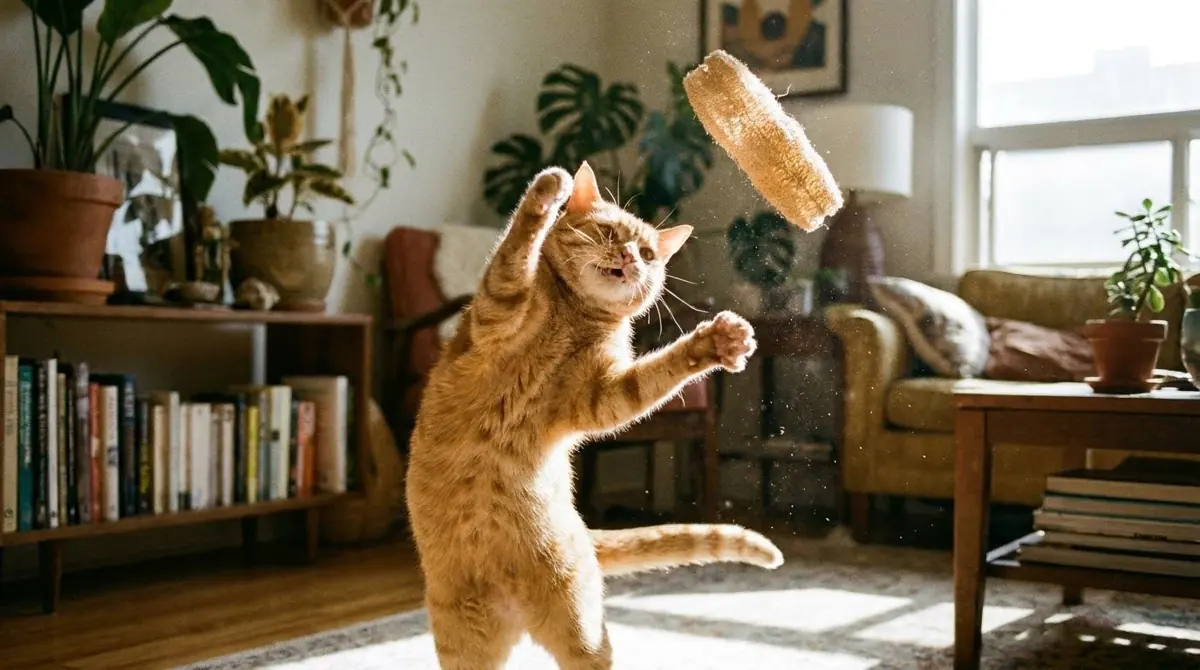
Feline Hyperesthesia causes sudden bursts of skin rippling, frantic self-grooming, and tail-biting panic. Discover behavioral and sensory routines to soothe flare-ups.
The Mystery of the 'Rolling Skin' Condition
Feline Hyperesthesia Syndrome (FHS) is a complex neuro-behavioral condition where lumbar spine nerves become hypersensitive. Mild environmental stress or light touch along the back can trigger pupil dilation, vocalization, and frantic biting at the flank or tail.
Veterinary evaluation is crucial to exclude flea allergy dermatitis and spinal arthritis before diagnosing FHS.
Minimizing Overstimulation Triggers
Avoid petting along the lower spine or base of the tail in cats prone to ripple episodes. Maintain predictable feeding schedules and keep household noise consistent.
Quiet Tactile Distraction
During mild episodes, do not touch the cat with hands. Instead, place a soft, unscented organic cotton rope toy in front of their paws. Chewing and kicking soft woven cotton safely channels neurological energy away from self-mutilation.
Have Questions or Need a Wholesale Quote?
We export high-quality, pet-friendly coffee wood chews and natural toys worldwide.
Partner with us!
✨ Wholesale Pricing Available for Resellers & Business Partners!
We offer competitive wholesale prices and attractive deals for resellers and distributors.
💬 Feel free to message me directly to discuss pricing, partnership opportunities, and further details. Let's grow our businesses together! 🤝