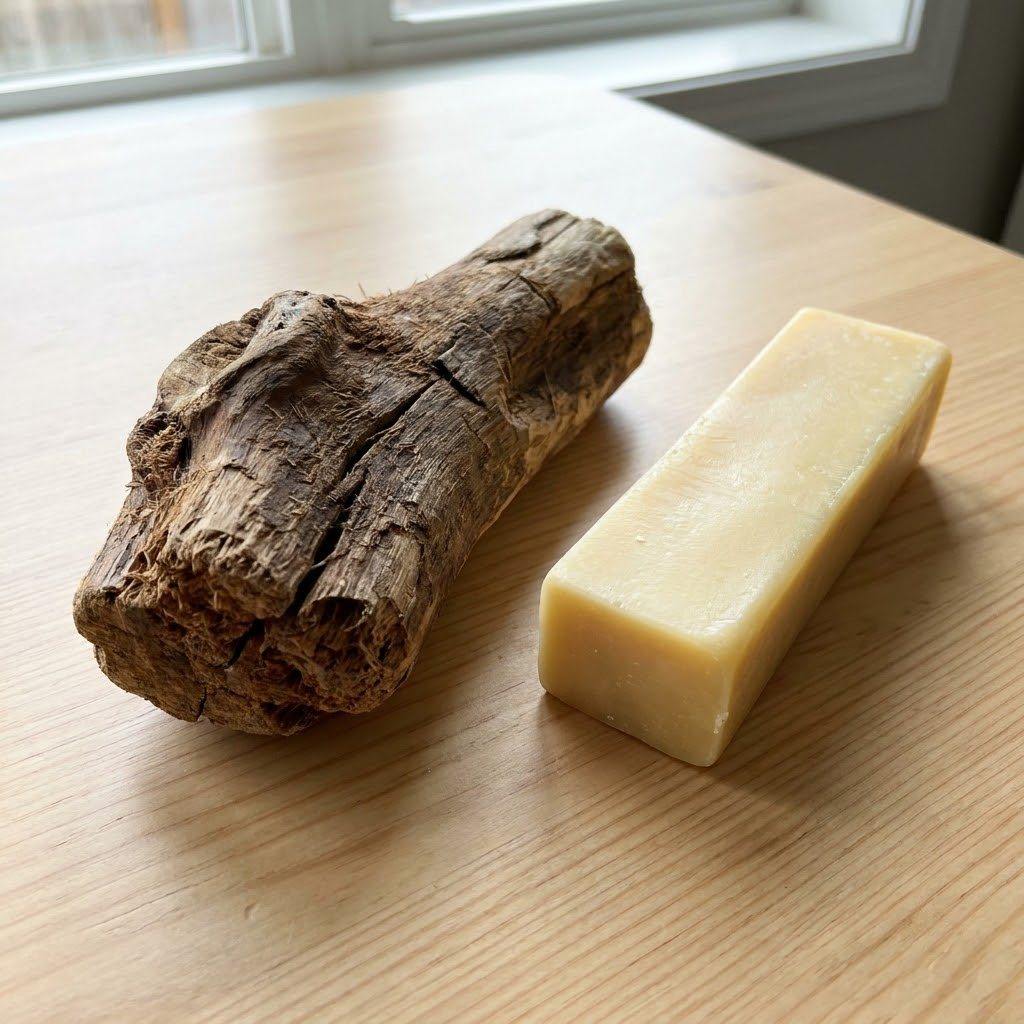
Himalayan yak cheese chews and coffee wood chews are two of the most popular natural alternatives to plastic toys. Compare calorie profiles, tooth fracture hazards, and long-term cost durability.
Key takeaways
- Yak cheese chews contain substantial dairy protein and calories (approx. 300–450 kcal per bar), while coffee wood chews contain strictly 0 calories.
- Un-microwaved yak cheese bars can become rock-hard, frequently failing the veterinary fingernail test and risking premolar slab fractures.
- Coffee wood chews soften with saliva, shedding gentle, non-abrasive cellulose fibers rather than hard, rock-solid chunks.
- Dogs with dairy allergies or chronic pancreatitis cannot safely consume yak milk chews, making hypoallergenic coffee wood the medical choice.
- From a cost-per-hour perspective, a single coffee wood chew lasts weeks of supervised gnawing, outlasting edible dairy bars several times over.
The Natural Chew Showdown: Botanical Wood vs. Smoked Dairy Curd
As conscious pet parents abandon synthetic plastic bones and bleached rawhides, two premium natural products dominate the conversation: Himalayan Yak Cheese Chews and Natural Coffee Wood Chews.
Yak cheese chews are crafted from boiled, compressed, and smoke-cured yak and cow milk curd mixed with salt and lime juice. Coffee wood chews are handcrafted from the harvested, kiln-dried branch wood of Coffea canephora trees in Vietnam.
While both are marketed as natural, long-lasting enrichment, their biochemical composition, biomechanical dental safety, and dietary impacts differ dramatically.
Dental Hardness & Fracture Mechanics: Which Is Safer?
Veterinary dental surgeons frequently express concern over the extreme rigidity of un-microwaved Himalayan yak cheese blocks.
When cured and dried, yak cheese forms an ultra-dense, non-yielding crystalline protein structure. On the Mohs hardness scale, a dried yak bar can match or exceed canine enamel hardness, failing the fundamental veterinary 'fingernail indent test.' When an eager dog attempts to bite down forcefully on an edge, the impact force cannot dissipate, commonly resulting in carnassial slab fractures.
A coffee wood chew behaves fundamentally differently. While hardwood is dense and firm to the touch, its interwoven lignocellulosic matrix hydrates rapidly in saliva. The surface layers yield and flake off as soft, fibrous filaments, absorbing bite force and gently polishing tooth surfaces without rebounding impact energy into the tooth root.
Nutritional Profile: 0 Calories vs. 400 Dairy Calories
For modern companion dogs, obesity is an escalating veterinary epidemic, contributing to diabetes, osteoarthritis, and reduced lifespan.
A standard medium-sized yak cheese bar contains between 300 and 450 calories, alongside significant dairy protein and milk fats. For a 30-pound dog whose daily caloric requirement is approximately 700 calories, consuming a yak chew can introduce more than half their entire daily caloric intake, causing rapid weight gain.
In contrast, a coffee wood chew contains 0% protein, 0% fat, 0% carbohydrates, and 0 calories. It is pure botanical cellulose that provides hours of rich masticatory satisfaction without adding a single calorie, making it the premier choice for overweight pets or dogs on strict medical diets.
Allergies, Pancreatitis, and Digestive Sensitivity
Canine food allergies are predominantly triggered by animal proteins and dairy products. Dogs suffering from cutaneous adverse food reactions (CAFR) or inflammatory bowel disease (IBD) frequently experience ear flare-ups, paw licking, and vomiting when exposed to cow or yak dairy proteins.
Furthermore, dogs recovering from acute pancreatitis cannot tolerate dietary fats. Even the residual milk fats in yak chews can trigger a painful pancreatic relapse.
Coffee wood is 100% hypoallergenic and plant-based, making it completely safe for dogs undergoing novel protein elimination diet trials or managing sensitive digestive tracts.
Longevity and Economic Value Comparison
From an economic standpoint, coffee wood chews offer superior value for pet parents.
A power-chewing dog can easily chew through an expensive $15 yak cheese bar in two or three days. In contrast, a properly sized coffee wood chew wears down gradually over several weeks of daily 20-minute sessions, delivering dozens of hours of enrichment at a significantly lower cost per chewing hour.
Frequently asked questions
Can yak cheese chews break a dog's teeth?
Yes. Dried yak cheese bars can be extremely hard, and veterinary dentists frequently treat tooth slab fractures caused by dogs biting down forcefully on unyielding yak chews.
Does a coffee wood chew have any calories?
No. Coffee wood chews are 100% natural plant fiber containing zero calories, zero fat, and zero sugar.
Can dogs with lactose intolerance chew yak cheese?
While the curing process removes most lactose, sensitive dogs or dogs with dairy protein allergies can still experience digestive upset and allergic reactions.
Which chew lasts longer: coffee wood or yak cheese?
Coffee wood chews generally last much longer than yak cheese, providing weeks of supervised gnawing compared to a few days for edible dairy chews.
Editorial sources
External references support the general safety and dental-care guidance in this article. Product dimensions and material descriptions come from the Eco Pet Toys catalog.
- American Animal Hospital Association (AAHA): Dental & Chew Guidelines: Veterinary consensus on masticatory object hardness, dental fracture risks, and supervision protocols.
- Veterinary Oral Health Council (VOHC): Accepted Plaque Control Methods: Standards for mechanical friction on canine tooth enamel and gingival margin health.
- ASPCA Position Statement on Dog Chews and Enrichment Safety: Guidance on individualized size selection, behavioral observation, and avoiding toxic chemical coatings.
- International Association of Animal Behavior Consultants (IAABC): Chewing & Arousal: Behavioral science principles on stress reduction and de-escalating resource guarding through natural toys.

Coffee Wood Chew Stick
Dense coffee wood chew made from branches collected during routine pruning in Vietnam's Central Highlands. Available in six sizes for supervised chewing.
Ask for current availability, packaging options, and a written quote.
Have Questions or Need a Wholesale Quote?
We export high-quality, pet-friendly coffee wood chews and natural toys worldwide.
Partner with us!
✨ Wholesale Pricing Available for Resellers & Business Partners!
We offer competitive wholesale prices and attractive deals for resellers and distributors.
💬 Feel free to message me directly to discuss pricing, partnership opportunities, and further details. Let's grow our businesses together! 🤝