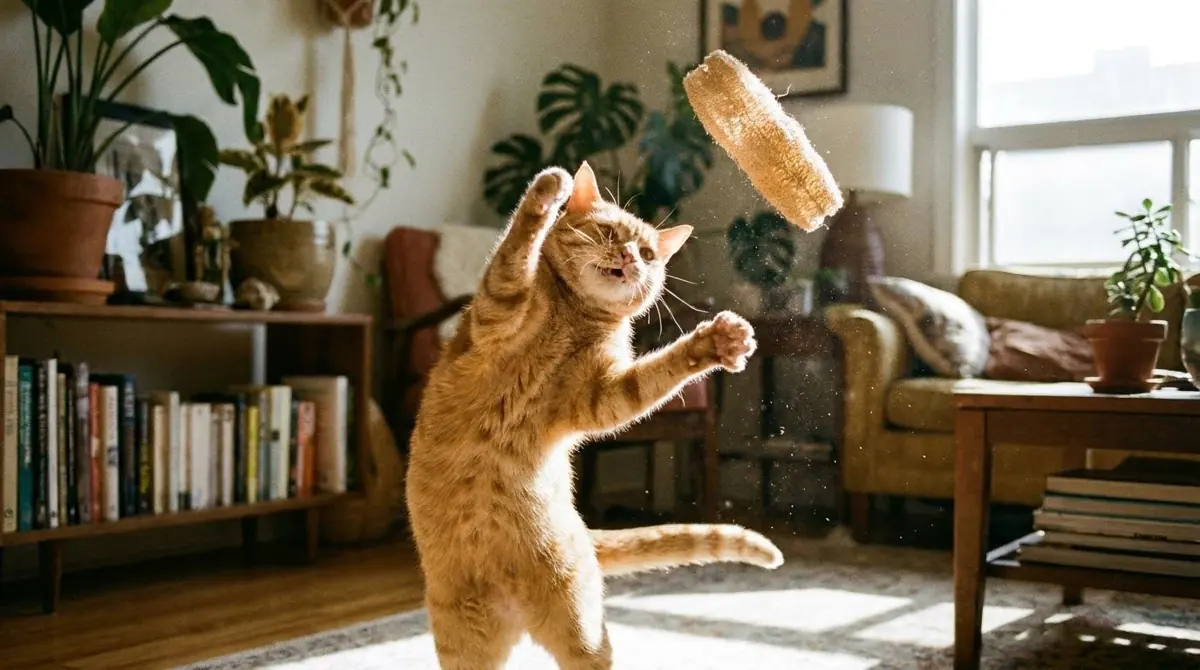
Feline whiskers (vibrissae) are loaded with hundreds of nerve endings. Learn how continuous tactile friction causes neurological fatigue and how to soothe it.
The Anatomy of Feline Vibrissae
A cat's whiskers are not simple hairs—they are highly sensitive touch organs embedded three times deeper into subcutaneous tissue, surrounded by nerve clusters and blood sinuses that register slight atmospheric air currents.
When deep, narrow food bowls or rigid hard-plastic toys repeatedly bend whiskers backward, the feline brain receives a barrage of sensory distress signals known as whisker fatigue.
Behavioral Symptoms You Might Overlook
Cats experiencing whisker stress drop food onto the floor before eating, pace restlessly near bowls, or swat angrily at stiff plastic toys rather than playing comfortably.
Switching to Yielding, Whisper-Soft Natural Textures
Wide, shallow ceramic bowls paired with soft, pliable plant-fiber toys like natural loofah give way upon contact, allowing whiskers to remain uncompressed while the cat bites and clutches the toy.
Have Questions or Need a Wholesale Quote?
We export high-quality, pet-friendly coffee wood chews and natural toys worldwide.
Partner with us!
✨ Wholesale Pricing Available for Resellers & Business Partners!
We offer competitive wholesale prices and attractive deals for resellers and distributors.
💬 Feel free to message me directly to discuss pricing, partnership opportunities, and further details. Let's grow our businesses together! 🤝