
Chemical dental water additives promise clean dog teeth without brushing, but clinical microbiology reveals they cannot penetrate the calcified extracellular matrix of dental biofilm. Discover the physical friction science of natural plant fibers and coffee wood chews.
Key takeaways
- Canine dental plaque is not loose food debris; it is a structured, viscoelastic biofilm encased in an extracellular polymeric substance (EPS) resistant to surface rinses.
- Chemical dental water additives containing chlorhexidine, zinc salts, or synthetic detergents risk altering oral and gastrointestinal microflora with chronic ingestion.
- Subgingival plaque and calculus require physical shear friction of at least 1.5 to 3.0 Newtons per square millimeter to mechanically dislodge from enamel grooves.
- Braided coconut coir fibers and resilient coffee wood sticks act as biological toothbrushes, penetrating interdental spaces to disrupt biofilm matrices.
- Pairing mechanical fiber chewing with routine veterinary dental checkups provides comprehensive periodontal prophylaxis without chemical side effects.
The Microbiology of Canine Dental Biofilm: The Unseen Glycocalyx Fortress
Over 80% of dogs over three years of age exhibit clinical signs of canine periodontal disease. To understand why preventive care often fails, pet parents must understand what dental plaque actually is. Plaque is not simply soft food remnants caught between teeth; it is a complex, living ecosystem known as a microbial biofilm.
Within hours of a professional dental cleaning, salivary glycoproteins form an acquired pellicle on canine enamel surfaces. Pioneer bacteria—predominantly aerobic Streptococcus and Actinomyces species—adhere to this layer, rapidly synthesizing an extracellular polymeric substance (EPS) composed of polysaccharides, extracellular DNA, and structural proteins. This matrix acts like biological cement, forming a protective glycocalyx shield.
As the biofilm matures over 48 to 72 hours, anaerobic pathogens (including Porphyromonas gulae and Treponema denticola) colonize subgingival margins, releasing volatile sulfur compounds and collagenases that destroy periodontal tissue. Without physical disruption, minerals in canine saliva (calcium phosphate and carbonate) precipitate into the matrix, transforming pliable biofilm into rock-hard dental calculus (tartar) within 3 to 5 days.
Why Chemical Water Additives and Oral Sprays Fall Short
The commercial pet wellness industry has heavily promoted chemical water additives, foam sprays, and enzymatic gels as effortless alternatives to manual tooth brushing. These products commonly contain chemical biocides (such as chlorhexidine gluconate, sodium hexametaphosphate, cetylpyridinium chloride, or zinc gluconate) intended to kill bacteria in the water bowl or mouth.
However, microbiological research consistently shows that bacteria embedded within a mature canine biofilm exhibit up to 1,000 times greater resistance to antimicrobial chemicals compared to free-floating planktonic bacteria. The dense EPS glycocalyx matrix physically blocks chemical penetration, meaning water additives merely bathe the outer surface of the fortress without neutralizing pathogenic colonies lurking underneath.
Furthermore, daily involuntary ingestion of chemical biocides presents documented systemic risks. Swallowing chlorhexidine or chemical surfactants alters the delicate balance of the canine gut microbiome, potentially impairing digestion and nutrient absorption. Oral sprays and water additives also fail entirely to provide mechanical stimulation to the periodontal ligament, doing nothing to strengthen jaw bones or alleviate stress.
The Physics of Mechanical Shear: How Fiber Friction Disrupts Biofilm
In veterinary dentistry, the gold standard for plaque removal is mechanical shear: applying physical, directional friction that exceeds the adhesive tensile strength of the biofilm matrix. Clinical engineering studies indicate that dislodging adhered plaque requires a mechanical shear force between 1.5 and 3.0 Newtons per square millimeter.
When a dog bites into a structured, fibrous material, the tooth penetrates into the substrate, allowing the dense fibers to glide vertically along the crown surface from the tip down to the gingival margin. This mechanical scraping creates high frictional shear that breaks the polysaccharide bonds holding the EPS matrix together, dislodging colonies before calcification occurs.
Unlike smooth plastic or uniform synthetic nylon, natural plant fibers feature irregular microscopic ridges and varied surface contours that contact tooth enamel at multiple dynamic angles. This physical wiping action mimics human dental flossing and tooth brushing, physically sweeping away bacterial accumulations without introducing chemical biocides.
Coconut Coir vs. Coffee Wood: Complementary Dental Textures
Two natural materials excel at delivering optimal mechanical shear for canine dental hygiene: braided coconut husk coir and dense coffee wood.
Coconut Husk Coir (Flossing Action): Coir fibers are the coarse, high-tensile cellular strands derived from the outer husk of coconuts. When twisted and braided into tug ropes and balls, these springy plant fibers compress under bite pressure and expand into narrow interdental spaces. The coarse fiber surfaces act as organic dental floss, scrubbing plaque off lateral tooth walls and massaging the gingival margin to promote microvascular blood flow.
Coffee Wood Chews (Toothbrushing Action): Coffee wood possesses a dense, tightly interwoven cellular matrix that gradually softens upon contact with saliva. As the dog gnaws with its carnassial teeth, the outer wood hydrates into fine, soft cellulose filaments that gently scrape plaque from the buccal tooth surfaces. The dog receives thorough mechanical scrubbing across its premolars and molars without risking enamel fractures.
Clinical Protocol: Implementing a Daily Mechanical Dental Routine
To establish an effective, chemical-free periodontal prevention program for your dog, veterinary oral health specialists recommend a structured three-pillar approach:
1. Daily 20-Minute Mechanical Chewing Session. Offer a size-appropriate coffee wood stick or braided coconut husk rope once daily, preferably after your dog's primary meal. This allows natural mastication to sweep away newly deposited food residues and disrupt nascent plaque biofilms before they can mineralize.
2. Interactive Fiber Play. Engage in 10 minutes of supervised tug-of-war using a coconut husk rope toy. The directional pulling forces generate dynamic shear across the canine premolars, reaching tooth surfaces that solitary chew sessions might miss.
3. Oral Cavity Monitoring. Lift your dog's lips weekly to inspect the gingival tissue. Healthy gums should appear pale pink and firm. If you observe dark red gingival borders, persistent bad breath, or heavy yellow-brown calculus build-up, schedule a veterinary examination.
When to Seek Professional Veterinary Dental Intervention
While mechanical fiber chewing provides outstanding daily plaque disruption, pet owners must recognize the vital boundary between home prevention and medical treatment. Natural chews are designed to prevent plaque accumulation on healthy teeth; they cannot reverse advanced periodontal disease or dissolve hardened calculus.
If a dog already exhibits Grade 3 or Grade 4 periodontal disease—characterized by mobile teeth, severe gingival recession, purulent discharge, or exposed tooth roots—offering hard chews can cause acute agony and exacerbate bone loss. Calculus that has already calcified into rock-hard tartar can only be safely removed through professional ultrasonic scaling and subgingival curettage under general anesthesia by a licensed veterinarian.
Once a veterinarian has professionally cleaned the teeth and restored oral health, introducing daily mechanical chewing with natural coffee wood and coconut fiber toys serves as the ideal long-term, non-toxic maintenance strategy to prevent disease recurrence.
Frequently asked questions
Can dental water additives replace tooth brushing or chewing for dogs?
No. Scientific studies show that chemical water additives cannot penetrate the thick, protective extracellular matrix of mature canine dental plaque. Only physical mechanical abrasion (brushing or textured chewing) can effectively dislodge plaque before it calcifies.
Are chemical water additives safe for daily long-term use in dogs?
Chronic ingestion of chemical biocides like chlorhexidine, zinc salts, and synthetic surfactants can alter the canine oral and gastrointestinal microbiome, potentially leading to digestive upset and mucosal sensitivity.
How does coconut husk fiber clean plaque off dog teeth?
Braided coconut coir fibers have natural springy resilience. When a dog bites down, the fibers penetrate between teeth and along the gumline, exerting mechanical shear forces that physically floss away bacterial plaque biofilm.
Does coffee wood chewing reach the gumline where periodontal disease starts?
Yes. When moistened with saliva, the outer surface of coffee wood separates into soft, flexible cellulose micro-fibers that slide along the tooth crown and contact the gingival margin, scrubbing plaque without cutting delicate gums.
How quickly does dental plaque turn into hard calculus in dogs?
Canine dental plaque begins mineralizing into rock-hard calculus (tartar) in as little as 48 to 72 hours due to high calcium concentrations in dog saliva. Daily mechanical chewing is essential to disrupt plaque before it hardens.
Editorial sources
External references support the general safety and dental-care guidance in this article. Product dimensions and material descriptions come from the Eco Pet Toys catalog.
- Veterinary Oral Health Council (VOHC): Protocols for Mechanical Plaque Disruption: Standardized clinical trials measuring mechanical shear forces against the extracellular biofilm matrix.
- Journal of Veterinary Dentistry: Biofilm Glycocalyx Resistance to Chemical Rinses: Controlled microbiological investigations on why liquid water additives fail to penetrate subgingival tartar.
- American Animal Hospital Association (AAHA): Dental Prophylaxis Standards: Comprehensive staging of periodontal disease and the critical role of daily mechanical fiber abrasion.
- European Veterinary Dental College (EVDC): Periodontal Pathogenesis in Dogs: Evidence-based consensus on supragingival plaque mineralization rates and mechanical intervention timing.
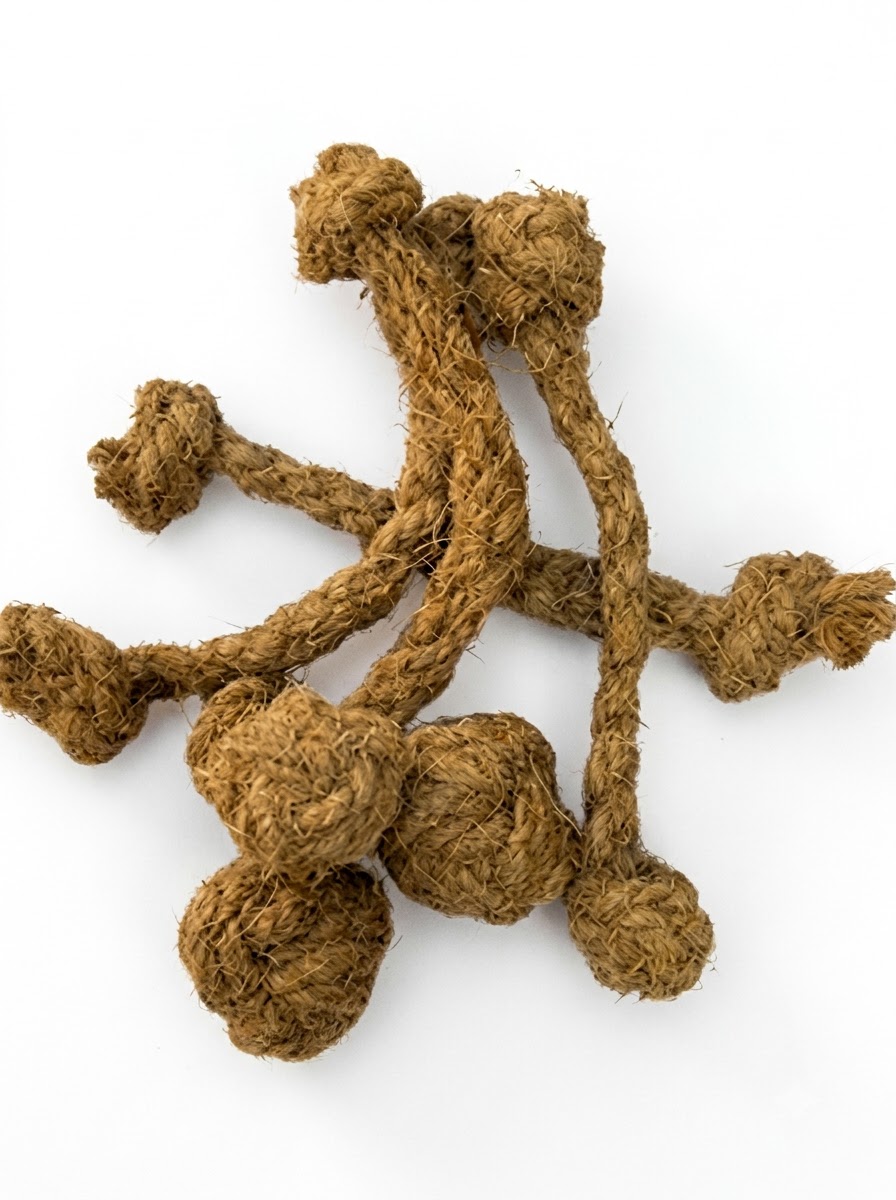
Coconut Husk Rope
Braided tug toy crafted from natural coconut coir. The textured plant fibers add tactile variety during supervised pulling, shaking, and chewing.
Ask for current availability, packaging options, and a written quote.
Have Questions or Need a Wholesale Quote?
We export high-quality, pet-friendly coffee wood chews and natural toys worldwide.
Partner with us!
✨ Wholesale Pricing Available for Resellers & Business Partners!
We offer competitive wholesale prices and attractive deals for resellers and distributors.
💬 Feel free to message me directly to discuss pricing, partnership opportunities, and further details. Let's grow our businesses together! 🤝