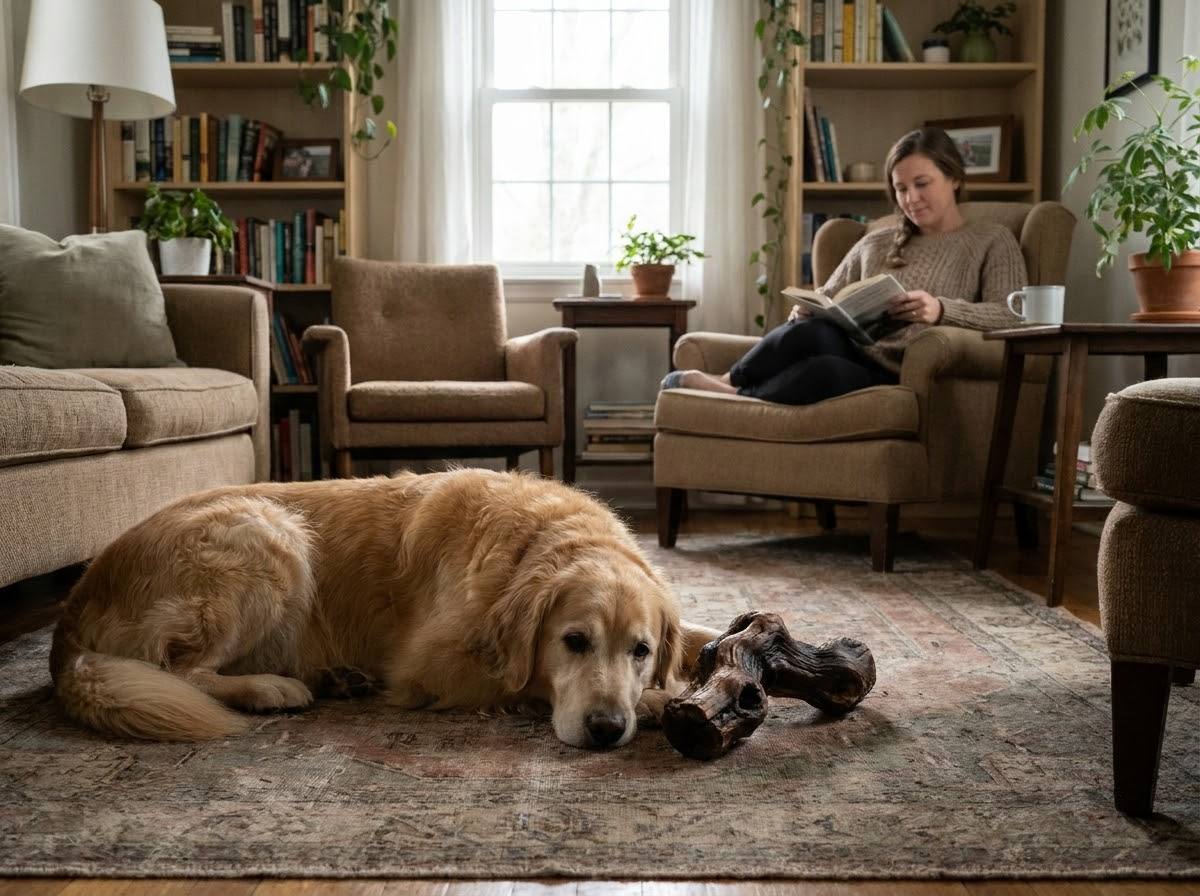
Dogs suffering from separation anxiety often channel their panic into shredding doorframes and furniture. Discover the neurobiology of anxiety chewing and how coffee wood provides a safe, calming outlet.
Key takeaways
- Destructive chewing during owner absences is a physiological coping mechanism driven by acute cortisol and adrenaline surges.
- Rhythmic mastication on dense coffee wood stimulates the vagus nerve, prompting serotonin and endorphin release that lowers heart rate.
- Unlike stuffed edible toys that finish in minutes, a coffee wood chew provides prolonged tactile resistance throughout departure routines.
- Introducing the wood chew during calm, positive training sessions prevents the dog from associating the chew solely with owner departures.
- Persistent or severe separation anxiety requires a multifaceted protocol combining environmental enrichment, desensitization, and qualified veterinary guidance.
The Neurobiology of Panic: Why Anxious Dogs Chew Furniture
Coming home to find shredded baseboards, gnawed doorframes, or mangled couch cushions is heartbreaking and frustrating. However, pet parents must understand that this destruction is not done out of spite or boredom—it is an outward symptom of severe internal panic.
When a dog with separation anxiety watches their owner prepare to leave, their sympathetic nervous system floods their bloodstream with adrenaline and cortisol. In an attempt to self-soothe, the dog's brain instinctively defaults to a hardwired biological coping mechanism: mastication.
Chewing provides rhythmic proprioceptive feedback through the jaw joints and cranial nerves. This rhythmic pressure stimulates the parasympathetic nervous system, helping the anxious canine brain de-escalate panic. Without an appropriate, durable chew object available, the dog attacks the nearest firm physical surface—usually wooden furniture.
Why Coffee Wood Chews Are Ideal for Anxiety Management
A natural coffee wood chew serves as the ultimate target for anxious chew redirection for three distinct reasons:
1. Natural Wood Grain Texture: Dogs that fixate on chewing doorframes and wooden table legs are seeking the specific tactile resistance of hardwood. Coffee wood provides that exact firm, satisfying resistance, making it an intuitive, natural substitute.
2. Zero Splintering: Unlike garden branches or structural pine lumber that shatters into sharp slivers that puncture gums and intestines, coffee wood fibers soften into digestible flakes when gnawed.
3. Long-Lasting Durability: Edible treat chews (like peanut butter Kongs or meat sticks) are consumed within five to ten minutes, leaving the dog alone with their anxiety. A coffee wood chew remains firm and engaging for prolonged chewing sessions.
The 'Departure Pairing' Protocol for Crate Training
To use a coffee wood chew effectively for separation anxiety, you must avoid the common mistake of only offering the chew when walking out the door. If offered exclusively at departures, the chew becomes a predictive trigger that heightens anxiety.
Step 1: Build Positive Associations at Rest. Offer the coffee wood chew while you are sitting calmly on the sofa watching television or reading. Let your dog chew peacefully next to you, associating the wood with safety and contentment.
Step 2: Crate Relaxation Practice. Place the chew in your dog's crate while the door remains wide open. Encourage your dog to go inside and gnaw voluntarily while you remain nearby in the room.
Step 3: Gradual Micro-Departures. Once your dog loves chewing in their designated space, offer the stick, step into an adjacent room for two minutes, and return calmly without making a dramatic fuss. Gradually increase departure durations as your dog remains relaxed.
Combining Olfactory Calming with Tactile Chewing
For dogs experiencing severe departure stress, combining olfactory enrichment with coffee wood chewing enhances the calming effect.
Try diffusing pet-safe, calming natural pheromones (such as Adaptil) near the dog's resting area, or rubbing a microscopic smear of organic coconut oil along the surface grooves of the coffee wood stick. The licking motion immediately triggers the release of saliva and initiates the calming chewing cadence.
A Holistic Approach: Chews Are an Aid, Not a Cure
While a coffee wood chew is an indispensable tool for redirecting destructive behavior and dissipating nervous tension, it should be part of a comprehensive behavioral plan.
Severe clinical separation anxiety involving frantic vocalization, self-harm, or elimination requires structured systematic desensitization training and consultation with a board-certified veterinary behaviorist (DACVB). The coffee wood chew provides the physical outlet your dog needs while underlying emotional confidence is rebuilt.
Frequently asked questions
Can a coffee wood chew cure my dog's separation anxiety?
A chew toy alone cannot cure clinical anxiety, but it provides a safe, calming physical outlet that lowers stress hormones and successfully stops destructive furniture chewing.
Why does my dog chew doorframes when I leave?
Chewing doorframes is an instinctive coping mechanism to self-soothe panic. Providing a coffee wood chew offers the same satisfying wood texture in a completely safe form.
Can I leave a coffee wood chew with my dog when I leave the house?
All chews should ideally be supervised. If using during departures, ensure the stick is fresh, extra-large, and remove it immediately once it wears down to one-third of its length.
How does chewing reduce stress in dogs?
Rhythmic chewing stimulates the trigeminal nerve, triggering the pituitary gland to release calming serotonin and endorphins while lowering heart rate and cortisol levels.
Editorial sources
External references support the general safety and dental-care guidance in this article. Product dimensions and material descriptions come from the Eco Pet Toys catalog.
- American Animal Hospital Association (AAHA): Dental & Chew Guidelines: Veterinary consensus on masticatory object hardness, dental fracture risks, and supervision protocols.
- Veterinary Oral Health Council (VOHC): Accepted Plaque Control Methods: Standards for mechanical friction on canine tooth enamel and gingival margin health.
- ASPCA Position Statement on Dog Chews and Enrichment Safety: Guidance on individualized size selection, behavioral observation, and avoiding toxic chemical coatings.
- International Association of Animal Behavior Consultants (IAABC): Chewing & Arousal: Behavioral science principles on stress reduction and de-escalating resource guarding through natural toys.

Coffee Wood Chew Stick
Dense coffee wood chew made from branches collected during routine pruning in Vietnam's Central Highlands. Available in six sizes for supervised chewing.
Ask for current availability, packaging options, and a written quote.
Have Questions or Need a Wholesale Quote?
We export high-quality, pet-friendly coffee wood chews and natural toys worldwide.
Partner with us!
✨ Wholesale Pricing Available for Resellers & Business Partners!
We offer competitive wholesale prices and attractive deals for resellers and distributors.
💬 Feel free to message me directly to discuss pricing, partnership opportunities, and further details. Let's grow our businesses together! 🤝