
Canaries and finches rarely climb—they hop and fly horizontally. Discover how natural coffee wood branches and optimal cage spacing keep tiny feet healthy.
The Passerine Foot Anatomy
Canaries, Zebra Finches, and Gouldian Finches have anisodactyl feet (three toes forward, one back) designed exclusively for perching. Because they do not climb with a beak like parrots, they land with significant impact relative to their body weight.
Uniform plastic dowels create repetitive impact trauma on the exact same pressure points, leading to chronic foot cramps and arthritis.
Natural Branch Contours for Gentle Landings
Our slender Coffee Wood Bird Perches offer naturally variable branch thickness that allows finch toes to wrap at different diameters throughout the day.
The fine organic bark provides superior landing grip, cushioning each hop and landing.
The Optimal 2-Perch Flight Setup
Avoid cluttering the center of the cage with too many branches. Position one natural coffee wood perch at each far end of the cage, leaving a clear horizontal flight corridor across the middle to encourage natural daily flight exercise.
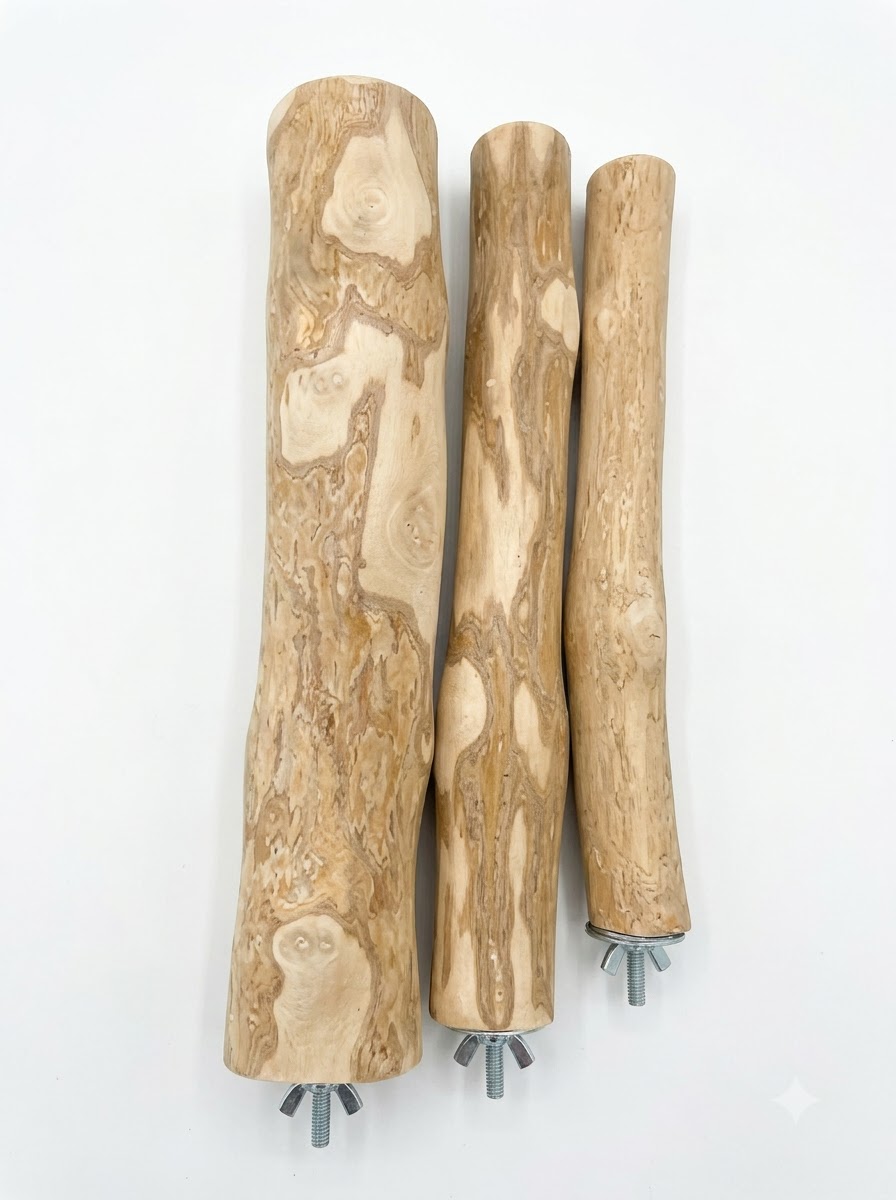
Coffee Wood Bird Perch
Natural bird perch made from reclaimed coffee wood. Irregular contours and diameter variations offer varied foot positions for pet birds.
Ask for current availability, packaging options, and a written quote.
Have Questions or Need a Wholesale Quote?
We export high-quality, pet-friendly coffee wood chews and natural toys worldwide.
Partner with us!
✨ Wholesale Pricing Available for Resellers & Business Partners!
We offer competitive wholesale prices and attractive deals for resellers and distributors.
💬 Feel free to message me directly to discuss pricing, partnership opportunities, and further details. Let's grow our businesses together! 🤝